Choosing among the 10 best Emollient Cream suppliers worldwide requires more than comparing product prices. Buyers must examine formulation quality, manufacturing experience, documentation, and supply reliability. A cream that feels smooth on the hand may still perform poorly in long-term use. Skin comfort, absorption, stability, and ingredient traceability all matter.
This guide reviews suppliers through a practical purchasing lens. It considers private-label services, custom formulation support, production capacity, minimum order quantities, packaging options, and quality-control procedures. Reliable suppliers should provide clear ingredient specifications, batch records, testing information, and responsive technical communication. Certifications can support trust, but they should be verified rather than accepted at face value. Regulatory expectations also differ across markets, so buyers should confirm current requirements before placing an order.
“Best” is not universal.
A small skincare brand may value flexible quantities and fast sampling. A hospital distributor may prioritize consistent batches, clinical documentation, and secure delivery schedules. Large retailers often need scalable production and dependable packaging capacity. Real-world supplier evaluation should include sample testing, factory audits, reference checks, and a review of complaint-handling processes. Even experienced buyers can overlook lead-time changes or reformulation risks. This article offers a structured starting point, not a substitute for independent due diligence. Supplier capabilities may change, and public information can remain incomplete. A careful decision therefore combines published evidence with direct communication, product trials, and documented commercial terms.
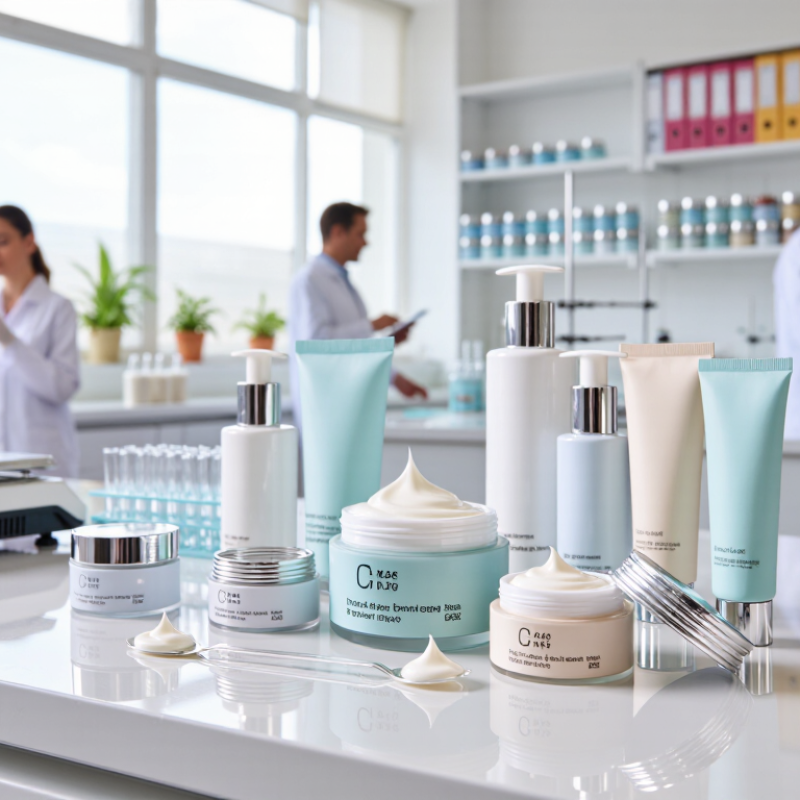
Emollient creams are leave-on moisturizers that soften rough skin and reduce water loss. They usually contain oils, waxes, or lipids that support the skin barrier. Unlike many cosmetic lotions, emollients can feel richer and remain on the surface longer. Some include humectants, such as glycerin, which attract moisture into the outer skin layer.
People with eczema, psoriasis, contact irritation, or simply very dry skin often use them. Older adults may need frequent application because skin becomes thinner and less oily with age. Parents commonly apply fragrance-free emollients to a child’s dry elbows, cheeks, or legs. Healthcare workers also use them after repeated handwashing, although greasy products may affect grip at work. Apply a small amount after bathing, while the skin is still slightly damp. Do not rub harshly.
In practice, no cream suits everyone. Fragrance, preservatives, or certain plant extracts can trigger stinging or redness. A patch test on a small area can reveal problems, but it cannot predict every reaction. Emollients do not treat every rash, especially when infection, swelling, or persistent pain is present. Medical advice matters then. Products containing paraffin or similar oils may make clothing and bedding catch fire more easily, so keep treated fabrics away from flames and heat. Supplier quality also matters: clear ingredient lists, batch information, hygienic packaging, and credible testing are practical signs of reliability. Loose claims deserve caution.

How to Evaluate Emollient Cream Suppliers Worldwide
A strong emollient cream supplier should provide more than attractive samples. Request complete ingredient lists, certificates of analysis, microbial results, stability data, and batch traceability. ISO Survey 2023 records more than one million ISO 9001 certificates worldwide, but certification alone does not prove product quality. Ask how the supplier handles failed batches, complaints, and formulation changes. Their answers often reveal operational maturity.
Review the cream under realistic conditions. Test spreadability, absorption, residue, odor, and skin comfort after repeated use. Check performance after heat exposure, cold storage, and transport vibration. Grand View Research’s 2024 emollients market analysis indicates steady global growth through 2030, increasing pressure on suppliers to scale consistently. Capacity claims should be supported by production records, lead-time history, and backup manufacturing plans. A polished presentation is not evidence.
Evaluate regulatory support, packaging compatibility, sustainability records, and communication speed across time zones. Request recent audit summaries rather than generic assurances. Compare minimum order quantities with your forecast, because low prices can hide inflexible terms or excessive inventory. I would also examine whether technical staff explain limitations clearly. That matters. One weakness remains easy to miss: many evaluations depend on short laboratory tests, while real users apply creams unevenly and store them poorly. A small pilot batch, monitored over several weeks, can expose problems before commercial purchasing.
| Rank | Supplier Evaluation Dimension | Recommended Benchmark | Documents or Evidence to Request | Weight | Why It Matters |
|---|---|---|---|---|---|
| 1 | Quality Management System | A documented quality system, preferably certified to ISO 9001:2015 or an equivalent standard | Current certificate, audit summary, quality manual, and corrective-action procedure | 15% | Shows whether production, complaints, deviations, and continuous improvement are controlled consistently. |
| 2 | Cosmetic Good Manufacturing Practice | Production aligned with ISO 22716 cosmetic GMP or applicable local cosmetic GMP requirements | GMP certificate or audit report, hygiene controls, batch records, and sanitation procedures | 15% | Reduces the risk of contamination, mix-ups, incorrect labeling, and inconsistent batch quality. |
| 3 | Formula Performance and Skin Feel | Stable emulsion with acceptable spreadability, absorption, after-feel, pH, viscosity, and appearance | Laboratory specifications, prototype samples, sensory evaluation, viscosity data, and pH results | 13% | Emollient creams must meet both technical requirements and consumer expectations for comfort and usability. |
| 4 | Safety and Microbiological Control | Risk-based preservative control with defined microbial limits and documented testing for every batch | Microbiological test results, preservative efficacy testing, stability data, and allergen information | 13% | Water-based creams can support microbial growth if preservation and manufacturing controls are inadequate. |
| 5 | Regulatory and Technical Documentation | Complete ingredient, safety, labeling, and market-compliance support for the intended sales regions | INCI list, SDS, specification sheet, certificate of analysis, safety assessment support, and regulatory declarations | 12% | Documentation requirements vary by market, so suppliers must support the destinations where the product will be sold. |
| 6 | Raw Material Traceability | Lot-level traceability from incoming raw materials through filling, packaging, and shipment | Batch numbering system, approved supplier list, raw-material COAs, and recall procedure | 10% | Traceability enables faster investigation, targeted recalls, and verification of ingredient origin. |
| 7 | Stability and Packaging Compatibility | Evidence of accelerated and long-term stability, including compatibility with the proposed container | Stability protocol, test results, packaging compatibility report, and recommended storage conditions | 8% | Helps identify separation, odor changes, color shifts, viscosity loss, leakage, or container interaction before launch. |
| 8 | Production Capacity and Minimum Order Quantity | Capacity and minimum order quantity appropriate to the buyer’s launch volume and forecast | Monthly capacity statement, line capabilities, MOQ schedule, lead-time commitments, and scale-up plan | 6% | A suitable supplier should support pilot orders without creating unnecessary cost or supply constraints at scale. |
| 9 | Supply Reliability and Export Readiness | Clear lead times, documented logistics processes, export experience, and contingency planning | On-time delivery records, export documents, shipping terms, contingency plan, and customer references | 4% | Reliable delivery protects launch schedules, inventory planning, and customer service levels. |
| 10 | Total Cost and Commercial Transparency | Competitive total landed cost with transparent pricing for formula, packaging, testing, freight, and revisions | Itemized quotation, payment terms, tooling charges, sample fees, revision policy, and freight assumptions | 4% | The lowest unit price may not provide the lowest total cost after testing, packaging, shipping, and compliance expenses. |
| Total Evaluation Weight | 100% | Use a weighted scorecard and verify critical claims through samples, audits, and independent documentation checks. | |||
Note: This supplier comparison framework intentionally excludes company names and brand-specific performance claims. Regulatory requirements, testing methods, and acceptable specifications should be confirmed for the target market and product category.
10 Best Emollient Cream Suppliers Worldwide?
Ten leading emollient cream suppliers earn attention through different strengths. In practical sourcing work, consistency matters more than glossy presentations. A pharmaceutical-grade supplier often provides strict batch control and complete testing records. A dermatology-focused manufacturer usually develops fragrance-free formulas for sensitive skin. A natural ingredient specialist may offer plant oils, but oxidation data must be checked. A contract manufacturer can support flexible volumes and private formulation work. A large-scale producer often delivers stable capacity during seasonal demand. A laboratory-led supplier may provide stronger texture and absorption research. A pediatric-care specialist normally uses gentler preservation systems. A sustainable supplier can reduce packaging waste and improve traceability. A regional producer may shorten delivery routes and simplify communication. An export-oriented supplier should understand documentation, customs, and destination-market requirements.
Real evaluation needs more than samples. Request certificates, ingredient specifications, microbial results, stability data, and recent audit records. Compare a cream after four weeks, not only after one application. Check its spread, whitening effect, residue, and performance under warm storage. Packaging also matters. A pump can limit contamination better than an open jar. However, packaging choices may increase cost or complicate recycling. That trade-off deserves honest review.
Some suppliers publish impressive claims without enough supporting evidence. That is a warning sign. Ask who performed the testing and whether methods were validated. I have found that communication speed can hide technical weakness. Conversely, a modest supplier may answer difficult questions clearly. No supplier is perfect. Formula changes, delayed documentation, and uneven batch texture still occur. A careful buyer should record these weaknesses before signing a long-term agreement.
Comparing emollient cream suppliers requires more than checking a glossy product catalog. In practical evaluations, quality begins with controlled raw materials, documented batch records, and repeatable manufacturing conditions. Ask for recent certificates of analysis, microbiological results, stability data, and full ingredient traceability. A reliable supplier should explain how it manages temperature, mixing speed, filling accuracy, and contamination risks. Small details matter. A separated sample often reveals weak process control.
Compliance separates serious suppliers from convenient ones. Review their quality system, audit history, manufacturing standards, and change-control procedures. They should provide clear technical files and respond consistently to regulatory questions. Do not rely on certificates alone. Verify issue dates, testing laboratories, and whether documents match the actual production site. Some suppliers look compliant on paper but communicate poorly during deviations. That is a warning sign.
Customization shows how well a supplier understands development work. Strong partners can adjust viscosity, absorption speed, fragrance level, packaging format, and preservative strategy without losing product stability. They should support pilot batches before full production and explain minimum order quantities clearly. Sample review should include skin feel, odor, spreadability, and performance after storage. No scorecard is perfect. My own evaluations sometimes overvalue technical documentation and undervalue response speed. Yet slow answers can delay testing, packaging approval, and market launch. A supplier’s willingness to discuss limitations may be more credible than an effortless promise.
Selecting an emollient cream supplier requires more than comparing prices. Start with the product’s intended use, skin type, texture, and packaging needs. A supplier should explain ingredient functions in clear, practical language. Ask for batch records, certificates of analysis, stability data, and documented quality procedures. Reliable partners can discuss manufacturing controls without vague claims. Experience matters here. A supplier familiar with dry, sensitive, or frequently washed skin may offer more useful guidance than a general trader. Still, experience should be verified, not simply advertised.
Tips: Request samples from more than one production batch. Check spreadability, absorption, scent, residue, and container performance after heat and cold exposure. Ask how raw material changes are reviewed and communicated. Confirm minimum order quantities, lead times, storage conditions, and complaint handling. A video audit or facility visit can reveal practical details, such as clean filling areas and organized records. Do not overlook responsiveness. Slow answers may become costly later.
For international sourcing, evaluate documentation consistency and communication across time zones. Confirm that labels, claims, and technical files match your market’s requirements. Independent testing can strengthen confidence, especially for creams designed for sensitive skin. Be careful with unusually low quotations; they may indicate weaker documentation or unstable supply planning. I would also score suppliers on transparency, not just performance. No evaluation is perfect. Your testing conditions may not reflect everyday customer use, so collect feedback and review the decision after launch.