How to Choose the Best Facial Skin Cleanser for Your Skin Type?
Choosing the right facial skin cleanser is essential for maintaining healthy skin. Each skin type has unique needs, and using the wrong product can lead to irritation. A good cleanser can enhance your routine and prepare your skin for further treatments.
When selecting a facial skin cleanser, consider your specific skin type. Oily skin may benefit from gel-based cleansers, while dry skin often needs creamier formulas. Sensitive skin requires gentle, non-irritating ingredients. Assessing your skin concerns and goals can significantly impact your choice.
Remember, the best facial skin cleanser won’t perform miracles on its own. It’s important to revisit your routine regularly. Sometimes, a cleanser that worked well last year might not be suitable now. Stay open to experimentation and listen to your skin's changing needs.
Understanding Different Skin Types for Facial Cleansing
Understanding your skin type is crucial for effective facial cleansing. Different skin types require specific products to achieve the best results. Oily skin produces excess sebum, often leading to breakouts. A cleanser with salicylic acid can be beneficial here, helping to reduce oil and prevent acne. However, over-cleansing can worsen oiliness, prompting excessive sebum production.
Dry skin, on the other hand, needs gentle hydration. Creamy cleansers with moisturizing ingredients can soothe dry patches. Some people mistakenly choose harsh cleansers, thinking they will improve their skin. Instead, this can strip natural oils and aggravate dryness. Combination skin poses its own challenge, where specific areas like the T-zone may be oily, while cheeks are dry. Balancing these needs requires a finely tuned approach.
Sensitive skin is easily irritated by harsh ingredients. For this type, aim for fragrance-free and hypoallergenic cleansers. The reality is that many individuals struggle to find products that respect their unique skin needs. It often requires trial and error. Observing how your skin reacts is vital for long-term success.
Key Ingredients to Look for in Facial Cleansers
Choosing the right facial cleanser can be challenging. Understanding key ingredients helps simplify this process. Many consumers overlook the importance of pH balance. A cleanser with a pH between 4.5 and 5.5 is ideal. This range maintains skin integrity and prevents irritation.
Look for gentle surfactants like cocamidopropyl betaine. This ingredient effectively cleanses without stripping moisture. Reports indicate that over 70% of people experience tightness after using harsh cleansers. Hydrating ingredients like glycerin and hyaluronic acid also play a crucial role. They help retain moisture and promote a healthy barrier.
Exfoliating agents, such as alpha hydroxy acids (AHAs), can enhance skin texture. While beneficial, they should be used cautiously. Over-exfoliation can lead to redness and sensitivity. Consulting a dermatologist is recommended for personalized advice. Formulations should be tailored to individual skin types, ensuring optimal results.
How to Choose the Best Facial Skin Cleanser for Your Skin Type
Evaluating Your Skin's Needs: Oily, Dry, Combination, or Sensitive
Choosing the right facial cleanser significantly impacts skin health. Understanding your skin type is crucial. Research shows that 50% of people struggle to identify their skin type accurately. An evaluation can help personalize your skincare routine effectively.
Oily skin tends to produce excess sebum. Light gel cleansers with salicylic acid are excellent for controlling oil. Yet, many oily skin individuals over-cleanse, which can cause irritation. Striking a balance is essential. For dry skin, creamy cleansers provide hydration, but using them too frequently can exacerbate dryness. Aim for gentleness in your routine to avoid unnecessary flare-ups.
Combination skin presents its own challenges. It needs a balance of moisture and oil control. Ingredients like hyaluronic acid and gentle exfoliators can be beneficial. Sensitive skin requires special care. Look for fragrance-free, hypoallergenic formulas. A surprising number of individuals experience reactions to common ingredients. This highlights the importance of patch testing new products before full application.
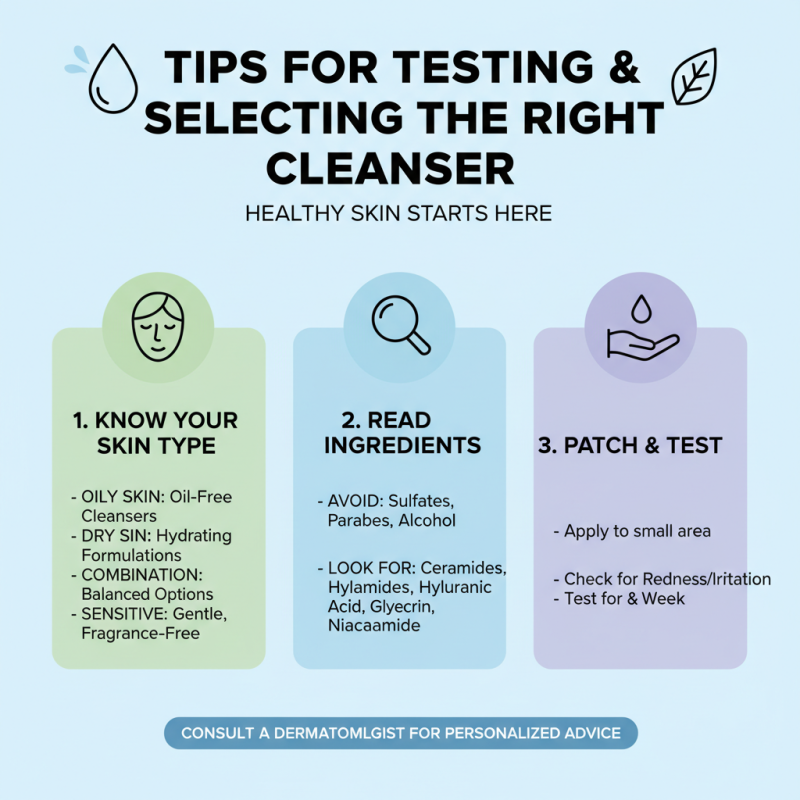
Tips for Testing and Selecting the Right Cleanser for You
Choosing the right facial skin cleanser is essential for maintaining healthy skin. The process can be daunting, given the myriad of options available. It’s crucial to understand your skin type first. According to the American Academy of Dermatology, oily skin requires oil-free cleansers, while dry skin benefits from hydrating formulations. Knowing your skin type can significantly influence the effectiveness of your product choice.
Testing cleansers can reveal what suits your skin best. Consider starting with samples or travel sizes. This strategy allows you to observe how your skin reacts. You might notice dryness or irritation with some products. A 2021 survey noted that 68% of users experienced negative reactions when switching to new cleansers too quickly. Patch testing a small area can help minimize unexpected reactions, guiding you towards a suitable choice.
Rinsing and pH balance matter too. A cleanser’s pH level can affect your skin barrier. Products with a pH close to the skin's natural acidity (around 4.5-5.5) are generally more effective. Look for labels indicating pH balance. This can prevent further skin issues, a common problem often overlooked. Adapting to your skin’s needs is a journey that involves trial and error. Embrace it.
Common Mistakes to Avoid When Choosing a Facial Cleanser
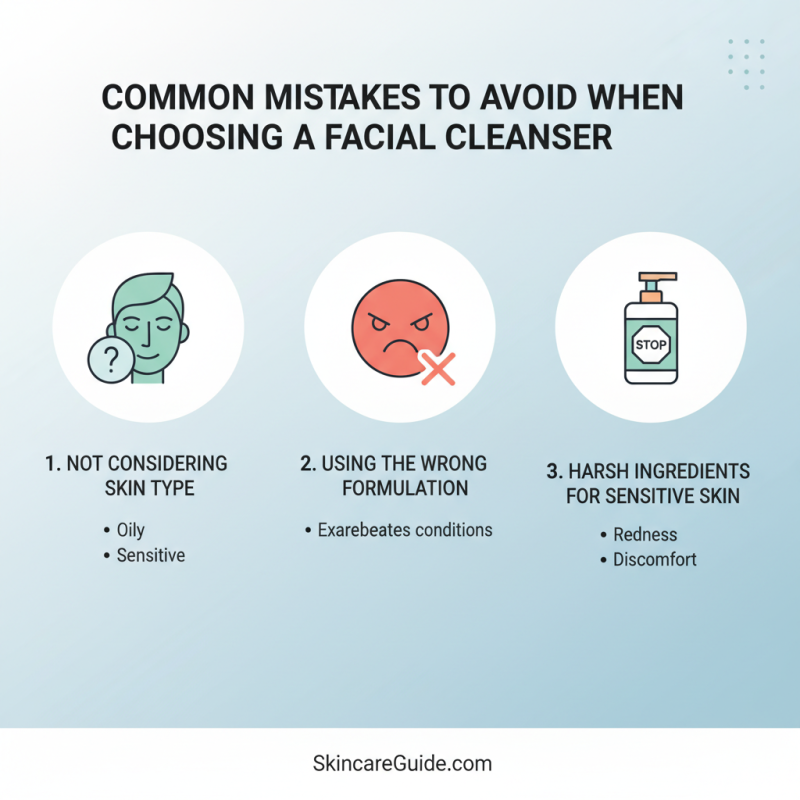
Choosing a facial cleanser can be daunting. Many people make common mistakes that can lead to skin irritation. One frequent pitfall is not considering skin type. Oily, dry, and sensitive skin all require different formulations. Using the wrong product can exacerbate existing conditions. A person with sensitive skin may find harsh ingredients overwhelming, leading to redness and discomfort.
Another issue is over-cleansing. Many believe that washing more often leads to cleaner skin. However, this can strip the skin of natural oils. This results in increased dryness and irritation. Balance is key for maintaining healthy skin. It’s essential to choose a gentle cleanser that effectively removes dirt without being too harsh.
Many overlook fragrance and additives. These can trigger allergic reactions in some individuals. It’s wise to opt for fragrance-free options when possible. Always test new products on a small area before a full application. Finally, don’t be swayed by marketing hype; quality ingredients matter more than flashy packaging. Reflecting on your choices can improve your skincare routine significantly.