What is the Purpose of Face Masks in Daily Life?
The use of face masks has become a common practice in daily life. Dr. Sarah Thompson, a renowned epidemiologist, emphasizes their importance: "Face masks aren't just a precaution; they are a vital tool against respiratory diseases." This sentiment reflects the growing understanding of how face masks can protect individual health and public safety.
In various settings—such as schools, workplaces, and public transport—face masks serve a dual purpose. They help reduce the transmission of viruses, especially in crowded environments. Additionally, they foster a sense of collective responsibility. People are reminded that their actions impact others. Observing mask usage can lead to reflection about personal safety and community care.
Yet, the effectiveness of face masks often depends on proper usage and acceptance. While many embrace them, others resist, citing discomfort or personal beliefs. This ongoing debate invites consideration of the balance between personal freedom and public health. The dialogue surrounding face masks challenges us to rethink our roles in the fight against contagious illnesses.

Understanding Face Masks: A Brief Overview
Face masks play a crucial role in our daily lives, especially in the context of public health. They act as a barrier that can significantly reduce the transmission of respiratory viruses.
According to the World Health Organization, wearing masks can lower the risk of infection by up to 85% when combined with other preventive measures. This statistic underscores their importance, particularly in crowded or poorly ventilated spaces.
Choosing the right face mask can enhance its effectiveness. Many experts recommend masks with multiple layers of fabric or surgical masks, as they provide better filtration. One study published in the journal "Nature" found that well-fitted masks can block over 90% of viral particles. While cloth masks are better than no mask at all, their performance varies widely based on the material and design. It's essential for individuals to be mindful of these factors when selecting a mask.
Tips: Ensure your mask fits well without gaps. Regularly clean reusable masks to maintain hygiene. Remind yourself that wearing a mask is not just for personal safety; it protects others too. Reflect on your habits and consider how consistently you practice mask-wearing in different scenarios. This awareness can influence community health positively.
Health Benefits of Wearing Face Masks in Daily Life
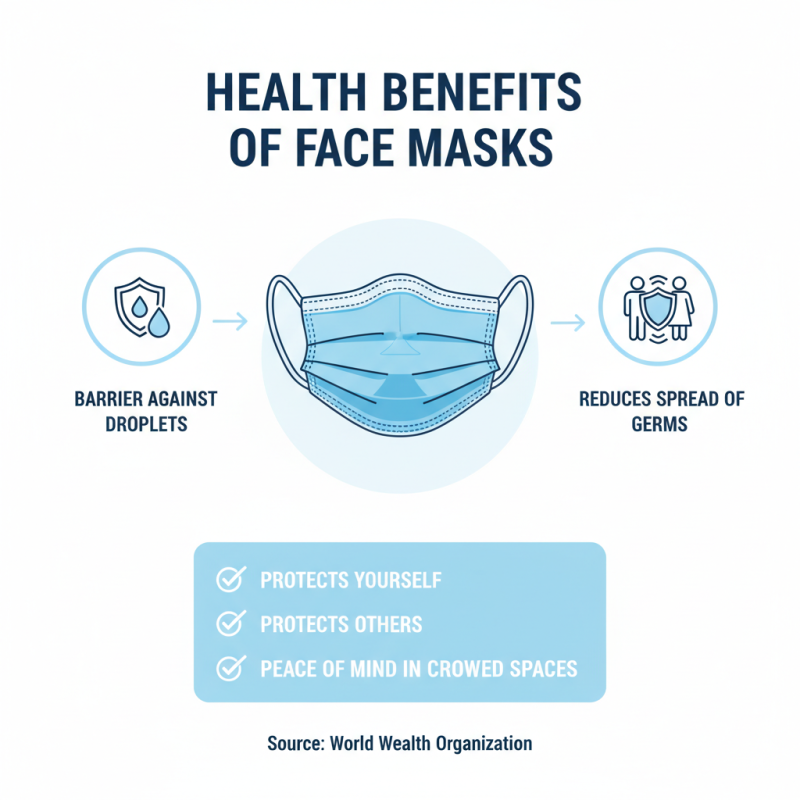
Face masks play a crucial role in our daily lives, especially regarding health benefits. They serve as a barrier against respiratory droplets, which are a primary mode of virus transmission. Wearing a mask reduces the spread of infectious agents, particularly in crowded or indoor spaces. This simple action can protect not only ourselves but also those around us.
In addition to their protective role, face masks can boost mental health. Many people feel a sense of safety and reassurance when they see others wearing masks. It fosters collective responsibility and community spirit. However, some may struggle with wearing masks due to discomfort. This can lead to frustration and reluctance. Finding comfortable options is essential. Masks come in various styles and materials, which may suit different preferences. Balancing comfort and safety can be a journey of adaptation.
Despite the benefits, there are challenges. Some individuals may doubt the efficacy of masks. Misinformation can discourage mask usage, leading to potential risks. Education and open dialogue are vital in addressing these concerns. Encouraging responsible behavior will ultimately benefit public health. We must reflect on the importance of face masks and continue to adapt to improve their usage in our lives.
Face Masks as a Tool for Preventing Disease Transmission
Face masks play a crucial role in disease prevention. According to the World Health Organization (WHO), masks can reduce the transmission of respiratory viruses by 70% when used correctly. This statistic highlights their effectiveness in combatting airborne diseases. In crowded places, such as public transportation or grocery stores, wearing a mask offers a protective barrier against droplets that can carry viruses like COVID-19 and influenza.
The Centers for Disease Control and Prevention (CDC) emphasizes the importance of masks in mitigating outbreaks. They recommend masks especially when physical distancing cannot be maintained. Masks are not just a personal choice; they protect others too. A study in the Journal of Infectious Diseases found that communities adopting mask mandates saw a significant drop in COVID-19 cases.
Despite their benefits, some people resist wearing masks. This hesitance raises questions about public compliance and understanding of health guidelines. There is an ongoing need for education about the proper use of masks. People must be aware that a mask alone is not sufficient. Social distancing and hand hygiene work together with mask-wearing to enhance protection against disease transmission.
What is the Purpose of Face Masks in Daily Life? - Face Masks as a Tool for Preventing Disease Transmission
| Dimension |
Description |
Effectiveness (%) |
Recommendation Level |
| Types of Masks |
Surgical Mask |
80 |
High |
| Types of Masks |
N95 Respirator |
95 |
Very High |
| Types of Masks |
Cloth Mask |
60 |
Moderate |
| Preventive Function |
Blocking Respiratory Drops |
85 |
High |
| Preventive Function |
Reducing Airborne Transmission |
70 |
Moderate |
| Usage Contexts |
Public Transport |
95 |
Essential |
| Usage Contexts |
Healthcare Settings |
90 |
Essential |
Social and Psychological Effects of Face Mask Usage
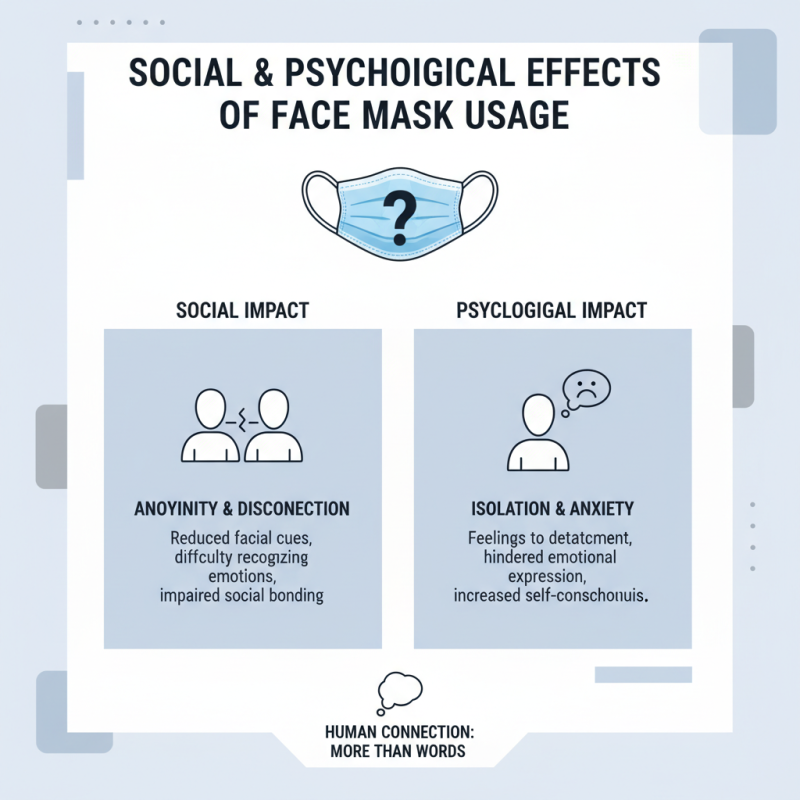
In daily life, face masks have become a common sight. They serve a vital role in public health. However, their social and psychological impacts are profound. Wearing a mask can lead to feelings of anonymity. This can create a sense of disconnection among individuals, despite being surrounded by others. Many people report feeling isolated when they cannot see facial expressions.
On the flip side, masks can also promote empathy through shared experience. People may feel united in their efforts to protect one another. In some cultures, masks offer comfort and security. They can symbolize care and concern for others. Yet, the reliance on masks raises questions about authentic connection. Hiding behind a mask may lead to misunderstandings. Communication can suffer when facial cues are obscured.
The evolving perception of face masks shows their dual role. They shield us physically while affecting our emotional and social lives. It's essential to reflect on how masks alter our interactions. Balancing health and personal connections is crucial during these times. As we navigate these challenges, a deeper understanding of our feelings and behaviors emerges.
Environmental Considerations Surrounding Face Mask Disposal
The rise in face mask usage due to health crises has sparked significant environmental concerns.
Disposable masks, often made from plastic fibers, contribute to pollution.
A report by the United Nations states that about 1.56 billion masks are discarded in the ocean every year.
This adds to the growing issue of microplastic contamination.
These masks can take hundreds of years to decompose, impacting marine life and ecosystems.
Disposing of masks properly is crucial. Many places now encourage people to cut ear loops before disposal to prevent entanglement risks to wildlife.
Additionally, designated trash bins for medical waste can help manage these masks more effectively.
Statistics reveal that 75% of face masks end up in general waste. Increased public awareness can change this trend.
Tip: Consider using reusable fabric masks where possible.
They reduce waste and can be washed and sanitized regularly. Always remember to make environmentally conscious choices.
Small changes can lead to significant impacts on the environment.