2026 Best Facial Skin Cleanser Suppliers for Global Buyers
Choosing the right Facial Skin Cleanser supplier in 2026 requires more than comparing prices or attractive packaging. Global buyers need partners that can deliver consistent formulas, stable production, and clear documentation across changing markets. A cleanser may look gentle in a sample bottle, yet perform differently after transport, storage, or large-scale manufacturing. That difference matters.
This guide introduces leading Facial Skin Cleanser suppliers for international sourcing teams, private-label brands, distributors, and professional skincare companies. It considers formulation experience, ingredient transparency, production capacity, quality systems, packaging options, minimum order quantities, and export support. Reliable suppliers should provide current ingredient lists, batch-testing records, product specifications, and practical samples for evaluation. Certifications can strengthen confidence, but buyers should verify their scope, validity, and issuing organizations.
A polished website is not proof.
Experienced procurement teams should also examine communication speed, complaint handling, lead times, and the supplier’s ability to adjust textures for different skin preferences. Foaming gels, cream cleansers, oil-based products, and fragrance-free formulas may serve different audiences. Climate matters too. A lightweight cleanser designed for a dry warehouse may not remain ideal in a hot, humid distribution route.
No supplier is perfect. Some companies offer excellent formulas but limited customization. Others provide flexible packaging but weaker documentation. This article therefore avoids treating one manufacturer as universally superior. Instead, it offers a practical comparison framework grounded in supplier evidence, product performance, and buyer experience. Readers should still request samples, confirm current requirements, and conduct independent due diligence before signing commercial agreements.
2026 Facial Cleanser Market: Growth Rates, Demand Trends, and Buyer Priorities
2026 Best Facial Skin Cleanser Suppliers for Global Buyers
The 2026 facial cleanser market is expected to expand steadily, with many forecasts placing annual growth near 5–8%. Actual performance may differ by region, income level, and retail channel. Demand is shifting.
Consumers increasingly seek gentle formulas that remove sunscreen, excess oil, and urban residue without leaving tight skin. Sensitive-skin products are gaining attention, while fragrance-free and low-irritation options support repeat purchases. Solid cleansers and refillable packaging also attract buyers focused on waste reduction, although convenience still influences everyday use.
Global buyers are prioritizing documented quality over attractive claims. Suppliers should provide ingredient specifications, stability data, microbiological testing, packaging compatibility results, and clear production records. Manufacturing experience matters, especially when formulas must remain consistent across large orders and changing climates. Humid shipping routes can affect texture and packaging seals.
Regional demand requires careful listening. Consumers in dry markets may prefer creamy cleansers, while hot climates often favor lightweight gels or foams. One formula rarely fits every market. Not every “natural” claim survives testing, and sustainability promises need measurable evidence. Buyers should review sample batches, verify lead times, and test products with local users before committing to volume purchases. Price matters, but unreliable documentation can become more expensive than a higher initial quotation.
2026 Best Facial Skin Cleanser Suppliers for Global Buyers
2026 Facial Cleanser Market: Growth Rates, Demand Trends, and Buyer Priorities
The global facial cleanser market is estimated to increase from approximately USD 8.90 billion in 2023 to USD 12.95 billion by 2030, representing an estimated compound annual growth rate of about 5.5%.
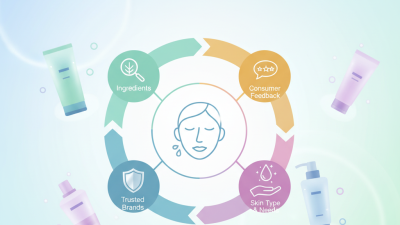
For global buyers, the strongest purchasing priorities are typically formulation safety, transparent ingredient information, regulatory compliance, stable supply capacity, packaging sustainability, and competitive total landed cost.
Source basis: publicly reported global facial cleanser market estimates and a 5.5% forecast CAGR. Annual values from 2024 onward are calculated estimates based on the reported 2023 market value and CAGR.
Facial Cleanser Formulation Standards: Skin pH 4.5–6.5 and INCI Compliance
For global buyers, facial cleanser sourcing begins with a measurable pH range, not attractive packaging. A finished cleanser should usually test between pH 4.5 and 6.5, close to the skin’s mildly acidic surface. However, pH alone does not prove gentleness. Surfactant type, preservative system, fragrance, and rinse-off time also influence comfort.
Suppliers should provide batch-specific pH records, stability results, microbiological testing, and complete ingredient documentation. INCI naming must follow the International Cosmetic Ingredient Dictionary and Handbook. It supports clear ingredient communication, but it is not a complete regulatory approval. Buyers should still check destination-market rules, restricted substances, labeling language, and allergen requirements. ISO 22716 offers useful guidance for cosmetic good manufacturing practices, while ISO 17516 supports microbiological quality control.
Market evidence shows why this discipline matters. Cosmetics Europe reported approximately €104 billion in European cosmetics and personal care retail sales in 2024. Grand View Research also identifies facial cleansers as a continuing growth category through the decade. Demand is expanding, but documentation gaps remain common during supplier audits.
Ask for pH testing at controlled temperatures, preferably with calibrated meters and retained samples. Small errors matter. A cleanser reading pH 6.5 may behave differently after heat exposure or extended storage. I would not accept one laboratory result as final proof. Formulas change, packaging interacts, and real skin is less predictable than a spreadsheet.
Supplier Qualification: ISO 22716 GMP, MoCRA, and EU 1223/2009 Requirements
2026 Best Facial Skin Cleanser Suppliers for Global Buyers
Supplier qualification now depends on documented compliance, not attractive samples. ISO 22716 GMP should cover batch records, purified water testing, sanitation, traceability, and complaint handling. A clean factory tour helps, but it proves little without controlled records. Request recent internal audit findings and corrective-action evidence.
For United States sales, verify MoCRA readiness. The supplier should support facility registration, product listing, safety substantiation, and serious adverse-event reporting. FDA guidance requires serious adverse events to be reported within 15 business days. Ask who owns each record and how quickly data can be retrieved. Gaps often appear between the manufacturer and the importing company.
For the European Union, Regulation 1223/2009 requires an EU Responsible Person, Product Information File, Cosmetic Product Safety Report, and CPNP notification. The safety assessor must review the finished cleanser, including preservatives, fragrance allergens, impurities, and packaging contact. Cosmetics Europe reported European cosmetics and personal care retail sales of about €104 billion in 2023, showing the scale of this regulated market. Yet sales volume does not equal supplier reliability. Check stability data from production-scale batches, not only laboratory samples. My practical concern is simple: small documentation errors can delay customs clearance and retailer approval. Qualification should include a live mock recall. Some suppliers may resist it. That resistance is useful evidence.
Global Supplier Comparison: MOQ, 30–60-Day Lead Times, and OEM/ODM Capacity
For global buyers, facial cleanser sourcing is now a capacity question, not only a price comparison. McKinsey’s 2023 beauty report projects the global beauty market will approach $580 billion by 2027, with roughly 6% annual growth. That expansion increases pressure on reliable private-label production. Yet public market reports rarely standardize MOQ or factory lead time. Buyers must request dated, written evidence.
A practical 2026 comparison starts with MOQ. Smaller facilities may quote 1,000–3,000 units for stock formulas, while customized formulas often begin near 5,000 units. Treat these figures as working benchmarks, not promises. A 30–60-day lead time is realistic only after formula approval, packaging confirmation, artwork clearance, and deposit. Ask whether the clock starts at purchase order or component arrival. That small detail can change launch planning.
Strong OEM/ODM suppliers should show formulation ownership, stability-testing records, preservative challenge results, and batch traceability. ISO 22716-based procedures are useful evidence of controlled cosmetic manufacturing, though certification alone does not guarantee performance. Compare sample viscosity, foam, rinse feel, and pump output after transport simulation. Keep one uncomfortable question: can the supplier repeat the same cleanser at scale? Attractive samples can still fail packaging compatibility. Include backup component sources, change-control rules, and realistic reordering capacity. Fast is useful. Verifiable is safer.
Quality and Cost Evaluation: Stability Testing, 24–36-Month Shelf Life, and Incoterms
For global facial cleanser buyers, shelf life should be proven, not promised.
Stability protocols commonly assess appearance, odor, pH, viscosity, microbial limits, and preservative performance. A practical plan combines real-time storage at 25°C/60% relative humidity with accelerated testing near 40°C/75% relative humidity. These conditions follow the framework in ICH Q1A(R2), although cosmetic suppliers must adapt it to product risks. ISO 22716:2007 also supports controlled manufacturing and documented quality practices.
Ask for batch-specific reports covering at least 24 months.
A 36-month claim needs stronger evidence, not optimistic labeling. Check packaging compatibility, especially pump leakage, cap deformation, and cleanser separation. Small failures become expensive.
Grand View Research’s 2024 skincare market analysis values the global sector at over US$150 billion, increasing pressure on buyers to control landed costs. Compare more than the unit quotation. Include testing, packaging, inspection, insurance, customs, inland delivery, and payment charges.
FCA can provide clearer freight control, while FOB suits ocean shipments after port handover.
CIF may appear simpler, but destination costs can remain unclear. DDP offers convenience, yet tax responsibility and importer obligations require careful verification.
The World Bank’s 2023 Logistics Performance Index shows significant differences in customs efficiency and shipment reliability between markets. Therefore, request recent transit records and a written responsibility matrix. A cheaper supplier may still lose value through delays, damaged cartons, or repeated retesting. Some assumptions will be wrong. Review them before signing.