

Does Salicylic Acid Cause Skin Purging? The Science Behind the "Worse Before Better" Phase
1. What Is Skin Purging?
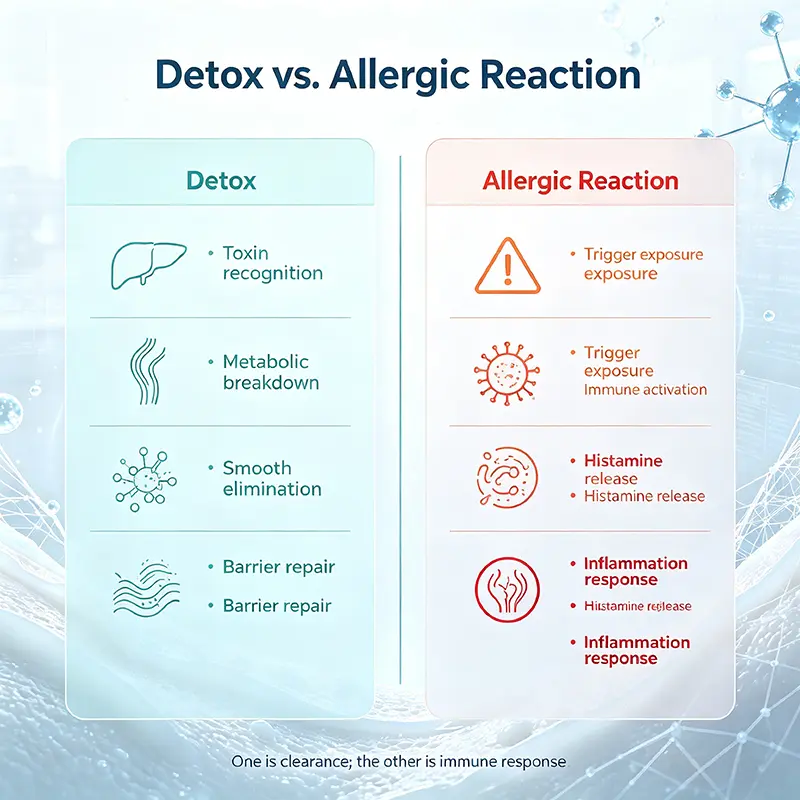
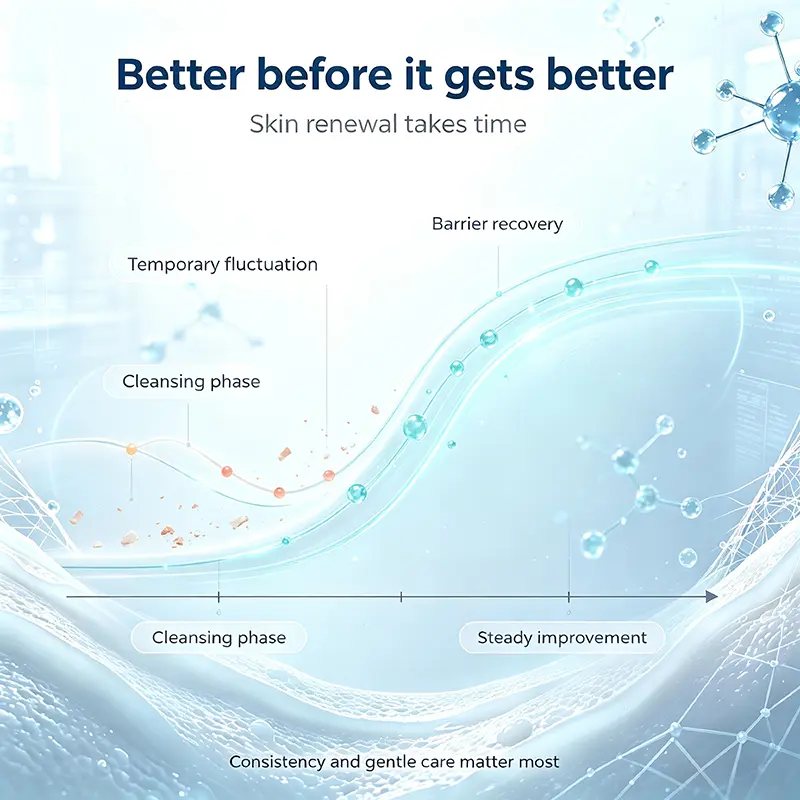
Despite the name, skin purging isn't actually your skin "detoxifying." Rather, it's certain ingredients accelerating the skin's natural cell renewal cycle.
Board-certified dermatologist Dr. Arielle Nagler explains the process: "Acne initially exists as 'microcomedones' beneath the skin's surface—invisible to the naked eye. Certain treatments accelerate skin cell turnover, bringing these microcomedones to the surface earlier than they would naturally appear."
In other words: these pimples were already forming deep within your skin—they just hadn't surfaced yet. Ingredients like salicylic acid speed up this process, essentially "ripening" breakouts that would have appeared weeks later.
Salicylic acid is particularly notable in this regard. As an oil-soluble ingredient, it penetrates pores, breaks down the cellular debris clogging them, and helps dilute sebum buildup. A study published in the Journal of Cosmetic Dermatology found that in acne patients aged 13–30, a 30% salicylic acid peel significantly reduced facial sebum production after just two treatments.
The logic is straightforward: salicylic acid "clears out" your pores, and the "debris" being cleared out shows up on the surface as temporary breakouts. As the skincare experts at Paula's Choice put it: "Without treatment, these blockages would eventually reach the surface anyway—it's just a matter of time. Salicylic acid simply accelerates the process."

2. How to Tell the Difference: Purging vs. Breakouts
This is the central question. Dermatologists and skincare experts have identified several distinguishing criteria:
Criterion 1: Look at the Ingredients
Only ingredients that accelerate cell turnover can cause true skin purging. These include: salicylic acid (BHA), alpha hydroxy acids (AHAs like glycolic and lactic acid), retinoids (retinol and its derivatives), and benzoyl peroxide.
If your new product contains none of these ingredients, then any breakouts you experience are not purging—they're likely a regular allergic reaction or skin irritation.
For consumers with persistent breakouts, the goal is consistent, gentle clearing rather than harsh peeling. This is exactly the logic behind our acne patches and tea-tree anti-acne set — formulated to support the skin through the purging phase without irritation.
Criterion 2: Look at the Location
Purging breakouts appear in areas where you normally break out—because those pimples were already forming there. If pimples appear in places where you never break out (for example, you've never had acne on your cheeks but suddenly see breakouts there), that's more likely an allergic reaction.
Criterion 3: Look at the Type of Blemish
Purging typically appears as blackheads, whiteheads, or small skin-colored bumps (non-inflammatory comedones) —not red, swollen pustules or deep cysts. Dr. Anna Chacon, a board-certified dermatologist, notes that purging generally only causes blackheads and whiteheads, while true acne breakouts can take many forms, including cysts and nodules.
Criterion 4: Look at the Duration
Purging is temporary. According to multiple dermatologists, it generally lasts about 4 to 8 weeks—roughly the time it takes for skin cells to travel from the basal layer to the surface and shed. If breakouts persist beyond 6 weeks of using a new product, it's likely that the product simply doesn't agree with your skin.
| Dimension | Skin Purging | Allergic/Irritant Reaction |
|---|---|---|
| Active Ingredients | Cell-turnover accelerators (salicylic acid, retinoids, AHAs, benzoyl peroxide) | Any ingredient |
| Breakout Location | Areas where you normally break out | Anywhere, including areas you never break out |
| Blemish Type | Blackheads, whiteheads, small bumps | Red pustules, cysts, nodules—more severe |
| Duration | Resolves in about 4–8 weeks | Persists or worsens |
| Signal | Skin is "adapting" to the active ingredient | Skin is "rejecting" the product |
3. Strategies for Managing Purging: Expert Advice
If you've determined that you're experiencing purging, dermatologists recommend the following strategies:
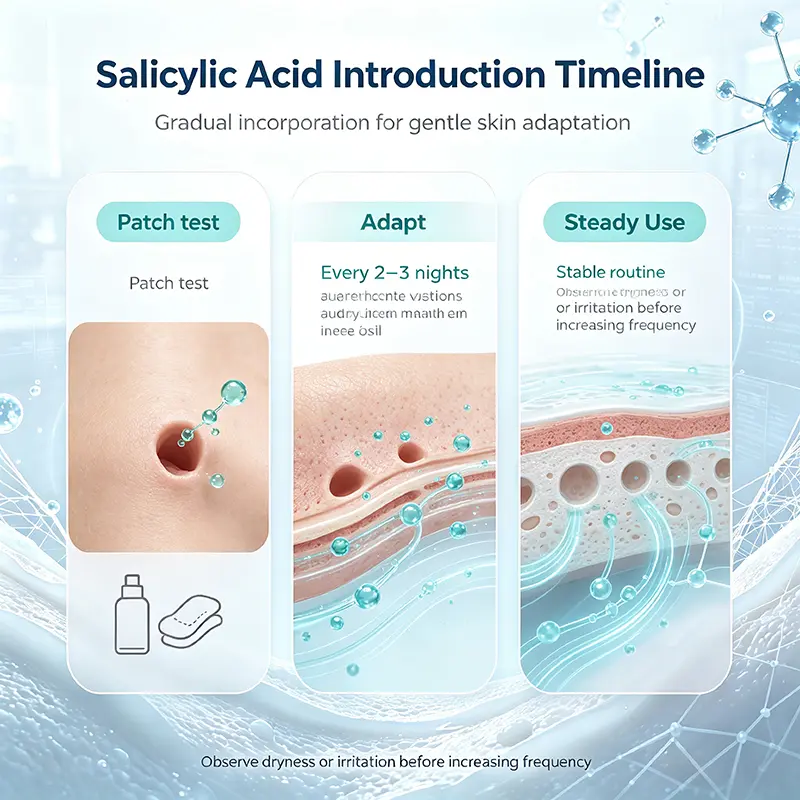
Introduce Gradually: Dr. Anna Chacon, a New York-based dermatologist, advises: "Don't start by using it every day. Begin with every other day—or even less frequently—to allow your skin to gradually adapt."
Start with a Low Concentration: Effective salicylic acid concentrations typically range from 0.5% to 2%. Start with a lower concentration product and work your way up.
Brands formulating salicylic acid products should also start gentle — our OEM team can help you dial in the right concentration and complementary soothing actives for your target market.
Stick to the Basics: Use a gentle cleanser, moisturize daily, and apply sunscreen rigorously—this is especially important during the purging phase, as active ingredients can increase photosensitivity.
Don't Pick or Squeeze: Dr. Paul Yamauchi specifically warns: "Avoid squeezing these breakouts, as doing so can lead to scarring."
When to See a Doctor: If purging persists beyond 6–8 weeks or you experience a severe reaction, consult a dermatologist.
4. Is Purging a Good Sign?
It's worth emphasizing: not everyone experiences purging when using salicylic acid. Some people tolerate it perfectly from the start, while others must go through this phase—individual differences are significant, and the reasons aren't fully understood.
The Paula's Choice research team offers an insightful explanation: "The breakouts you're seeing—without treatment, they would eventually appear on your face anyway, just over a longer timeframe. And those deep-seated blockages, if left unaddressed, might remain lodged in your pores, keeping them clogged, and could even evolve into more severe cystic acne."
In other words: although purging is uncomfortable, it's a sign in some cases that the product is effectively "clearing out" your pores.
For both brands and consumers, the real challenge may not be purging itself—but how to help consumers navigate this "trust-testing phase" —convincing them that the temporary "worse" is paving the way for lasting "better."
Want to learn more about the science behind active ingredients? Explore our curated selection of scientifically-validated, ingredient-transparent essentials—designed for those who truly care about their skin.
Related Products
- Acne Patch (Private Label) — hydrocolloid support while your skin adapts
- Tea Tree Anti-Acne Skincare Set — gentle oil-control essentials for breakout-prone skin
Want to launch a salicylic acid or acne-care line? We're a certified OEM/ODM manufacturer with 15+ years of biotech experience. Request a free quote