






Hydroxyapatite in Skincare: From Bone Repair to Anti-Aging "New Star"—How Much Potential Lies Hidden in Daily Skincare?
Signal 1: From Injectable Fillers to Skincare "Multi-Tasker"—The Cross-Over Logic of Hydroxyapatite
Hydroxyapatite is the main inorganic component of human bones and teeth. Because of this inherent biocompatibility, it has been safely used in regenerative medicine for decades.
In the aesthetics field, hydroxyapatite—represented by fillers like Radiesse®—has long been FDA-approved for facial and hand rejuvenation. A 2025 systematic review noted that hydroxyapatite fillers provide immediate volumizing effects through the physical support of microspheres while continuously stimulating collagen synthesis, creating a synergistic mechanism of "immediate filling and long-term regeneration."
But what's truly captured the industry's attention is another dimension: hydroxyapatite is moving from injectable medical devices into daily skincare formulations.
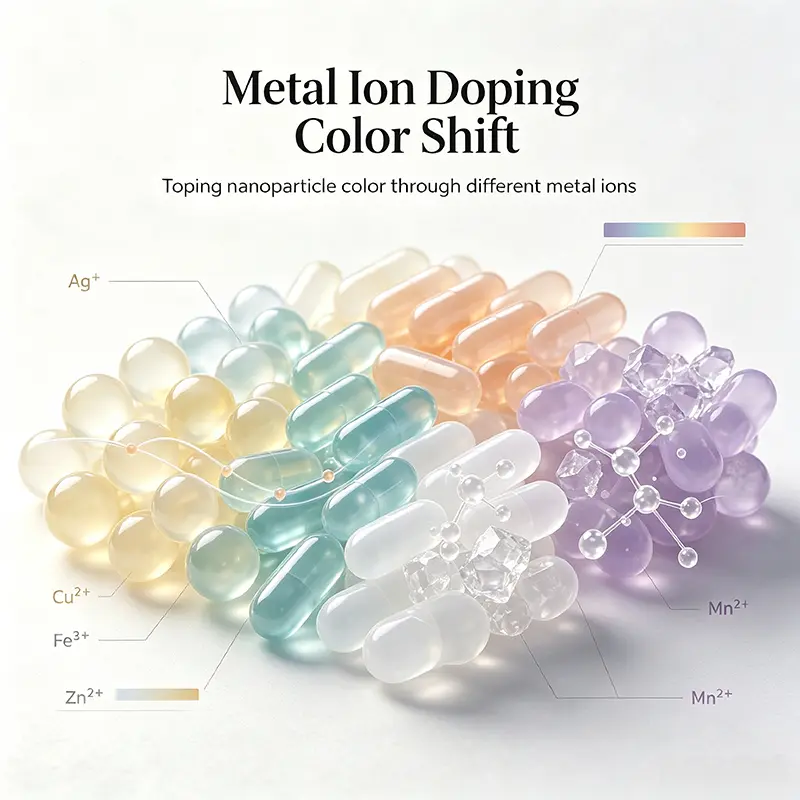
In February 2026, chemists at St. Petersburg State University developed hydroxyapatite-based nanoparticles that reportedly can simultaneously serve as a pigment, sunscreen, anti-aging ingredient, and stabilizer—replacing four ingredients at once. By doping metal ions into hydroxyapatite crystals, scientists can modulate different colors, enabling both pigment and UV protection functions in a single material.
The significance of this technology lies in the fact that in traditional cosmetics, pigments, UV filters, anti-aging actives, and emulsion stabilizers are four independent functional modules—each potentially carrying risks of irritation or allergy. Hydroxyapatite nanoparticles, because of their high compatibility with human tissue, "rarely cause adverse reactions." For manufacturers, this means fewer raw material purchases and lower formulation costs.
What does this mean? The cross-over of hydroxyapatite is essentially the convergence of "biocompatibility" and "multi-functionality"—a single ingredient that simultaneously delivers volumizing, collagen-stimulating, UV protection, pigmentation, and even stabilization benefits. In an era where "minimalist formulations" are becoming a consumer trend, this logic carries enormous commercial potential.
Signal 2: More Than Just a "Filler"—The Cellular Regeneration Mechanism of Hydroxyapatite
The anti-aging principle of hydroxyapatite goes far beyond mere "physical filling." Recent research is revealing deeper biological mechanisms.
A 2025 study published in Materials Today Bio found that hydroxyapatite microspheres encapsulated in hydrogels can promote fibroblast function by activating calcium signaling pathways and motor protein signaling pathways. Fibroblasts are the core cells that produce collagen and elastin—when activated, the skin's structural support system gains the potential for "self-repair."
The study also found that hydroxyapatite triggers a milder adaptive immune response compared to polymer microspheres like PMMA and PLLA, while more effectively promoting the formation of normal collagen fibers.
A 2026 double-blind clinical study published in the Journal of Cosmetic Dermatology further validated this mechanism. The study showed that hydroxyapatite—whether diluted with saline or a multinutrient solution—significantly improved hand skin aging grading, hydration, and dermal thickness within 90 days. In vitro data was even more striking: hydroxyapatite alone increased fibroblast proliferation to 132.5%, while dilution in a multinutrient solution reached 148.7%.
Additionally, a 2026 animal study published in Aesthetic Surgery Journal Open Forum compared hydroxyapatite with other regenerative injectables like PDRN and exosomes in an intact skin model, finding that combination therapy yielded the most significant results.
What does this mean? Hydroxyapatite doesn't simply create temporary fullness through "foreign filling"—it activates the skin's own repair system through biological signaling. For those seeking "natural, progressive" anti-aging effects, this is a compelling narrative.

Signal 3: Nano-ization and Delivery Systems—The "Last Mile" for Skincare Applications
If hydroxyapatite is already mature enough in the injection space, what's the key bottleneck preventing it from entering daily skincare? The answer is: penetration.
Conventional hydroxyapatite microspheres are relatively large in size, making it difficult for them to penetrate the skin's stratum corneum. "Nano-ization" and "delivery systems" are breaking this limitation.
A 2025 study published in Materials Chemistry and Physics successfully encapsulated nano-hydroxyapatite in liposomes for the first time. Liposomes are vesicular structures resembling cell membranes that can carry active ingredients across the skin barrier. The research team synthesized hydroxyapatite particles of 200–500 nanometers using the sol-gel method and then encapsulated them within liposomes, creating a formulation suitable for daily-use dermocosmetics.
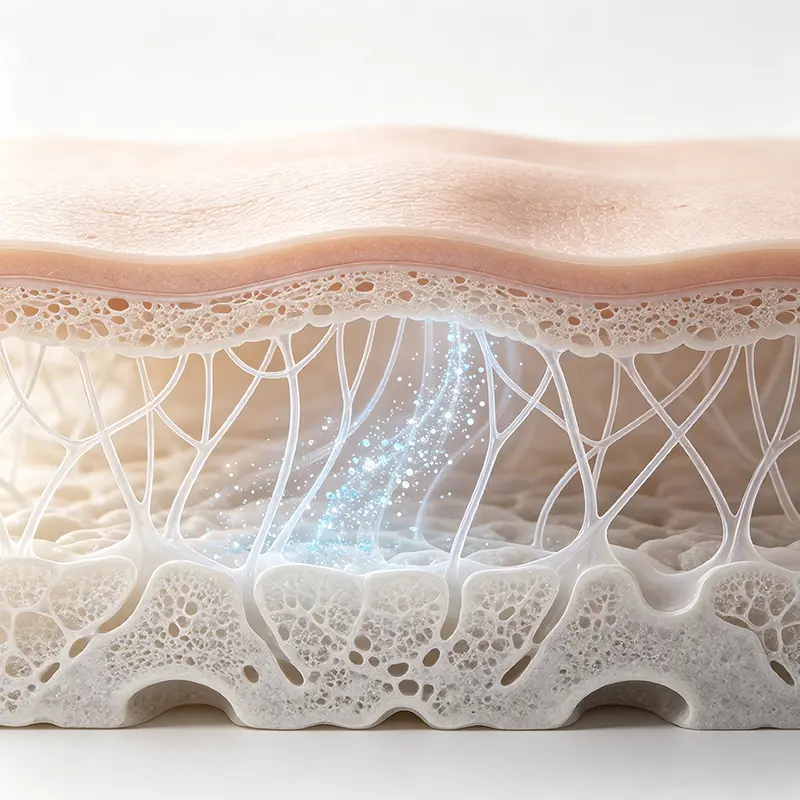
This means hydroxyapatite can be delivered to the deep layers of the skin through topical application—rather than injection—to stimulate collagen production. The researchers noted that this liposome/nano-hydroxyapatite complex "can be used nightly for skin rejuvenation."
Meanwhile, the hydroxyapatite nanoparticles developed by scientists at St. Petersburg State University measure between 3–100 nanometers—"much smaller" than particles used in existing aesthetic products, thus "can penetrate the skin more deeply and produce more pronounced effects." The research team also emphasized that their synthesis method is "easy to reproduce and scale," with raw materials fully accessible locally.
What does this mean? Nano-ization and liposomal encapsulation are shifting hydroxyapatite from "clinic-only" to "home-daily"—and once the barrier to entry lowers, the market size potential changes entirely.
Signal 4: Regulatory Green Light and Safety—Assessing the Nano Version
For any cross-over ingredient, regulatory attitude is a key variable determining the speed of commercialization.
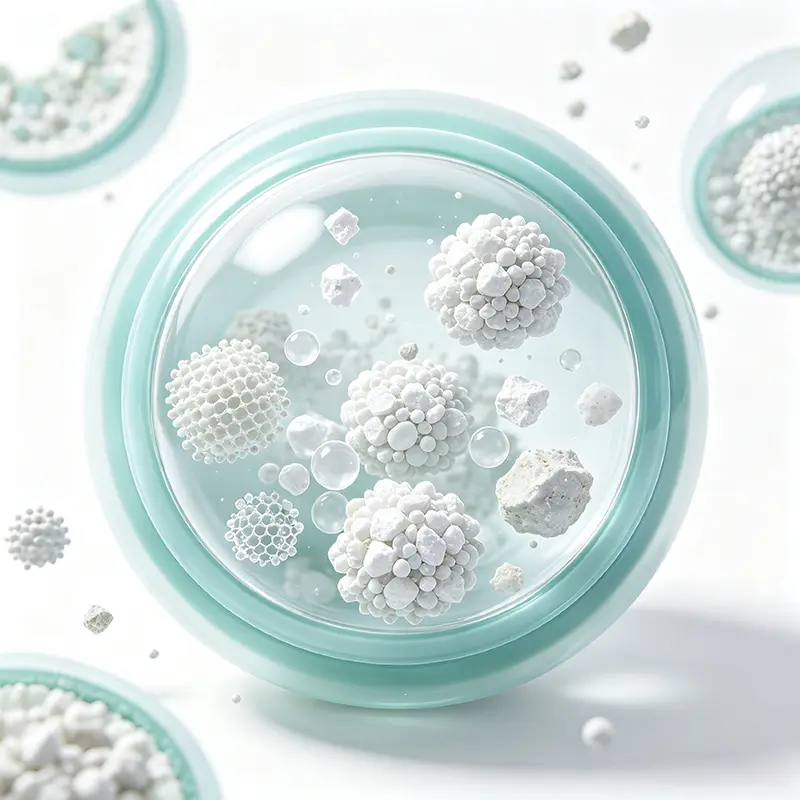
In April 2025, the EU's Scientific Committee on Consumer Safety (SCCS) issued a preliminary assessment opinion on hydroxyapatite (nano) , concluding that hydroxyapatite (nano) is safe for use in toothpastes at concentrations up to 29.5% and in mouthwashes up to 10%.
The SCCS noted that even when tested at high concentrations in oral mucosal cell models, hydroxyapatite (nano) does not exhibit mutagenic hazards, nor does it show cytotoxicity or inflammatory responses. The absorption of nanoparticles by the oral mucosa is "negligible," and any internalized particles are shed with epithelial cell turnover. Furthermore, nanoparticles that are unintentionally swallowed dissolve rapidly in gastric fluid, posing no nanoparticle-related safety concerns.
However, the safety assessment also specifies clear limitations: it applies only to rod-shaped particles (≥87% of particles) with an aspect ratio ≤3, that are uncoated and not surface-modified. This means not all "nano-hydroxyapatite" can automatically claim safety certification—morphology and surface properties are critical distinguishing variables.
In China, hydroxyapatite (nano) has been included in the "List of Used Cosmetic Ingredients" (2021 edition), with a maximum historical usage concentration of 6.5% in leave-on products.
What does this mean? Regulators have given hydroxyapatite (nano) a cautious green light, but with clear "strings attached"—morphology control and surface modification management will be key compliance considerations for brands.
Conclusion: The Evolutionary Path from "Bone" to "Skin"
The cross-over of hydroxyapatite is not a "new ingredient" story—it's a "new use for an old material" story. Its advantages are clear—high biocompatibility with human tissue, collagen-stimulating properties, and multi-functional potential. Its challenges are equally clear—penetration efficiency, nano-safety considerations, and the "cognitive leap" from aesthetic injectables to daily skincare.
BASF's AI-designed collagen, FerrinX's precision-fermented lactoferrin, and the nano-cross-over of hydroxyapatite—the 2026 ingredient innovation race is shifting from "discovering new molecules" to "uncovering new applications."
And when hydroxyapatite starts appearing on your serum's ingredient list, the question worth asking isn't "what is it," but "in what form, at what size, and by what delivery method is it being delivered to my skin?" —because it's these variables that determine whether it's true "scientific innovation" or just "concept marketing."
Want to learn more about the science behind cutting-edge skincare ingredients? Explore our curated selection of scientifically-validated, ingredient-transparent essentials—designed for those who truly care about what goes into their skincare.