


PDRN vs Collagen vs Hyaluronic Acid: Ingredient Comparison for Brands
Every season the same brief lands on a product developer's desk: PDRN vs collagen vs hyaluronic acid — pick the one that sells. That framing guarantees a bad decision, because the three actives are not competitors on a single axis. They occupy different molecular weight bands, they sit on different sides of the cosmetic-drug line, and they carry completely different cost structures and supply risks. A serum built around one of them will behave nothing like a hydrogel mask built around another, even when the marketing copy is identical.
This guide is written for the brand owner who has to sign the purchase order, not for the consumer choosing a bottle. It compares the three actives on the six variables that actually decide a launch: mechanism and molecular weight, claim boundary, cost structure, format fit, registration path, and supply terms. By the end you will have a scoring matrix you can run before you pay for a single sample, and a shortlist of questions to put to any OEM that quotes you.
PDRN vs Collagen vs Hyaluronic Acid: Six Decision Variables, Not Three Winners
A comparison that ranks the three actives by "efficacy" is unusable, because efficacy has no meaning until you fix three things: the delivery route, the dose, and the claim you intend to print. Change any one of them and the ranking flips.
So the honest version of the comparison is a six-variable screen. Run it before the ingredient debate, not after:
- Mechanism and molecular weight. Where the material acts, and whether it can reach that layer from a topical format at all. - Claim boundary. What sentence you will be legally allowed to put on the pack, in the markets you intend to sell in. This is the variable that most often kills an otherwise attractive formula. - Cost structure. Not the headline price per kilogram of active, but the full bill of materials and the minimum order quantities attached to each component. - Format fit. Whether the active survives, and still performs, in the format you plan to sell — serum, sheet mask, hydrogel, or cream. - Registration path. What has to be filed, by whom, and where, before the product can be lawfully sold. - Supply terms. Minimum order quantity, sample policy, lead time, and who owns the formula.
Two of these are effectively irreversible once the project is funded. Claim boundary decides what the product can be sold as, and format fit decides whether the active is even present in a meaningful way at the point of use. The other four can be renegotiated later.
Screen the two irreversible variables first — claim boundary and format fit cannot be repaired once the tooling is paid for.
What Each Ingredient Actually Does: Mechanism and Molecular Weight
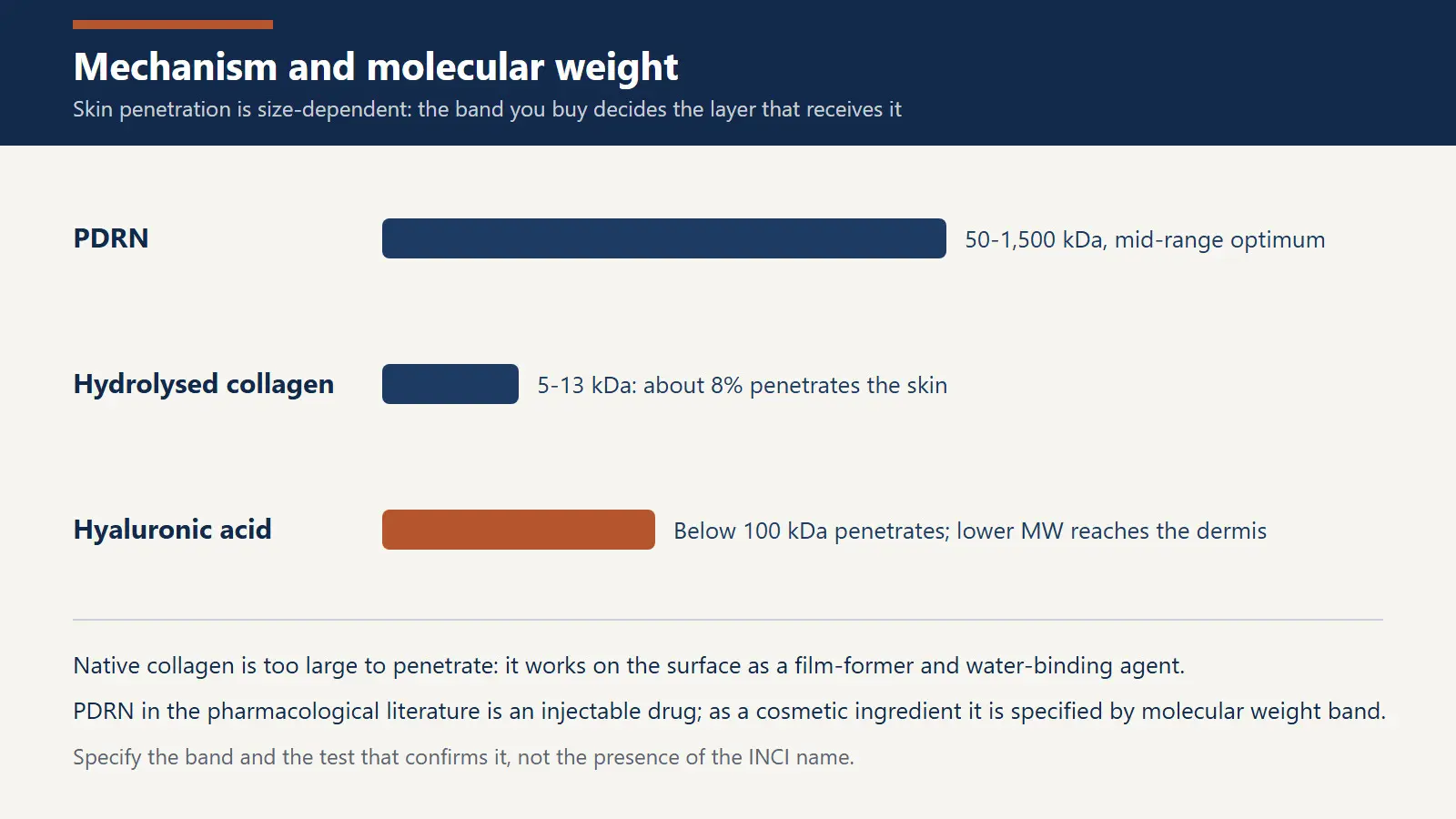
Molecular weight is the variable that separates a marketing ingredient from a functional one, because skin penetration is size-dependent. The three actives sit in very different bands.
PDRN (polydeoxyribonucleotide). In the pharmacological literature PDRN is described as a registered injectable drug whose activity runs through adenosine receptor signalling, with a molecular weight range of roughly 50 to 1,500 kDa, a main distribution of 80–200 kDa and a peak near 132 kDa, purity above 95%, and around 50% double-stranded content (Squadrito et al., Frontiers in Pharmacology 2017;8:224). Notably, the same literature and subsequent reviews converge on a band rather than a maximum: mid-range molecular weight PDRN (50–1,500 kDa) outperformed both lower and higher molecular weight material in wound-healing models, where it promoted faster collagen deposition (narrative reviews in Journal of Cosmetic and Aesthetic Science and Cureus, 2026). That is a useful warning against the instinct to buy "the smallest fraction available".
Collagen. Native collagen is far too large to penetrate skin; it works on the surface as a film-former and water-binding agent, which is why it earns its place in masks and creams as a texturising and moisture-retention system rather than as a delivery system. Hydrolysed collagen is the interesting case: one review reports that approximately 8.0% of hydrolysed collagen with a molecular weight between 5 and 13 kDa could penetrate the skin, and that these fractions also promoted cell proliferation (Collagen Hydrolysates for Skin Protection, PMC7070905). Read that number carefully — it means the great majority of the material stays on the surface. For a buyer, that is not a defect; a mask that hydrates and films well is a legitimate product. It only becomes a problem when the label implies the collagen is being "delivered into" the skin.
Hyaluronic acid. HA is the best-characterised of the three, and its behaviour is almost entirely governed by molecular weight. A 2026 review of topical HA forms found that HA below 100 kDa penetrates skin, with the lower molecular weights able to reach the dermis, while high molecular weight HA stays on the surface (Hyaluronic Acid in Topical Applications, PMC12731180). This is why a well-built HA product is usually a blend: a high-molecular-weight fraction for immediate surface hydration and feel, and a low-molecular-weight fraction for the deeper story.
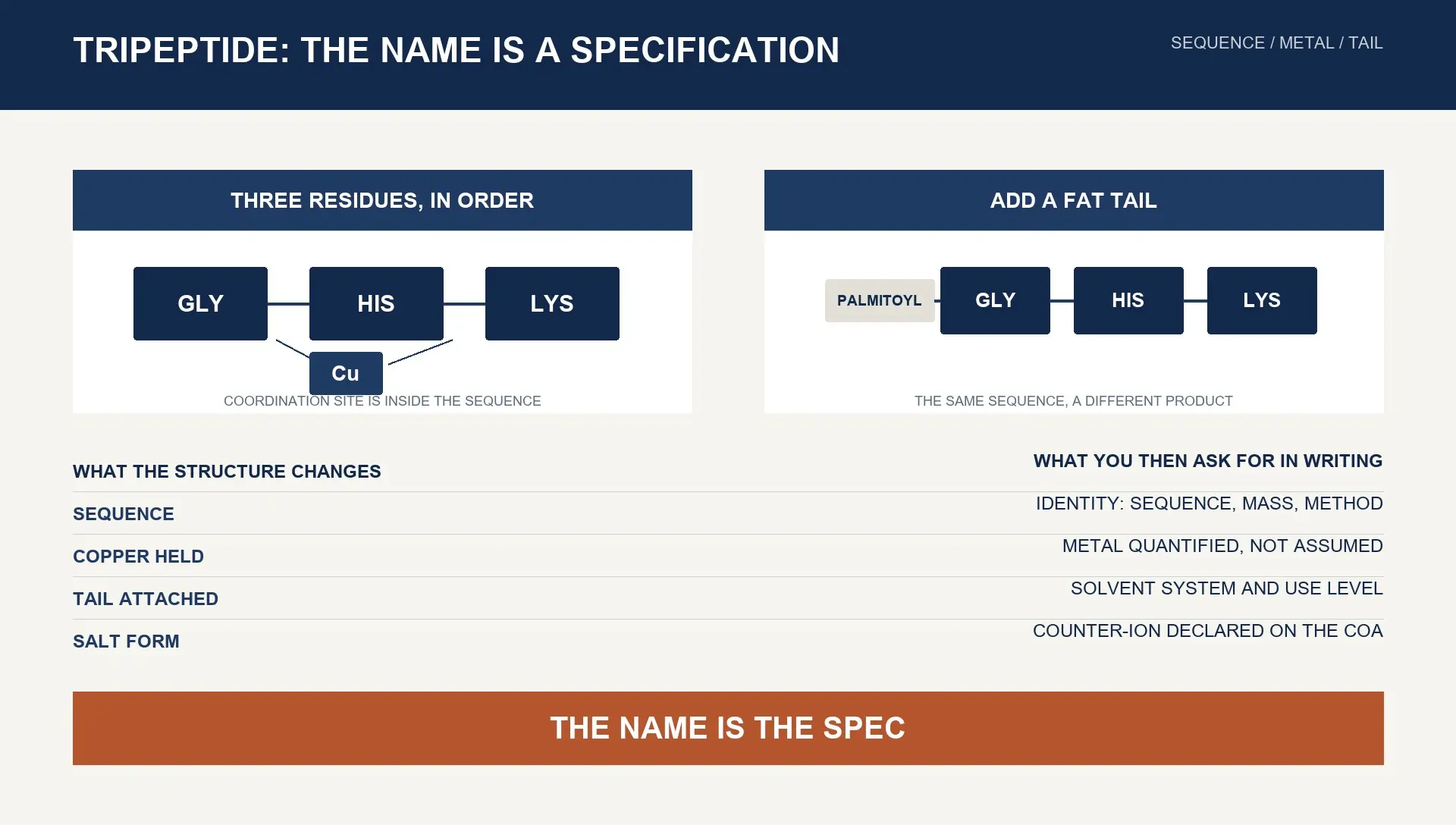
The practical consequence for a buying brief is a single sentence: stop specifying "contains X" and start specifying the molecular weight band, the use level, and the test that proves the band. A supplier who cannot answer the second question will not be able to answer the third.
The Claim Boundary Is What Really Picks the Ingredient
This is the variable that quietly eliminates more ingredient choices than any lab result, and it has nothing to do with chemistry.
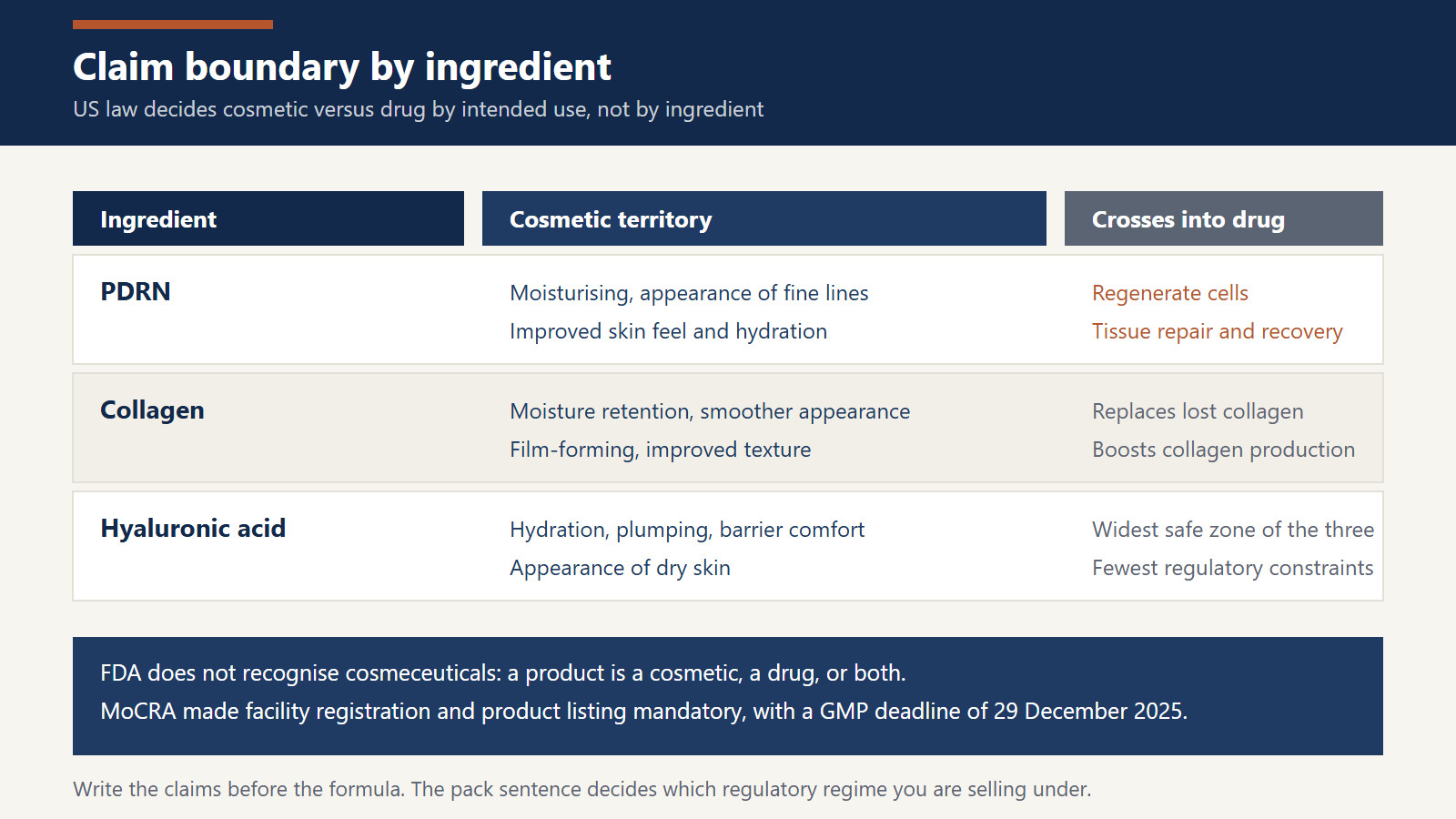
Under United States law, whether a product is a cosmetic or a drug is determined by its intended use, not by its ingredients. FDA states that intended use may be established by "claims stated on the product labeling, in advertising, on the Internet, or in other promotional materials", and gives explicit examples of claims that push a cosmetic across the line into drug territory: claims that a product will restore hair growth, reduce cellulite, regenerate cells, or increase or decrease melanin production in the skin. FDA also states plainly that the FD&C Act "does not recognize any such category as cosmeceuticals" — a product is a drug, a cosmetic, or both, and nothing else (FDA, Is It a Cosmetic, a Drug, or Both?).
Read that list again with the three actives in mind, because it reorders them:
- PDRN sits closest to the line. The entire commercial narrative around it is regeneration, repair and recovery — vocabulary that FDA names directly ("regenerate cells"). A cosmetic containing PDRN can be sold lawfully, but the moment the pack copy starts describing tissue regeneration or cell-level repair, the product is being positioned as a drug. The ingredient is not the problem; the sentence is. - Collagen sits in the middle. Moisturising, film-forming, improving the appearance of fine lines: these are cosmetic claims. "Replaces lost collagen" or "boosts collagen production in the skin" edges into structure-or-function territory and should be treated with the same caution as PDRN. - Hyaluronic acid has the widest safe zone. Hydration, plumping, improving the appearance of dry skin, and barrier-related comfort language all sit comfortably in cosmetic territory, which is a large part of why HA remains the default hero ingredient for brands that want to make claims without legal exposure.
Two operational consequences follow. First, write the claims before you write the formula, and have someone with regulatory authority sign them off — retrofitting claims after the formula is locked is expensive. Second, treat the claim boundary as a specification item on the brief you send to your OEM, not as a marketing task that happens later. In the United States this matters operationally as well: MoCRA made cosmetic product facility registration and product listing mandatory (with certain small-business exemptions), and requires FDA to establish cosmetic GMP requirements, with a statutory deadline of 29 December 2025. A supplier that has not resolved its own registration and GMP posture cannot carry yours.
Write the claims before the formula — the sentence on the pack decides whether you are selling a cosmetic or an unapproved drug.
Adjacent Actives Competing for the Same Slot: PDRN vs Retinol
In practice the ingredient that displaces your chosen active is usually not one of the other two. PDRN vs exosomes is the comparison buyers raise most often this season, but the framing hides two very different problems: one is a materially standardised active with a defined risk profile, and the other is a commercial label that covers several different materials. Retinol competes for the same shelf position on a third axis — formulation complexity.
The retinol trade. Retinol has the strongest consumer recognition of any anti-ageing active and a claim vocabulary that is already familiar to buyers, which shortens the education job. The price is operational: retinol requires irritation management (a titration or buffering strategy, and a clear usage instruction), it is oxidation-sensitive so it constrains packaging and shelf-life testing, and it carries market-specific concentration restrictions in some jurisdictions. If your brand has no existing retinol SKU, you are buying a formulation and stability programme, not just an ingredient.
The exosome specification problem. "Exosome" is a commercial label rather than a single standardised ingredient. Materials sold under it differ in origin, in whether they are vesicles or conditioned-media derivatives or liposomal reconstructions, and in what the certificate of analysis actually measures. That makes cross-supplier comparison genuinely difficult and makes claim substantiation harder, because you cannot write one substantiation file that holds across two suppliers' material. The ingredient is not automatically a bad choice — but it demands a specification-first approach in which you define what you are buying in analytical terms before you accept a sample.
For buyers, the useful framing is that these two are risk instruments, not efficacy instruments:
| Adjacent active | What it wins you | What it costs you | Where it makes sense |
|---|---|---|---|
| Retinol | Consumer recognition, familiar claim language | Stability programme, irritation management, packaging constraints, market-specific concentration limits | Brands that already sell anti-ageing and can absorb formulation complexity |
| Exosome-type materials | Novelty and a premium price story | Non-standard specification, hard cross-supplier comparison, higher claim substantiation burden | Buyers with an analytical spec already written and a supplier willing to test against it |
If you want a like-for-like read on how these sit beside the three actives in a full ingredient comparison, including sourcing notes, our longer 2026 efficacy skincare guide comparing PDRN, peptides, retinol and hyaluronic acid walks through the wider active landscape; the present guide deliberately stays on the three-actives decision.
PDRN vs Hyaluronic Acid: Volume Versus Narrative
PDRN vs hyaluronic acid is the pairing that most often gets mis-specified, because the two are compared on price when they should be compared on role.
Hyaluronic acid is a volume ingredient. The supply base is deep and competitive, the material is well characterised, the claim space is wide, and consumers already understand what it does. That combination means HA can carry a product on its own without any supporting narrative, and it can also work as the base system underneath another hero active. Its weakness is precisely its strength: it is so widely used that it differentiates nothing.
PDRN is a narrative ingredient. It brings a differentiated story, a premium price justification and a clinical vocabulary that no humectant can match. It also brings the narrowest claim boundary of the three, the highest sensitivity to molecular weight specification, and an ingredient cost that becomes visible in the unit economics of a single-use product.
The practical conclusion is rarely "pick one". It is to assign roles explicitly in the brief:
| Role in the SKU | Best fit | Why |
|---|---|---|
| Moisture base and safety net for claims | Hyaluronic acid blend | Cheap, stable, wide claim space, no regulatory friction |
| Hero active and price justification | PDRN at a specified molecular weight band | Differentiated story, defensible specification, premium positioning |
| Sensory and film-forming system | Hydrolysed collagen | Texturising, water-binding, improves feel and moisture retention |
| Anti-ageing anchor with consumer recognition | Retinol | Familiar claim language, but requires a stability and irritation programme |
Naming both a base active and a hero active forces a discipline that a single-ingredient brief never does: you have to state the use level of each, and therefore you have to know the cost of each. That single habit removes most of the ambiguity in OEM quoting.
PDRN buys the story and hyaluronic acid buys the volume — assign them separate roles instead of treating them as substitutes.
Format Fit: Serum, Sheet Mask, Hydrogel or Cream
Format is not a packaging decision. It is the constraint that decides whether your active does anything at all, and how much it costs to make it do that thing.
Water-based systems (serum, hydrogel, mask essence). These are the natural home for HA, which is compatible across the entire water-soluble space, and for PDRN, which is water-soluble and therefore easy to incorporate but sensitive to heat, pH extremes and preservative choice. A cold-process or low-thermal-load manufacturing route is usually the practical requirement for a PDRN-containing system, and it is worth confirming that your supplier's process can accommodate it before you commit to a use level.
Sheet masks. In a sheet mask the active is dosed into a fixed essence fill weight, which makes the arithmetic brutally simple: your active cost per unit is the fill weight multiplied by the use level. A mask is therefore a demanding format for expensive actives and an excellent format for inexpensive ones. It is also the format where hydrolysed collagen earns its keep, because film-forming and water-binding behaviour is exactly what a mask needs, and where an HA blend delivers immediate sensory results. Note that sheet masks are also the format in which the essence is largely in contact with the skin for a limited window, so the specification that matters most is the molecular weight band, not the total percentage.
Creams and lotions. The native territory for hydrolysed collagen and HA, both of which contribute texture, water-binding and film formation. PDRN can be formulated here, but the repair narrative is less naturally carried by an occlusive-rich cream, and more of the active's value proposition is spent on sensory compromise. If PDRN is your hero, a serum or hydrogel usually communicates it more cheaply.
| Format | Hyaluronic acid | Hydrolysed collagen | PDRN | Buyer note |
|---|---|---|---|---|
| Serum | Excellent | Workable, watch tack | Excellent, cold process preferred | Cheapest way to carry an expensive hero active |
| Hydrogel mask | Excellent | Good | Excellent | Best alignment of format and PDRN story |
| Sheet mask | Excellent | Excellent | Cost-sensitive | Active cost scales directly with fill weight |
| Cream or lotion | Excellent | Excellent | Workable | Best sensory vehicle for collagen and HA |
| Body or hand format | Excellent | Excellent | Rarely used | Underserved category, lower competitive noise |
That last row deserves a flag. Body and hand formats absorb the same actives, tolerate simpler specifications, and face far less competitive noise than the face-mask shelf. If you are sourcing to differentiate rather than to follow, they are the least crowded place to apply everything in this guide — for a format-native read on the mask side specifically, our guide to sheet masks from China for global buyers covers substrate, essence and fill-weight decisions in more detail.
The Cost Structure You Are Actually Negotiating
Most ingredient negotiations start in the wrong unit. Suppliers quote a price per kilogram; brands sign off on it; and then the project is surprised by what the actives actually cost per finished unit. Convert everything to per-unit cost before the first meeting.
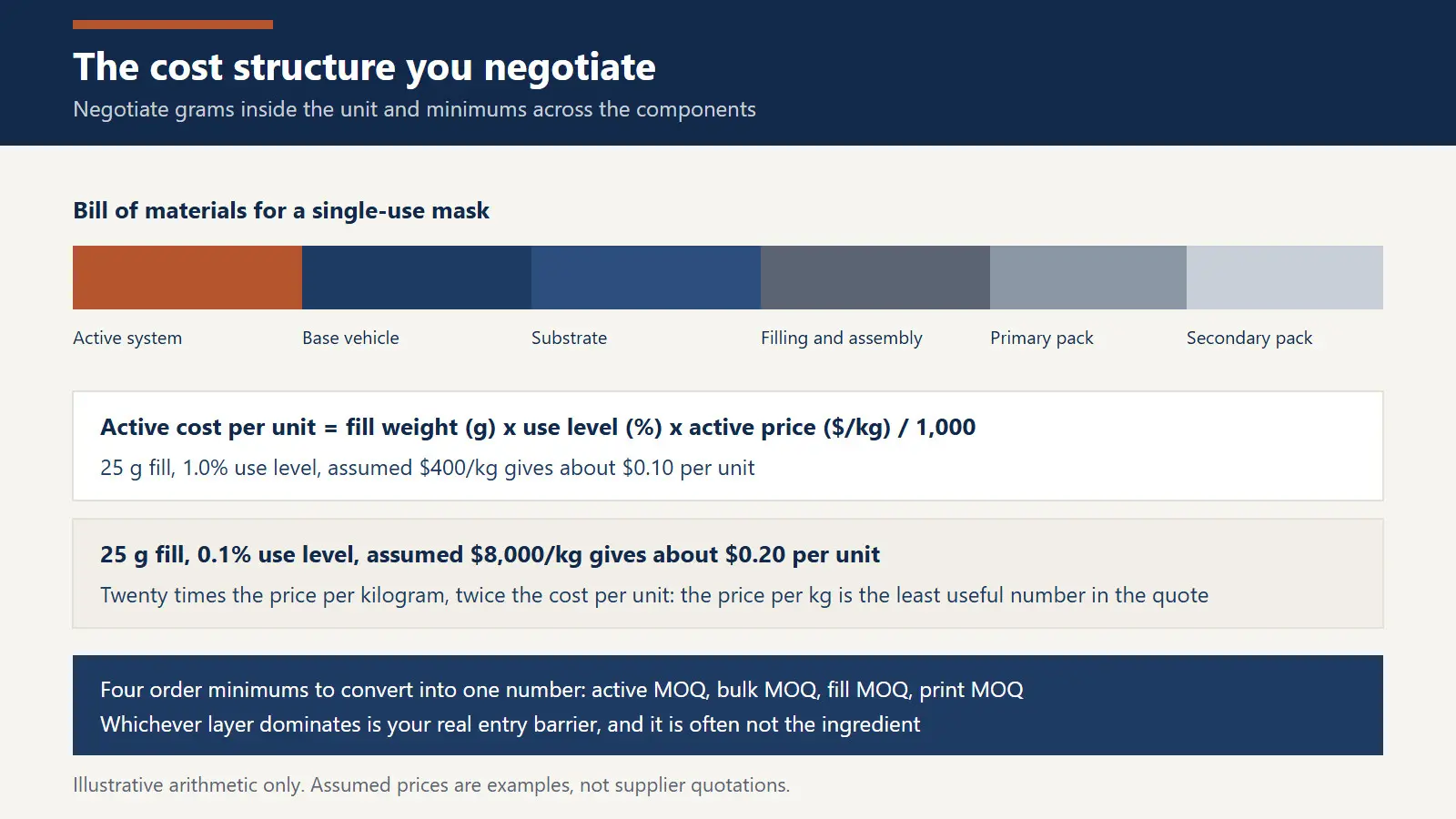
The arithmetic is not complicated. Your active cost per unit is:
active cost per unit = fill weight (g) × use level (as a decimal) × active price ($/kg) ÷ 1,000
Two illustrative calculations show why the headline price misleads. A 25 g essence with an active at 1.0% use level and an assumed $400/kg works out to $0.10 per unit. The same 25 g essence carrying a premium active at 0.1% use level and an assumed $8,000/kg works out to $0.20 per unit — the ingredient is twenty times more expensive per kilogram and only twice as expensive per unit. (These are arithmetic illustrations, not quoted supplier prices.) The variable that moves your COGS is the product of use level and fill weight, not the price on the specification sheet.
That insight changes the negotiation in a specific way: argue about grams in the unit, not dollars on the invoice. If a use level can be justified at 0.1% instead of 1.0%, you have removed cost that no volume discount will recover.
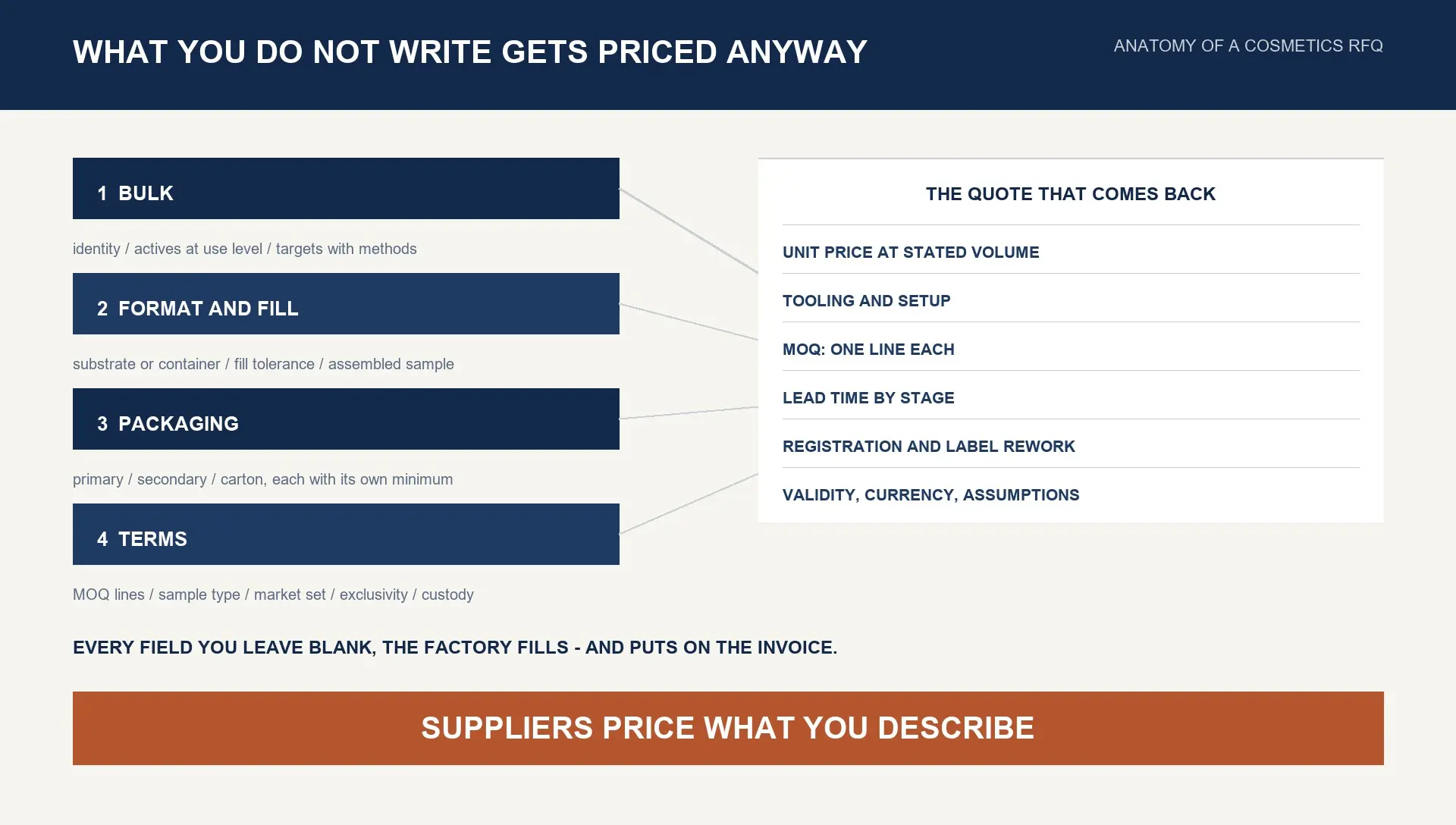
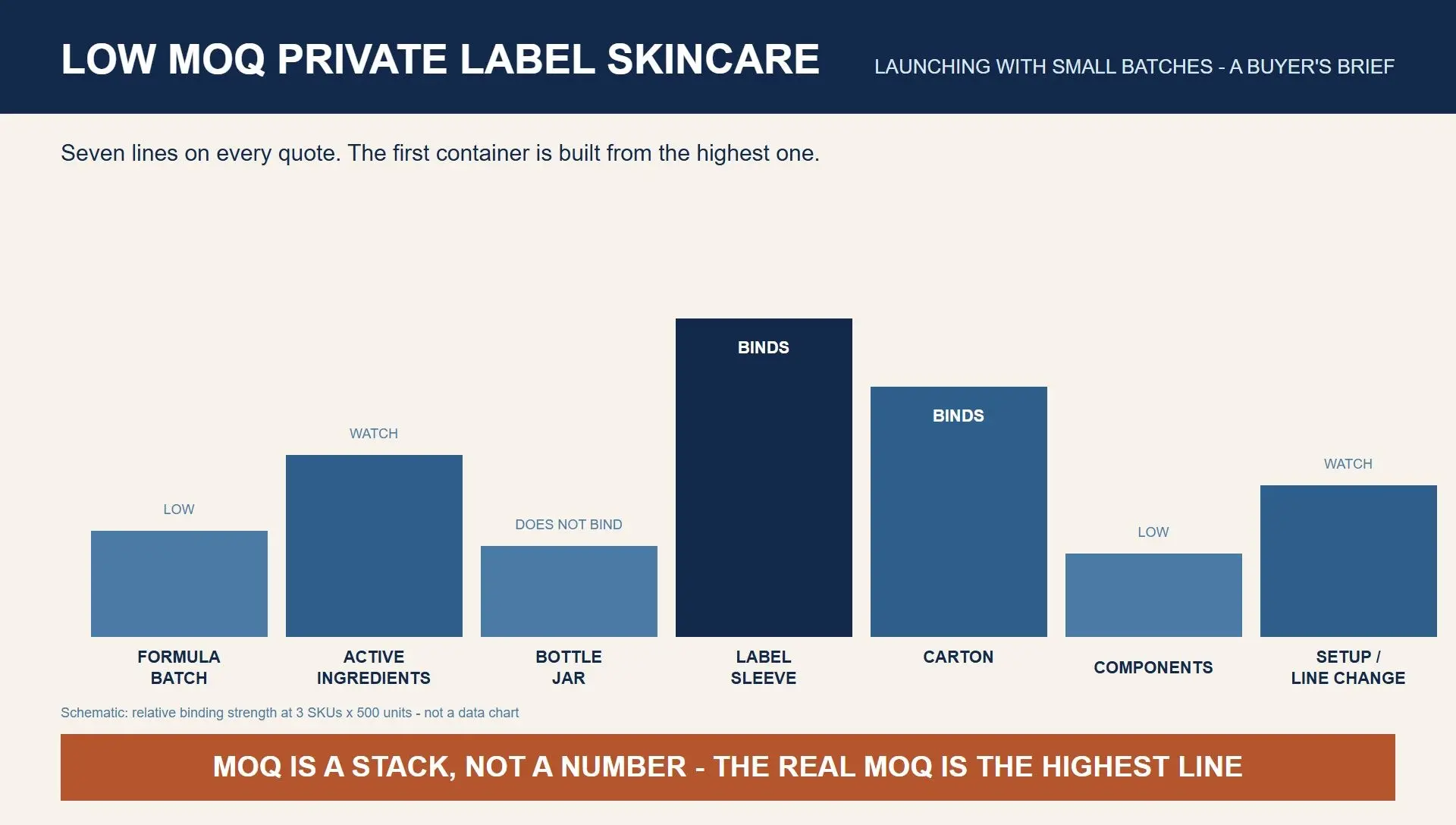
The second thing to convert is the order-quantity stack. A skincare project usually has four separate minimums, set by four different parties:
- Active MOQ — the smallest lot the ingredient supplier will ship, often expressed in kilograms - Bulk MOQ — the smallest batch your manufacturer's mixing equipment will run efficiently - Fill MOQ — the minimum number of units a filling line will set up for - Print MOQ — the minimum run for a printed pouch, sachet or carton, which is frequently set by the printing supplier rather than the cosmetics factory
Ask your supplier to express all four as one number: the minimum order in finished units. Whichever layer dominates is the real entry barrier for your project, and it is often not the ingredient. Then break the bill of materials into the six buckets you are actually paying for — active system, essence or base vehicle, substrate where relevant, filling and assembly, primary packaging, and secondary packaging — and ask for each bucket separately. A single lump-sum quote cannot be optimised; a bucketed quote can.
Four commercial terms belong in the same email as the price, because they decide whether the price is real: sample policy (cost, turnaround, and whether the sample fee is credited against the order), lead time split into bulk and finished goods, Incoterms, and formula ownership. If you are launching small, the order-quantity stack is the constraint that matters most, and there is a dedicated route for that: our guide to low-MOQ skincare OEM solutions for global buyers covers how small-batch entry changes which components you specify.
Negotiate grams inside the unit and minimums across the components — the price per kilogram is the least useful number in the quote.
Reading Demand Data Without Fooling Yourself
Demand data is where ingredient decisions most often get built on a misread. Three disciplines keep this section honest.
First, the instrument. The market figures used in this article are Amazon marketplace weekly search volumes, captured for the window 23 August to 5 September 2026. They are not Google figures, they are not Google Keyword Planner figures, and the two cannot be treated as interchangeable: Amazon search reflects purchase intent inside one retail platform, while Google reflects broader query behaviour across the whole web. Do not quote one as the other, and do not blend them.
Second, the direction of travel. With that caveat stated, the numbers are informative about relative size and momentum:
| Search term | Amazon weekly volume | 4-week change | Reading |
|---|---|---|---|
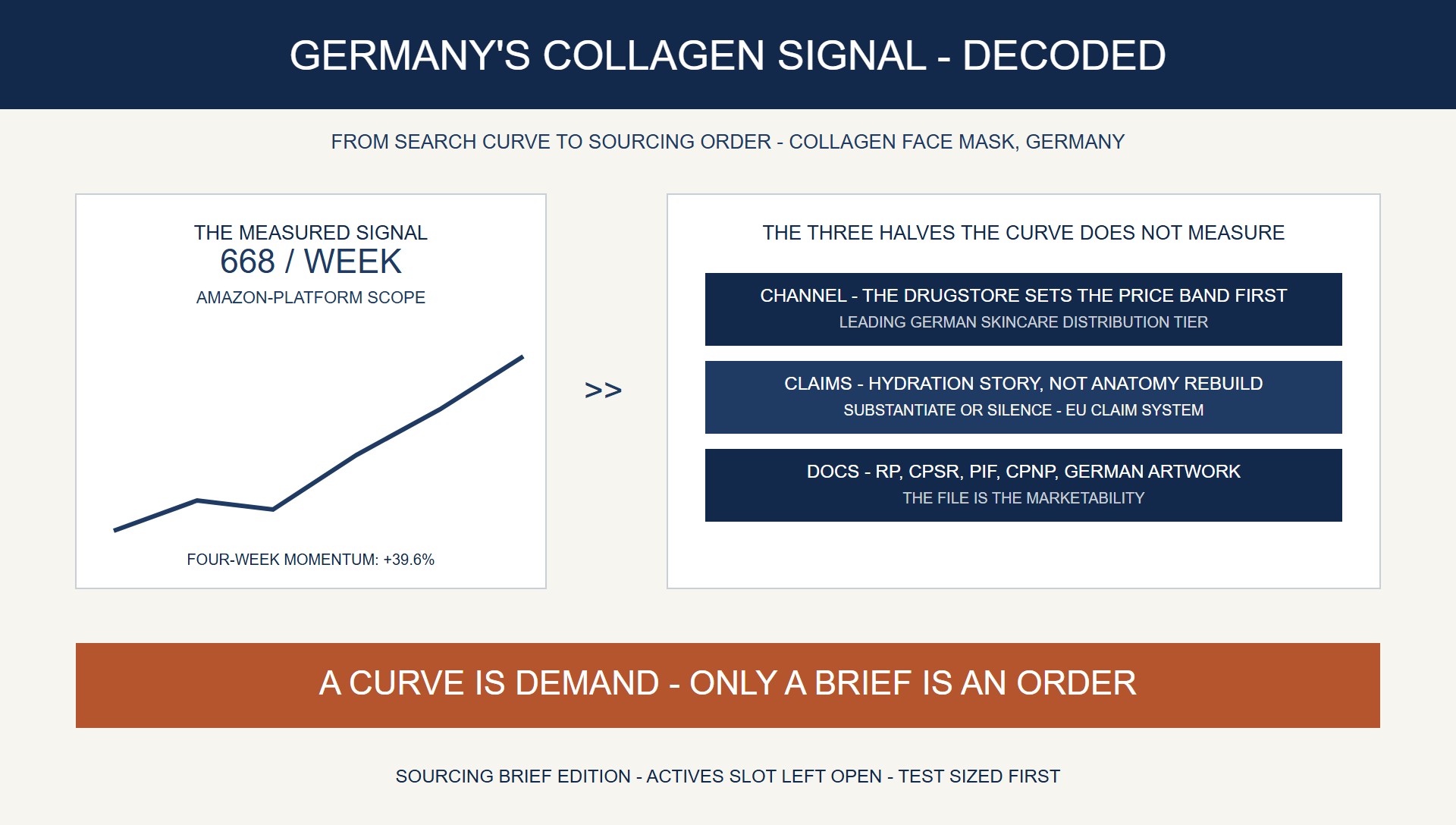
| collagen face mask | 19,066 | +1.6% | Large and essentially flat |
| hand mask | 6,192 | +16.9% | Mid-sized and strengthening |
| pdrn mask | 2,006 | −18.9% | Smaller and weakening over four weeks |
| hydrogel face mask | 210 | −19.7% | Low base, recovering from a low point |
| salmon dna mask | 134 | −27.1% | Declining |
The honest conclusion is uncomfortable for anyone who has already decided what to sell. Collagen demand is the volume base; PDRN demand is the differentiation play and it is volatile. A four-week decline of 18.9% on pdrn mask does not mean the ingredient is finished — single-platform four-week windows are noisy, and a launch can change them. It does mean you cannot write "PDRN demand is exploding" in an internal business case and expect it to survive scrutiny. Build the PDRN case on margin and differentiation, and build the volume case on collagen and HA.
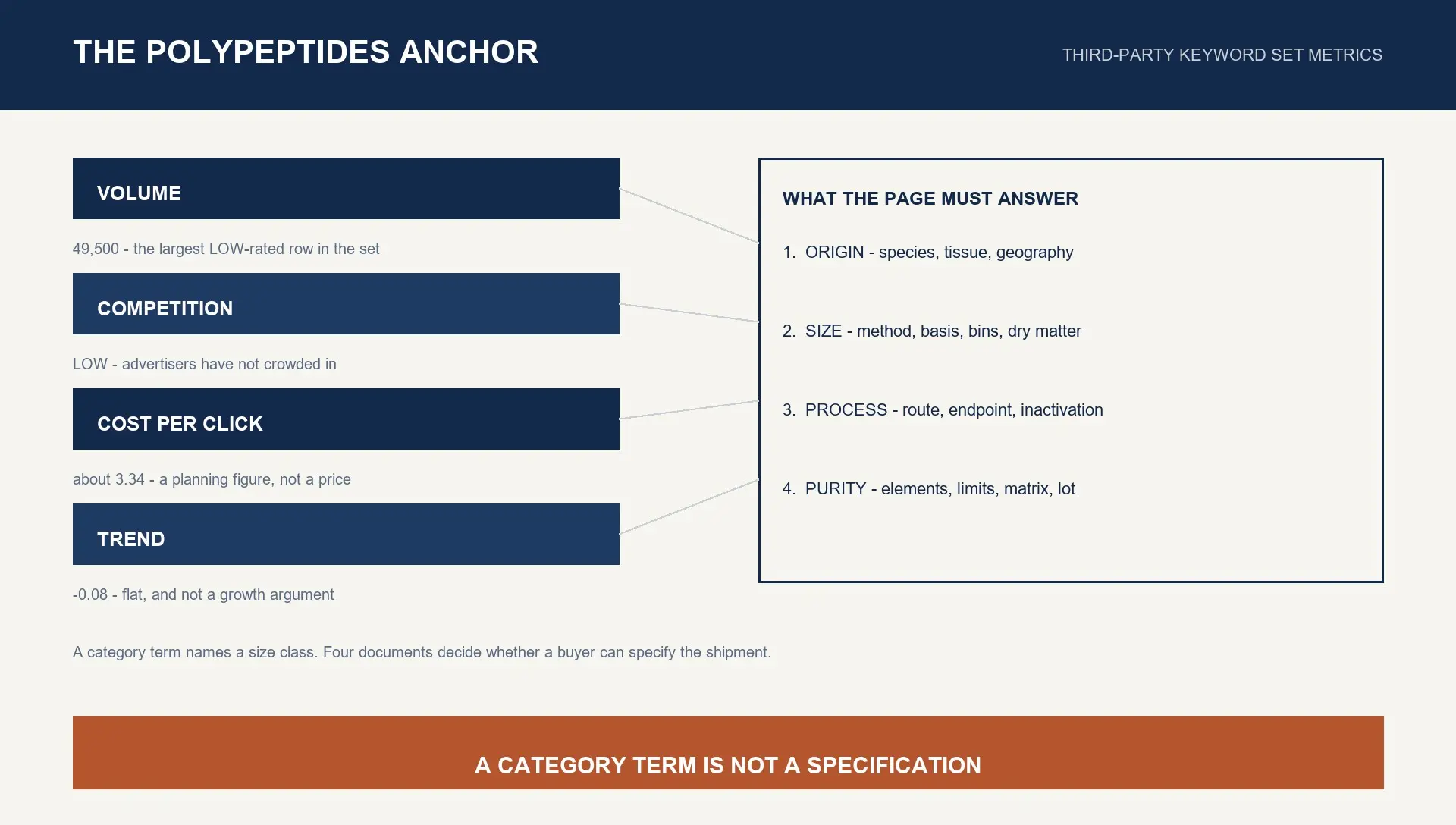
Third, the keyword instrument. Where keyword difficulty or volume figures appear in this guide, they come from the free tier of a commercial keyword tool, in the United States database, captured 17 September 2026. They are indicative and unaudited, and many long-tail phrases in this category carry no published metric at all. A blank metric means the data source has no coverage for that phrase — it does not mean zero search volume. Treating absence of data as evidence of no demand is the most common error in ingredient business cases.
The defensible position is collagen for volume, hyaluronic acid for claim safety, PDRN for margin — each with its own metric and its own risk statement.
Regulatory Path and Registration Before You Commit
Registration is usually treated as a shipment-stage task. In practice it is a formulation-stage constraint, because the market you intend to sell in decides which ingredients you can describe how.
United States. Under MoCRA, cosmetic product facility registration and cosmetic product listing are mandatory, subject to certain small-business exemptions, and FDA was required to establish cosmetic GMP requirements with a statutory deadline of 29 December 2025 (FDA, Is It a Cosmetic, a Drug, or Both?). The practical consequence for a buyer is that your supplier's registration and GMP posture is now a checkable item rather than a relationship-based assumption. Ask for it as documentation, not as reassurance.
European Union and other markets. The equivalent gate is notification or registration with the competent authority before the product is placed on the market, together with a responsible economic operator established in the market and a compliant product information file. Requirements differ by jurisdiction and change, so the operative instruction is to have your regulatory advisor confirm the current path for each market you intend to enter, rather than to reuse a checklist from a previous launch.
The ingredient-specific trap. PDRN illustrates a subtlety that matters commercially. In the pharmacological literature PDRN is characterised as a registered injectable drug, and that identity travels with the ingredient's origin story into consumer-facing marketing. But as an ingredient in a leave-on cosmetic, PDRN is simply a cosmetic ingredient — and the injectable's drug status does not license drug-style claims on a cosmetic label. The same distinction applies in the opposite direction for collagen and HA: their benign regulatory status as cosmetic ingredients does not mean any claim written about them is automatically acceptable.
The documents worth requesting before you commit to a formula, rather than after, are: the INCI and CAS confirmation, the specification sheet including molecular weight band or distribution, a stability or compatibility statement, safety assessment documentation, the manufacturer's GMP certificate, and a statement of which market registrations the manufacturer already holds. If a supplier cannot produce the first two, the remaining four are unlikely to survive audit.
A Scoring Matrix for Your Next SKU
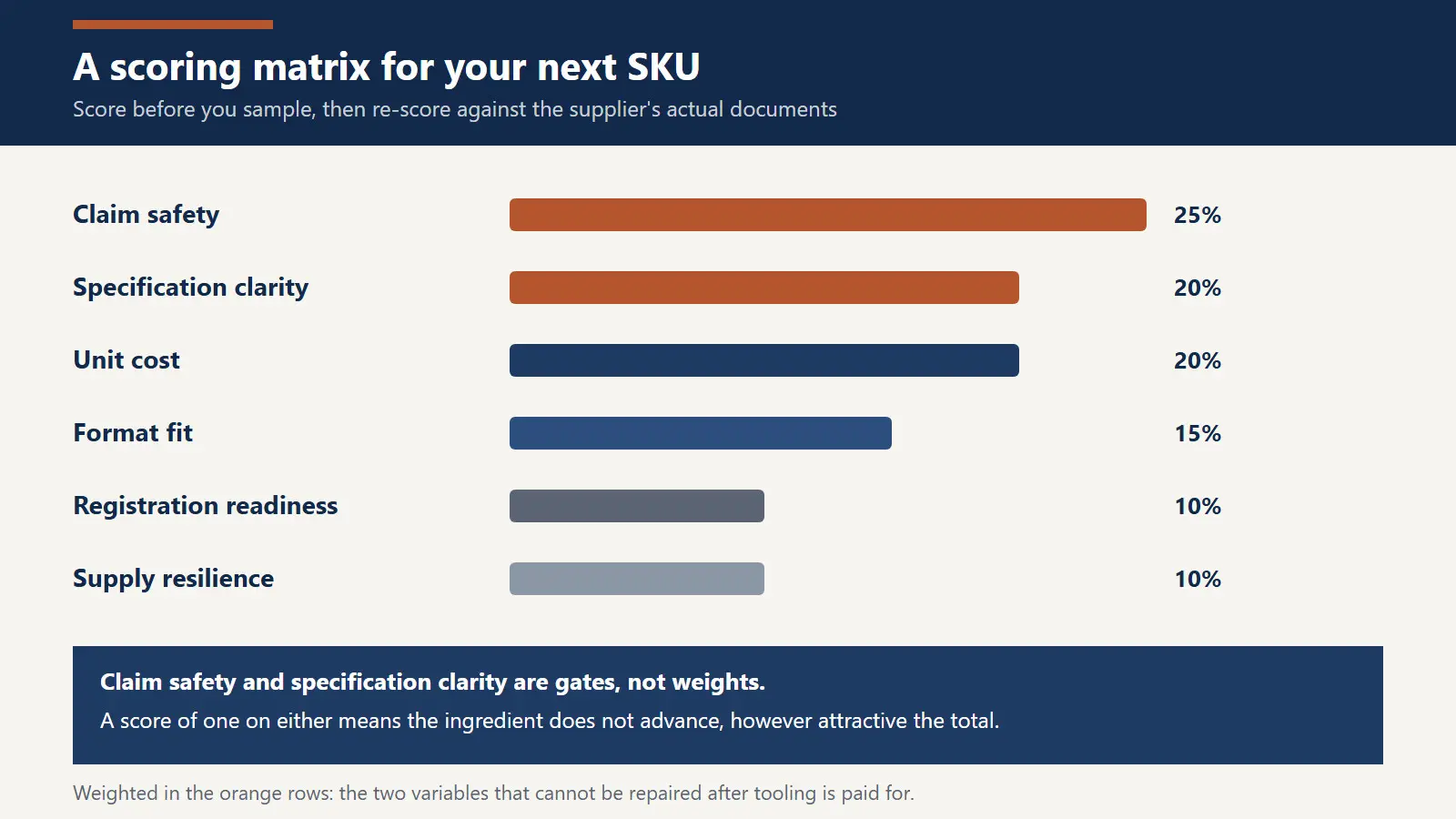
Turn the six variables into a score before you turn them into a formula. The point of scoring is not precision; it is forcing the weak variable into the conversation while it can still be fixed.
| Decision variable | Weight | A score of 1 looks like | A score of 5 looks like |
|---|---|---|---|
| Claim safety | 25% | Intended hero claim risks crossing into drug territory in a target market | Every intended claim sits inside the cosmetic definition in all target markets |
| Specification clarity | 20% | Supplier cannot state a molecular weight band or test method | Certificate of analysis states the band and the method used to confirm it |
| Unit cost | 20% | Active cost per unit leaves no room for margin at planned fill weight | Active cost per unit is a minor line in the bill of materials |
| Format fit | 15% | Active is degraded or uneconomic in the chosen format | Chosen format amplifies how the active actually works |
| Registration readiness | 10% | No documentation, no verifiable GMP status | Dossier and GMP documentation available on request before sampling |
| Supply resilience | 10% | Single supplier, opaque order minimums, unstated lead time | Multiple qualified suppliers, stated MOQ stack and lead times |
Two rules make the matrix useful rather than decorative. First, treat claim safety and specification clarity as gates, not weights — a score of 1 on either means the ingredient does not advance, however attractive the total. Second, score each candidate before you request samples, and re-score after the sample arrives using the supplier's actual documents. The gap between the two scores is the most reliable measure of how much a supplier was performing for you.
The buyer checklist that follows from all of this is short enough to put in an email:
1. Name a base active and a hero active separately, with a use level for each. 2. Specify the molecular weight band, not just the INCI name. 3. Write the pack claims first and have them reviewed against the cosmetic definition for every target market. 4. Convert every order minimum into finished units, then identify which component binds first. 5. Request INCI and CAS confirmation, a specification sheet, stability documentation, a GMP certificate and the manufacturer's existing registrations. 6. Calculate active cost per unit at the planned fill weight before discussing price per kilogram. 7. Confirm sample cost, sample lead time, bulk versus finished lead time, Incoterms and formula ownership in writing.
Score the claim boundary and the specification first — they are the only two variables that cannot be renegotiated after the tooling is paid for.
Frequently Asked Questions (FAQ)
Q1: Which of the three actives should a new brand launch first?
Hyaluronic acid, in most cases. It is the cheapest to source, the most stable in formulation, the easiest to claim lawfully, and the least likely to surprise you during stability testing. Launching HA first lets you validate your supply chain, packaging and registration path on a product where the ingredient is not the risk. Add collagen for sensory and moisturising benefit, and treat PDRN as a second-wave hero once your claims process is mature.
Q2: Can we claim that our product boosts collagen production or regenerates skin?
Treat both as drug claims unless your regulatory advisor has specifically cleared the wording for the market in question. FDA states that claims which position a product as regenerating cells, or as affecting the structure or function of the body, establish an intended use that makes the product a drug — and FDA does not recognise "cosmeceutical" as a legal category. Safer cosmetic territory includes moisturising, improving the appearance of fine lines, and improving the appearance of dry skin.
Q3: Are the collagen face mask benefits consumers search for actually deliverable?
Partly, and honesty here protects you commercially. Native collagen is too large to penetrate skin; it works as a film-former and water-binding agent, which is a real and perceptible benefit. Even in hydrolysed form, one review reports that only about 8.0% of material in the 5–13 kDa range penetrates skin. So deliver moisture retention, improved feel and a smoother appearance — and avoid claiming that your mask is replenishing collagen inside the skin.
Q4: Is a pdrn vs collagen mask worth the premium over a single-active mask?
Only if the premium is justified by something a buyer can verify. PDRN costs materially more per unit than collagen at comparable fill weights, and its claim space is narrower, so the premium has to rest on differentiation and formula specification rather than on a stronger legal claim. A defensible premium argument is a stated molecular weight band, a documented use level, and a stability file — not the presence of the word on the front of the pack.
Q5: Do we need both hyaluronic acid and PDRN in the same formula?
They are complementary rather than duplicative, and pairing them is a common and rational structure: HA carries the moisture base and the safe claims, while PDRN carries the differentiated story. The discipline is to declare a use level for each and to run the unit-cost arithmetic before committing, because two actives in one fill weight consume margin faster than one.
Q6: What should we ask an OEM before paying for samples?
Ask for INCI and CAS confirmation, the specification sheet including molecular weight band, a stability or compatibility statement, the GMP certificate, the manufacturer's existing market registrations, the order minimum separate for active, bulk, filling and printing, sample cost and turnaround, and lead time for both bulk and finished goods. Any supplier who answers all of these in writing is worth a sample; a supplier who cannot produce the first two is not.
What to do next
If you are choosing between PDRN, collagen and hyaluronic acid for a launch this year, the fastest way to shorten the decision is to send us the version of this matrix that you have already filled in. Tell us your target format, your planned fill weight, the molecular weight band you want, and the claims you intend to print, and we will come back with a bucketed bill of materials, the active cost per unit at your intended use level, and the order minimums separated by active, bulk, filling and printing — so you can see which component actually gates your first run.
You do not need a finished specification to start that conversation. A format, a fill weight and a claim list are enough. Write to us with those three items and we will tell you plainly which of the three actives fits, and which one will cost you money you cannot recover.
Send us your specification brief — format, fill weight, target molecular weight band and intended claims — and we will return the unit-cost breakdown and the order-quantity stack for your project.
Sources and Further Reading
Primary and peer-reviewed sources
1. Squadrito F. et al., "Pharmacological Activity and Clinical Use of PDRN", Frontiers in Pharmacology 2017;8:224 — molecular weight range 50-1,500 kDa, main distribution 80-200 kDa, purity above 95%, salmon sperm DNA origin. PMC5405115
2. "Collagen Hydrolysates for Skin Protection" — approximately 8.0% of hydrolysed collagen in the 5-13 kDa range penetrates skin. PMC7070905
3. "Use of Collagen in Cosmetic Products", MDPI — collagen water-binding, texturising and film-forming behaviour. PMC10968853
4. "Hyaluronic Acid in Topical Applications: The Various Forms" — HA below 100 kDa penetrates skin; lower molecular weights reach the dermis. PMC12731180
5. "Polydeoxyribonucleotide in Skincare and Cosmetics", Journal of Skin and Stem Cell — mid-range molecular weight PDRN as the optimal band. brieflands.com
6. "Polydeoxyribonucleotide (PDRN) in Post-procedure Recovery in Aesthetic Medicine: A Narrative Review", Cureus, 15 May 2026. cureus.com
7. "Polynucleotides and polydeoxyribonucleotides in dermatology: a narrative review", Journal of Cosmetic and Aesthetic Science. jcasonline.com
8. "Update on Low-Molecular Weight Hyaluronic Acid in Dermatology: A Scoping Review", EMJ Reviews, 7 November 2024. emjreviews.com
9. U.S. Food and Drug Administration, "Is It a Cosmetic, a Drug, or Both? (Or Is It Soap?)" — intended use, the regenerate-cells drug-claim example, no legal category of cosmeceutical, MoCRA registration and listing, GMP deadline 29 December 2025. fda.gov
Data and metric provenance
10. Demand figures are Amazon marketplace weekly search volumes for the window 23 August to 5 September 2026. They are not Google figures and must not be quoted as such.
11. Keyword metrics are indicative results from the free tier of a commercial keyword tool, United States database, captured 17 September 2026, unaudited.
12. Unit-cost calculations in this article are illustrative arithmetic. The assumed ingredient prices are examples used to demonstrate the formula, not supplier quotations.