
A Tissue Giant Takes Over Mass-Market Skincare: Where Do Independent Brands Sit in a US$40 Billion Deal?
On September 8, 2026, Australia's Competition and Consumer Commission (ACCC) conditionally approved Kimberly-Clark's US$40 billion acquisition of Kenvue — on the condition that Kenvue divest its Carefree and Stayfree period care brands in Australia to a purchaser approved by the ACCC. What does this mean? Kenvue, parent of Neutrogena and spun off from Johnson & Johnson only in 2023, is set to be absorbed wholesale into Kimberly-Clark, the global tissue and personal care giant — and the deal is still awaiting regulatory clearance in the European Union. If you run your own skincare brand, this is not "big-companies' business". The competitive structure of mass-market skincare is being rewritten: unit costs, channel power, shelf positions, advertising auctions — every parameter of the game you are playing is changing. This article does not debate whether the deal will close; it addresses a more practical question: given the certainty of consolidation, where should independent brands stand, how should their supply chains be negotiated, and what should be done in the next 12 months?
The Deal in Full: Where a US$40 Billion Transaction Stands
First, the parties and the structure. Kimberly-Clark is a global leader in tissue, hygiene and personal care, owning Kleenex, Kotex and more, with scale manufacturing and supply-chain efficiency at its core. Kenvue is the consumer health and personal care group spun off from Johnson & Johnson in 2023, spanning skincare, oral care and period care, with mass-market names such as Neutrogena, Aveeno and Listerine. At US$40 billion, this transaction — if completed — brings all of Kenvue's brands and channel assets under Kimberly-Clark, creating a giant spanning "tissue × personal care × mass skincare". Two facts matter:
Fact one: the regulatory logic has nothing to do with skincare — but the divestment clause may spill over. The ACCC's clearance rests on competition protection in Australia's period care market: there, Kimberly-Clark and Kenvue are two of the three major suppliers, and an unconditional merger would substantially weaken competition. The regulator therefore requires Carefree and Stayfree to be sold to an approved purchaser. In other words, the deal itself has been judged viable; the regulator merely wants a partial transfer. The bigger variable lies ahead: EU approval is pending, and if the European Commission follows suit with conditions, the divestment list may widen to more categories and more markets — and where divested assets go will directly create new brand and supply-chain opportunities.
Fact two: the approval outcome is not the risk — the approval period is your window. From announcement to clearance in all major markets typically takes one to two years. During this window both merging parties pass through a "reorganisation period": SKU rationalisation, promotional-budget redistribution, channel terms renegotiation and supplier re-audits. For independent brands, this time when "giants are turning around" is the golden window to secure shelf slots, channel partnerships and cross-border market resources — if you wait until the dust settles, the positions are already locked.
Why It Concerns You: The Mass-Market Moat Is Deepening
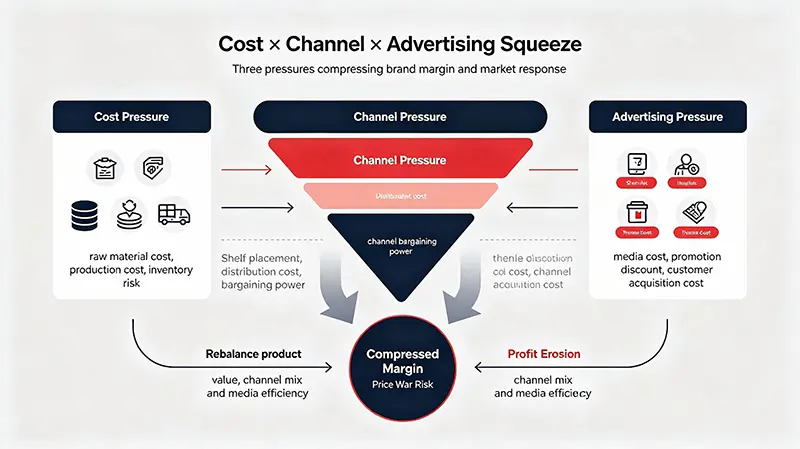
Translate the financial meaning of Kimberly-Clark acquiring Kenvue into competitive language and it is one sentence: mass-market skincare will now stand behind the company best in the world at squeezing cost out of manufacturing and supply chains. To understand this, start with the cost structure of mass skincare. Competition in the mass price band (roughly US$5-15 retail) is the sum of three things — cost, channel and advertising: whoever has lower unit costs, better shelf positions and fee rates at retailers and platforms, and deeper pockets in ad auctions, wins. The tissue business is the extreme version of exactly these three: margins as thin as blades, survival requiring极致 automated lines, global procurement networks and distribution density. Transfer those capabilities to skincare brands such as Neutrogena and Aveeno, and three things follow.
First, unit cost and procurement synergy. Shared supply-chain links (packaging, logistics, global sourcing, regional plants) will be reintegrated, pushing mass-skincare procurement prices further down — price wars in the mass band will only intensify. Second, channel bargaining power. The combined company is bigger in front of retailers and platforms, with stronger leverage on shelf positions, promotional resources and platform fee rates; the squeeze transmits to every brand in the same price band. Third, advertising auctions. Mass skincare is a major digital-ad buyer; merged budgets concentrate, bidding levels on exact-match and category terms rise, and independent brands face passively rising customer-acquisition costs.
All three shocks are structural — no amount of effort offsets them. But note the counter-intuitive corollary: consolidation is helping you see where you should not be. If an independent brand competes head-on with Neutrogena & co. in the mass band, it is not facing a brand but a distribution machine with printing-press economics. The place you cannot win is the place you should not be. Subtraction is not surrender — it is redeploying resources out of a losing battlefield.
The Giant's Three Blind Spots: Three Directions Where You Are Misaligned
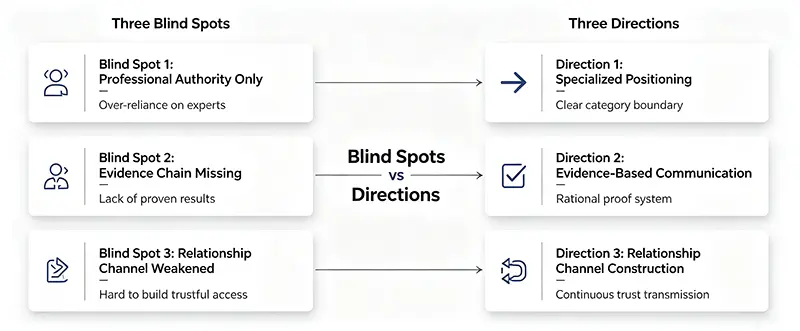
Consolidation brings more than threats — it also throws into relief what giants are bad at. Based on observation of mass-skincare competitive structures (an analytical framework for your positioning decisions), three blind spots deserve serious evaluation.
Blind spot one: specialty audiences — giants need "a big enough market", you need "deep enough trust". The bigger the company, the harder it is to customise deeply for a niche: eczema/sensitive-skin consumers, skin-tone specialties, complete regimes for specific skin conditions (oily-acneic, dry-sensitive) tend to be marginalised internally as "too small a pool". That is exactly independent territory: vertical audiences, high repurchase, strong word-of-mouth — and once trust is built, low price sensitivity. One actionable path is the "dermatologist-endorsement route": third-party dermatology certifications such as the US National Eczema Association's Seal of Acceptance are becoming a channel signal for sensitive-skin lines — certification is precisely the kind of asset "giants are too slow to build and independents can own".
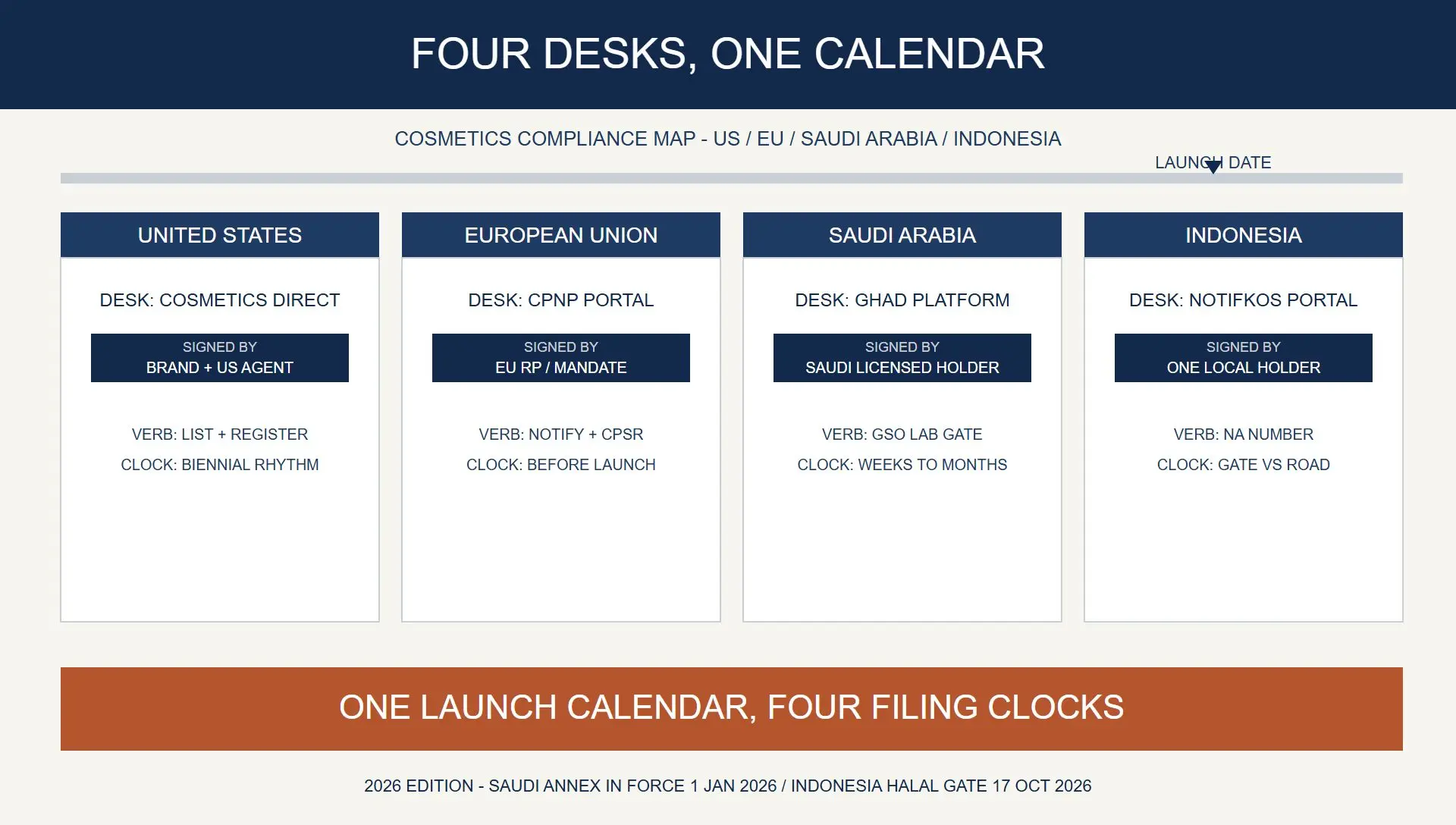
Blind spot two: evidence-based claims — giants buy ad slots, you can out-prove them. Regulatory winds in 2026 are turning claims substantiation into a hard gate: the EU's ECGT fully applies on September 27 (generic green claims need proof), and the US MoCRA mandates safety substantiation. Giants respond with legal and ad-compliance teams; your opportunity lies in "evidence-dense expression" — every efficacy claim backed by a test report or ingredient data. That evidence density complies with regulation and is naturally suited to content marketing and AI-search citation. When competitors sell adjectives, you sell data — that is differentiation.
Blind spot three: brand relationships outside the channel — giants serve shelves, you can serve people. Mass giants focus on retail and mass media. Independent brands can, during the integration period, put resources into relationship-driven channels giants neglect: DTC subscriptions, communities, vertical KOLs, offline experiences. The rise of social commerce — such as Sephora's monthly Drop Shop model on TikTok Shop — is turning "small batches, fast launches, strong content" into a channel requirement: precisely the rhythm flexible supply chains excel at and the one giant organisations struggle to match.
Three Action Directions: From Insight to Execution
Understanding the landscape is only the first step. Here are the three directions broken into executable steps you can put into your next two quarters.
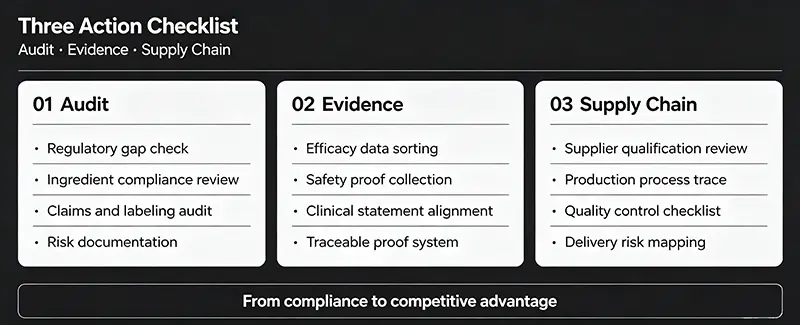
Action one: positioning audit (complete in 2-4 weeks). Map your current and in-development products as an "efficacy keyword × price band" matrix and compare one by one with mass brands such as Neutrogena and Aveeno. For every product with high overlap, ask three questions: do I have evidence mass brands cannot match (test reports/clinical data)? Do I have endorsements they cannot match (dermatology certification/expert backing)? Do I have channel relationships they cannot match (vertical communities/DTC subscriptions)? If the answer is "no" three times, that product is defensive — move marketing resources to lines with at least one "yes". The output of a positioning audit should be a "divest list + invest list", not empty talk.
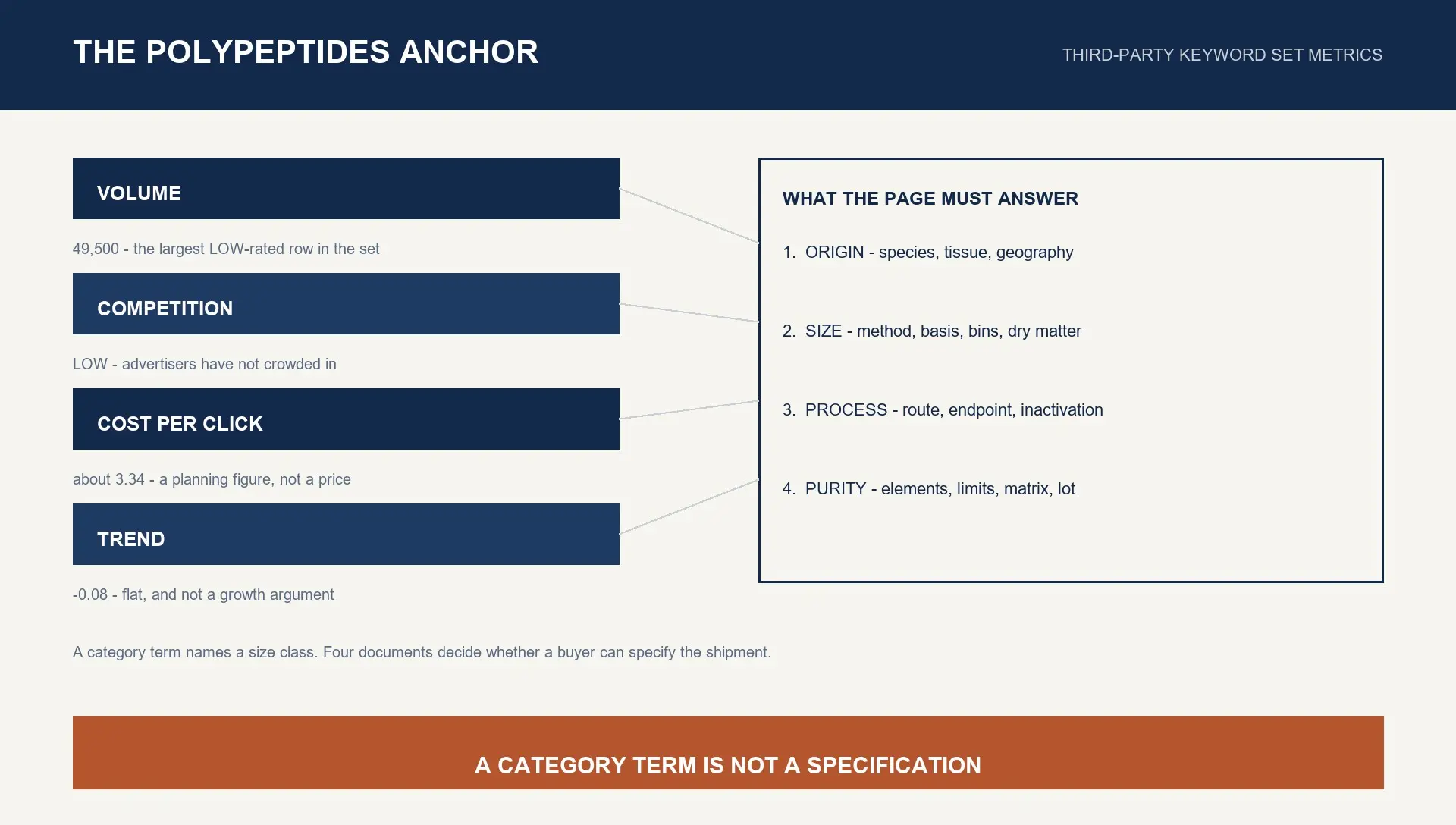
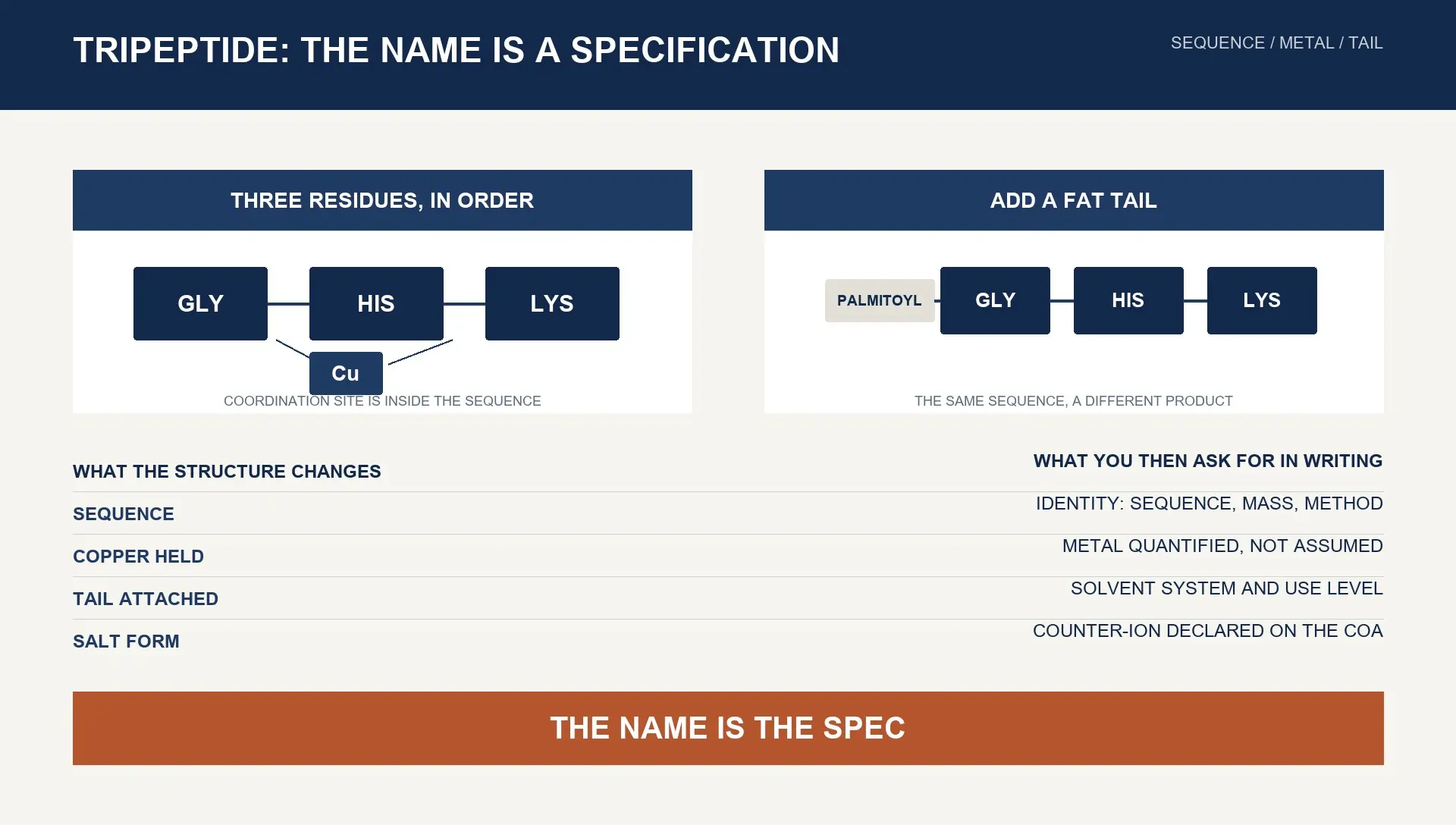
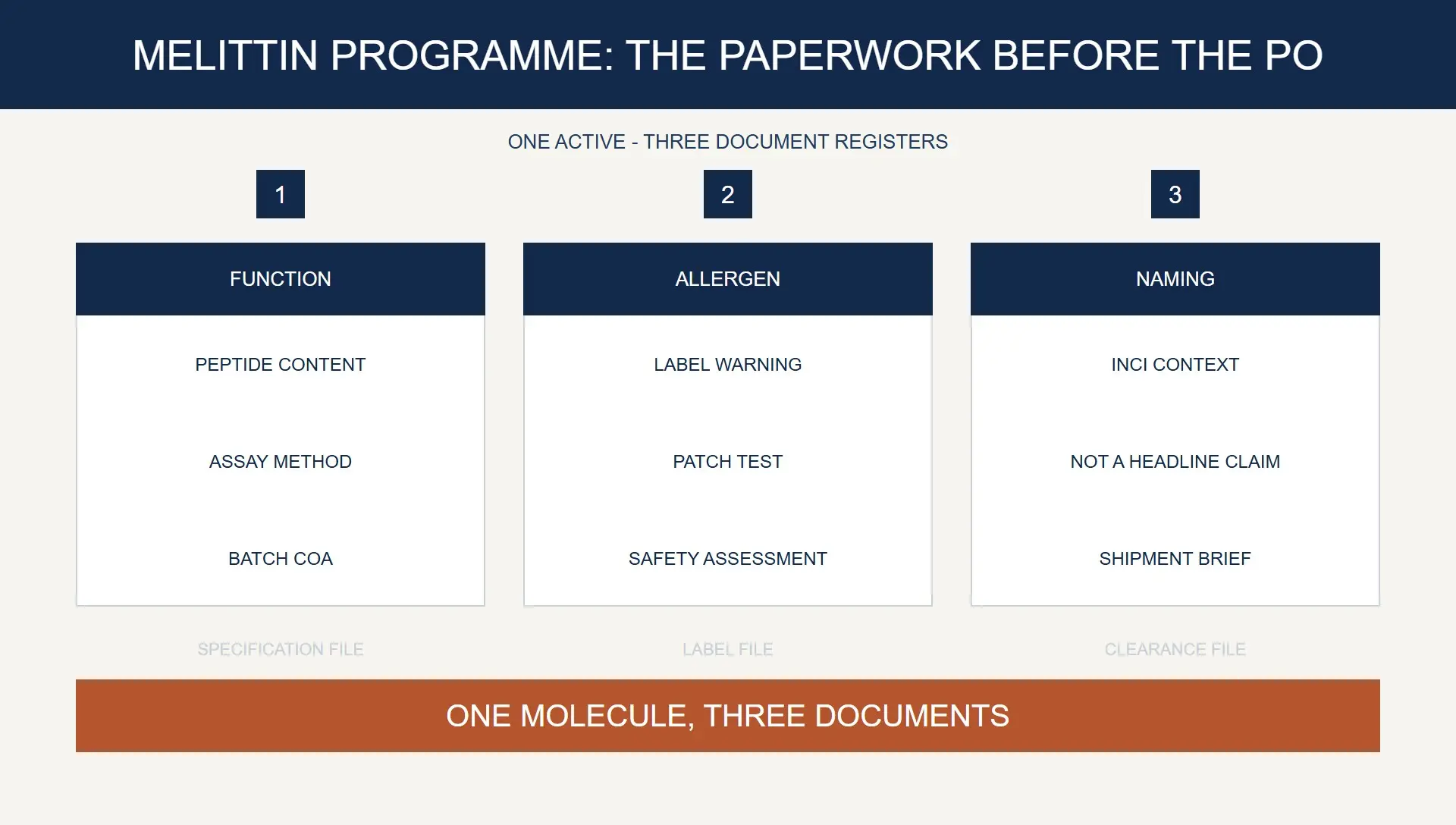
Action two: build "evidence density" into product development (sustained over 6 months). If you aim for the evidence-based claims route, evidence planning must be front-loaded from product definition: every product making efficacy claims needs a matching testing plan (clinical/lab/consumer) and a data file, plus compliance review before launch (see ECGT and MoCRA substantiation requirements). When you ask your factory for evidence support, put these in writing: ingredient data and COA, stability test reports, efficacy test reports, a compliance commitment on restricted-substance lists, and compliance pre-review of claim copy. Evidence is not added after launch — it is required from the formula stage.
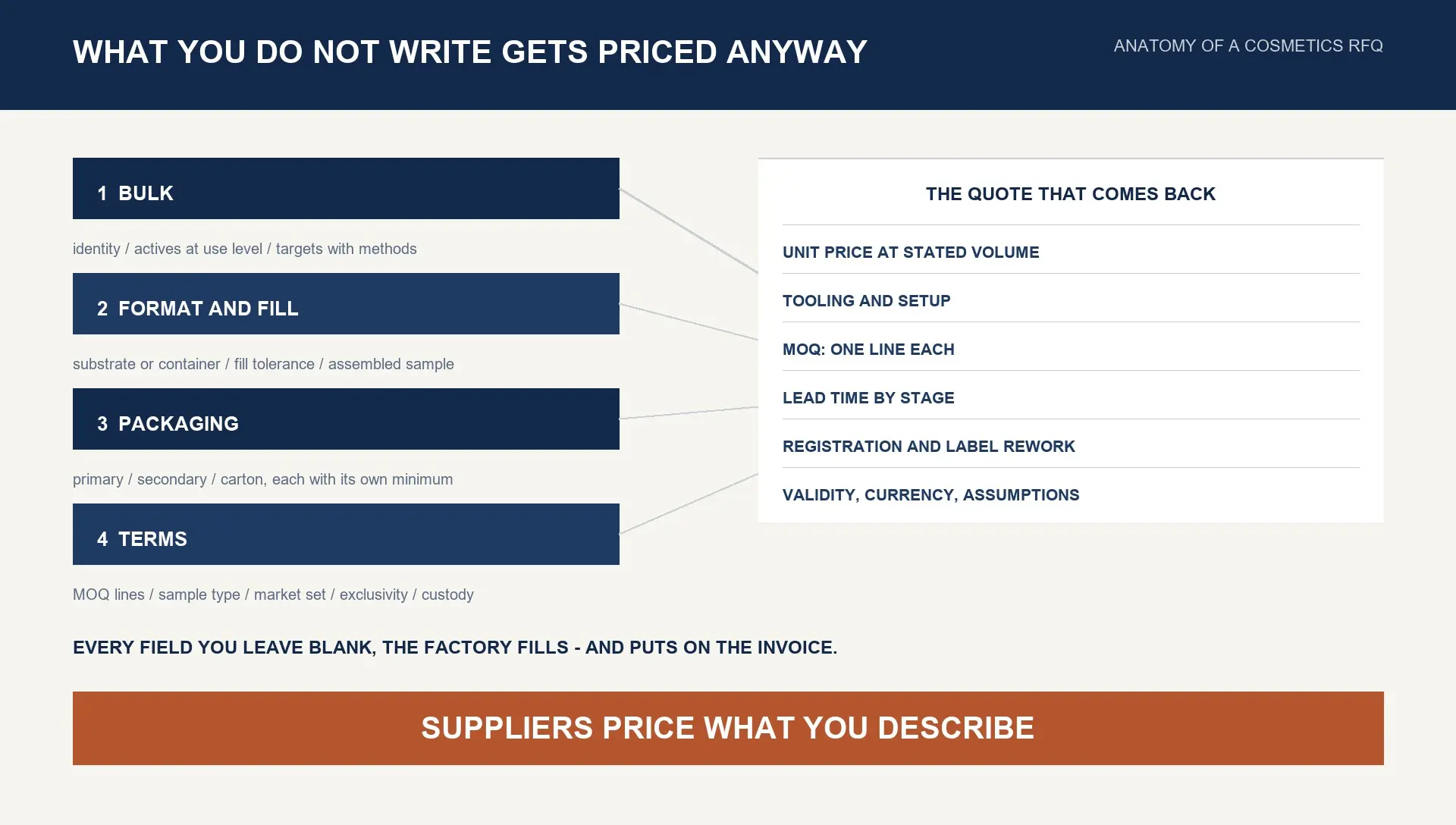
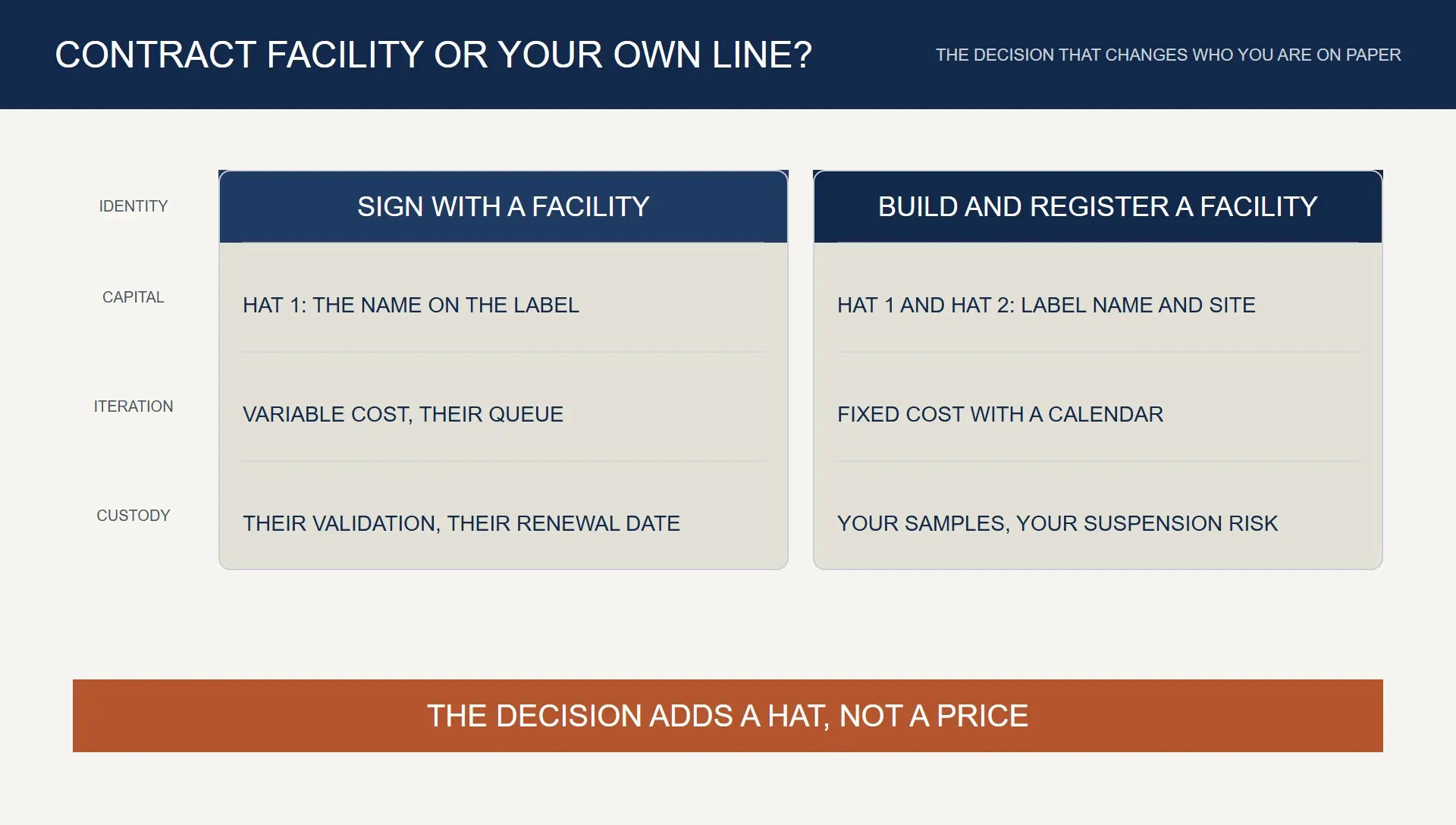
Action three: lock supply-chain flexibility (negotiate and put on paper within 1-3 months). The signature of consolidation is "supplier centralisation and re-audits" — big brands concentrate orders with a few top factories and re-audit quality and compliance. The independent brand's counterweight is the opposite: agility. Do three things now. First, evaluate whether your current factory will commit to stable capacity (rather than jumping your orders into gaps). Second, upgrade commercial terms from handshakes to written frameworks — MOQ structures (by dosage form or by SKU), FOB/CIF quotations, lead times (sampling and production committed separately), sample policy, an annual framework agreement and price-lock mechanisms. Third, run a "dual-source feasibility" assessment — does your hero product have an alternative factory? Not to switch immediately, but to ensure your negotiating position rests on the ability to leave. A supply chain without written terms is the most fragile asset during consolidation.
Six Frequently Asked Questions
(use these Q&As directly with your team or factory):
Q1: Will consolidation let giants "steal capacity" from my factory? Consolidation does bring supplier concentration, but top factories' capacity is usually locked by long-term frameworks; the more realistic risk for independents is diluted priority during peak season. Counter: put capacity commitments in an annual agreement and keep a second source.
Q2: Is there still opportunity in the mass price band? Yes — but not on "cheaper". The mass band is becoming an internal race of cost machines. Independent opportunity sits outside both ends: specialty audiences pay a premium for trust; evidence-based positioning pays a premium for proof.
Q3: Do dermatology certifications (e.g. NEA Seal) take long? Certification requires formula review and external testing; expect months, and formulas may need adjusting to certification standards. If you plan this route, raise the certification target with your factory at the formula-development stage to avoid post-launch rework.
Q4: Will ECGT/MoCRA compliance push up costs? Yes, but marginal cost is manageable. What is truly expensive is not compliance itself but the rework of delisting or claim revision after launch. Front-loading your evidence plan is the only way to keep compliance costs inside budget.
Q5: Are divested assets (e.g. Carefree/Stayfree being sold) a brand opportunity? For some buyers, yes. Divested brands often lose parent support and urgently need new supply chains and channel relationships, opening windows for agile factories and brand operators — but beware "buying a liability": divested assets carry history, so run full due diligence.
Q6: Should I act now or wait until the dust settles? Waiting is the most expensive choice. The approval period (typically 1-2 years) is exactly when shelf slots, supplier terms and talent are loosest; once the dust settles, loose positions are re-locked.
A 12-Month Action Roadmap
Fold the analysis above into one executable schedule:
This roadmap has a single logic: turn the giants' integration period into your construction period. Windows in competitive structure wait for no one — positions, terms and trust belong to those who act inside the window.
Put this roadmap into your quarterly review: is your positioning on a frontal collision course with the giants? Would your supply-chain terms survive a "client brand changing ownership" shock? If you want to benchmark your current factory's flexibility — capacity commitment, MOQ structure and annual agreements — with the same ruler, send us your requirement list: FKY offers brand-side buyers a free capacity-fit assessment, turning "terms on paper" into a real moat. Windows are measured in quarters, not years.