
Market & Channel Trends
Private Label Skincare Low MOQ: Launching with Small Batches
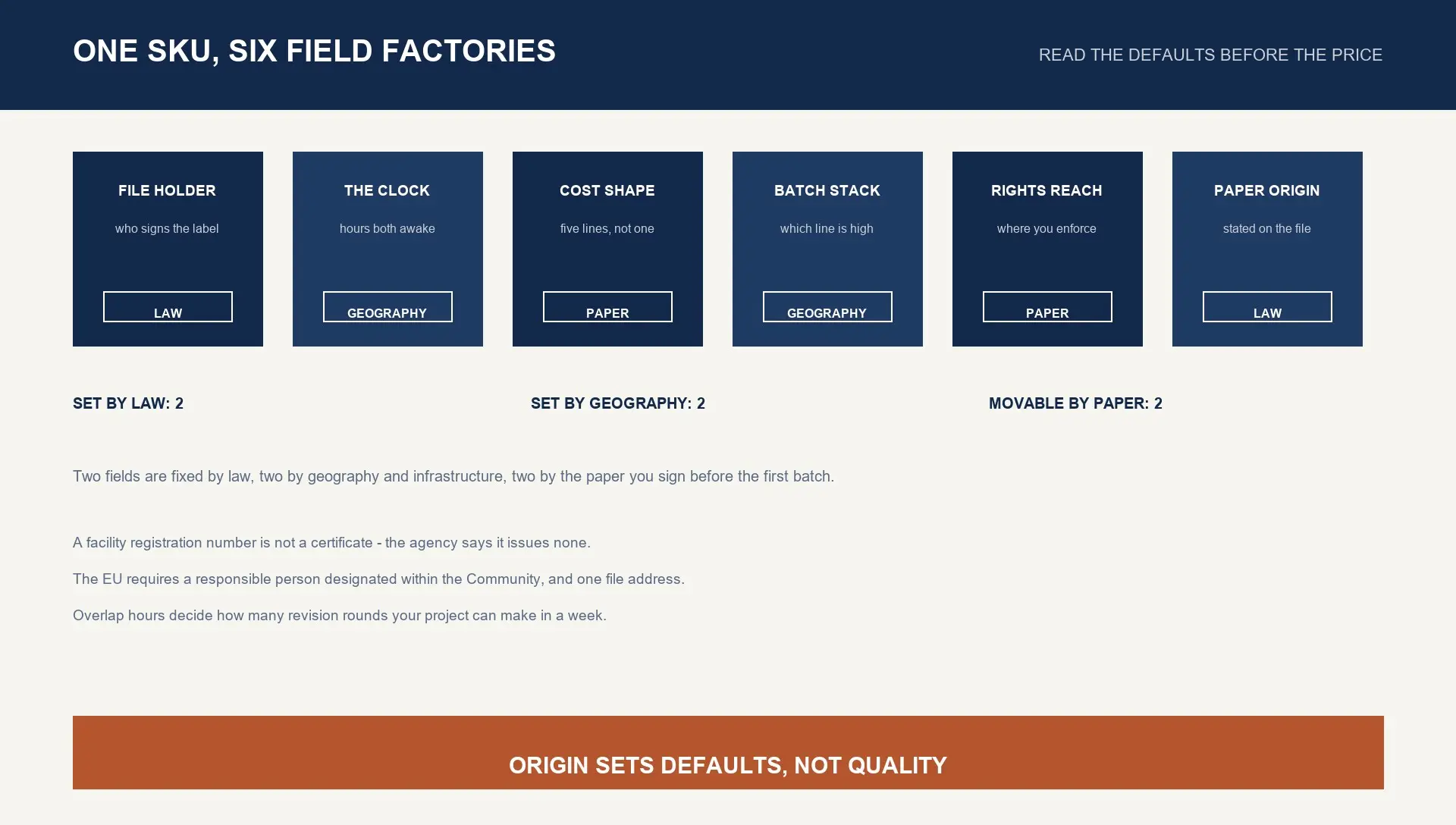
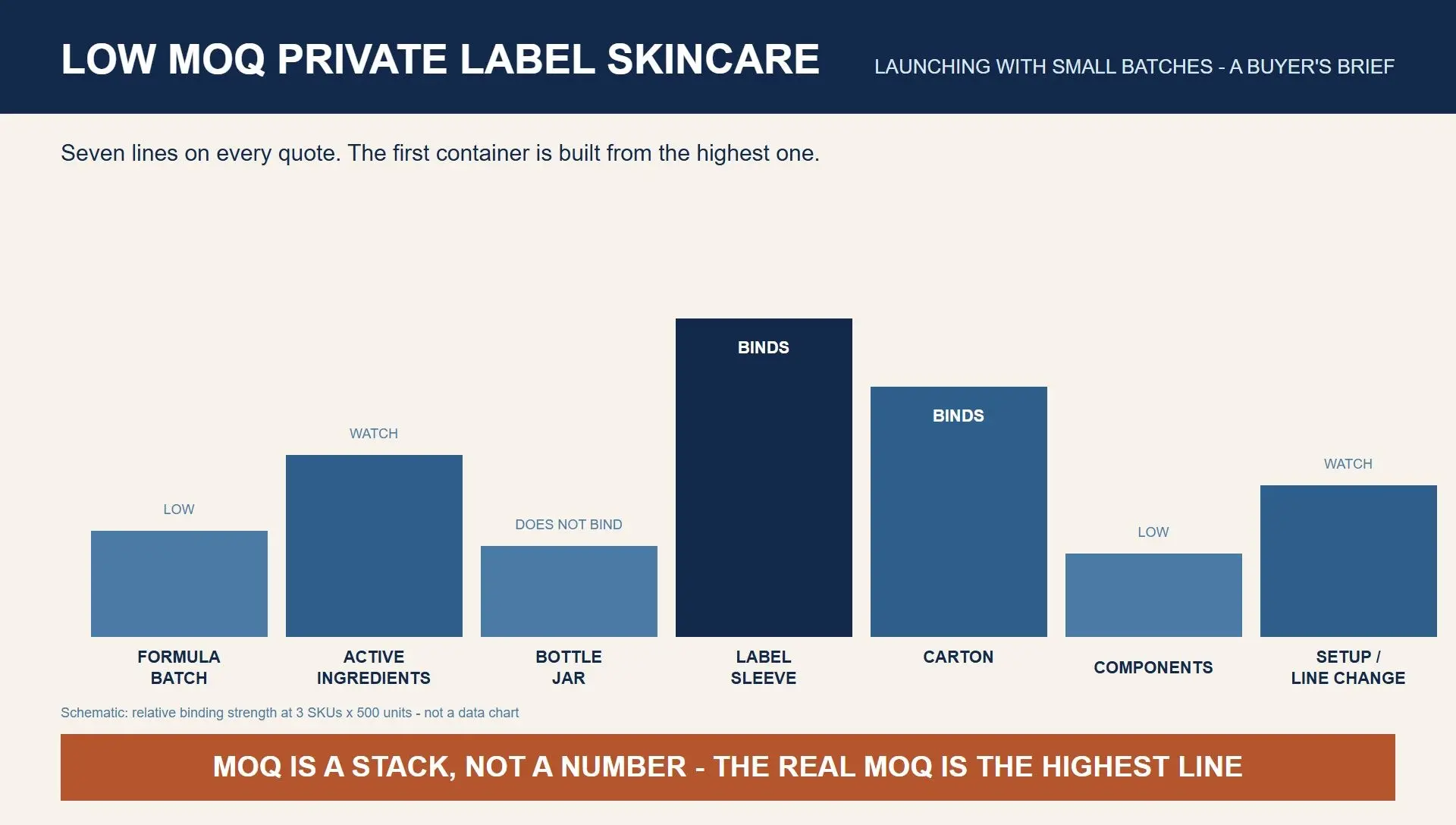
MOQ is a stack, not a number: the formula line, the packaging line, the components line. Read the 50-to-10,000-unit spread in published "low MOQ" claims honestly, work the first container at three SKUs by five hundred units, and name the line that binds before your factory does.
Private Label vs White Label Skincare: Which Model Fits
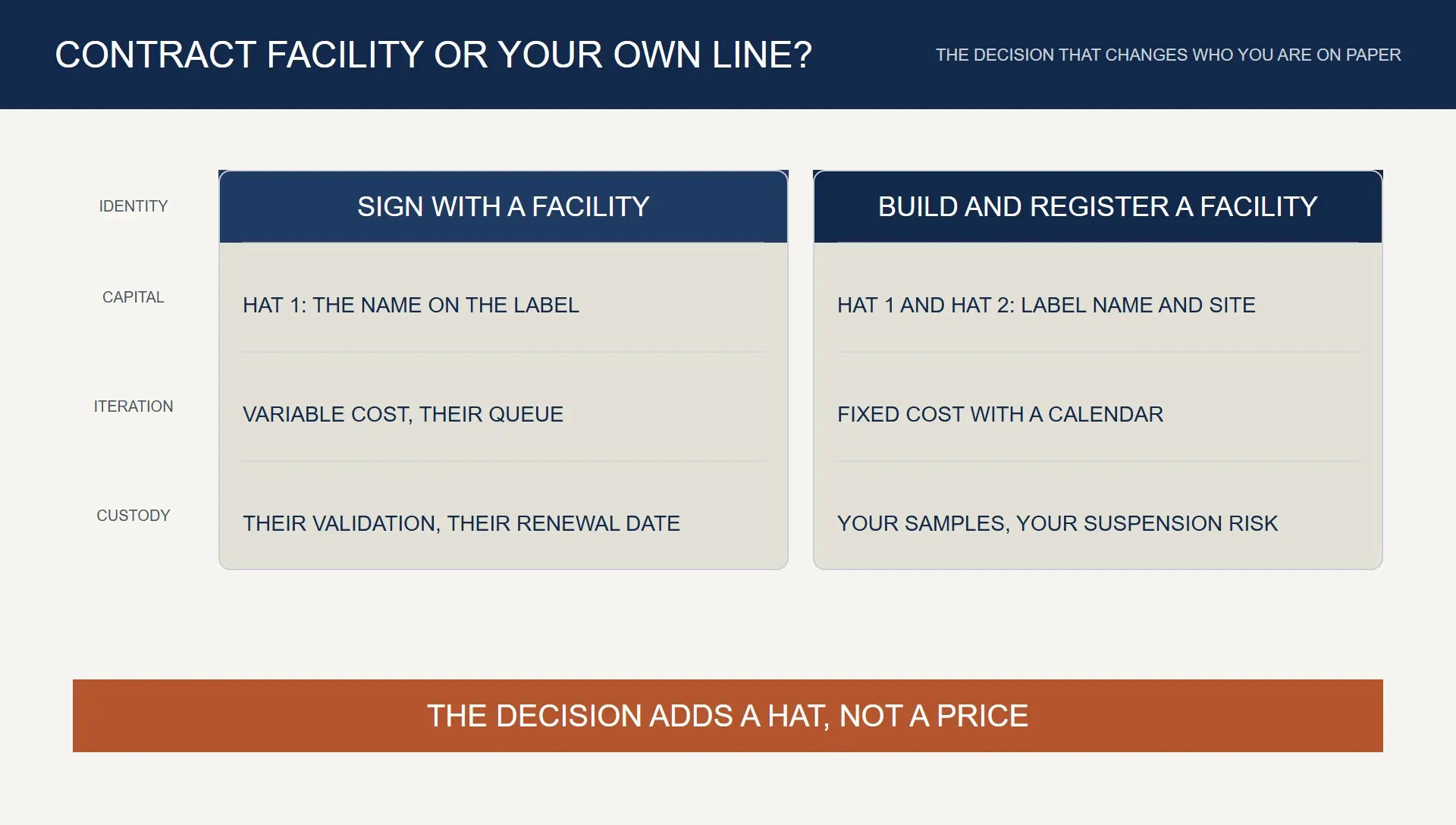
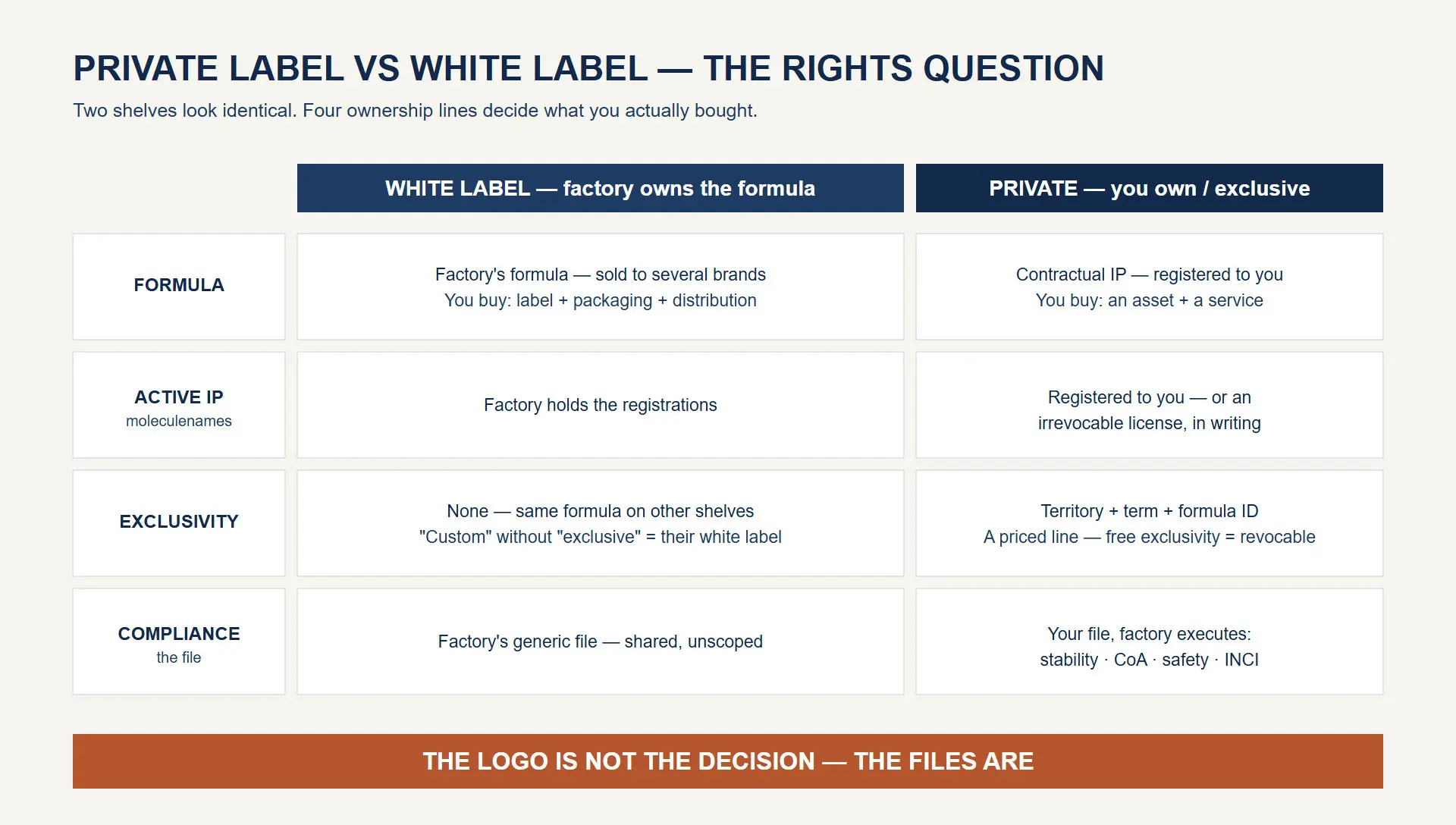
The private label vs white label decision is a rights question, not a logo question: who owns the formula, the IP, the exclusivity and the compliance file — plus the quote math, the geography table and a scoreable five-dimension factory checklist.
How to Start a Skincare Brand in 2026: A Factory Buyer's Playbook
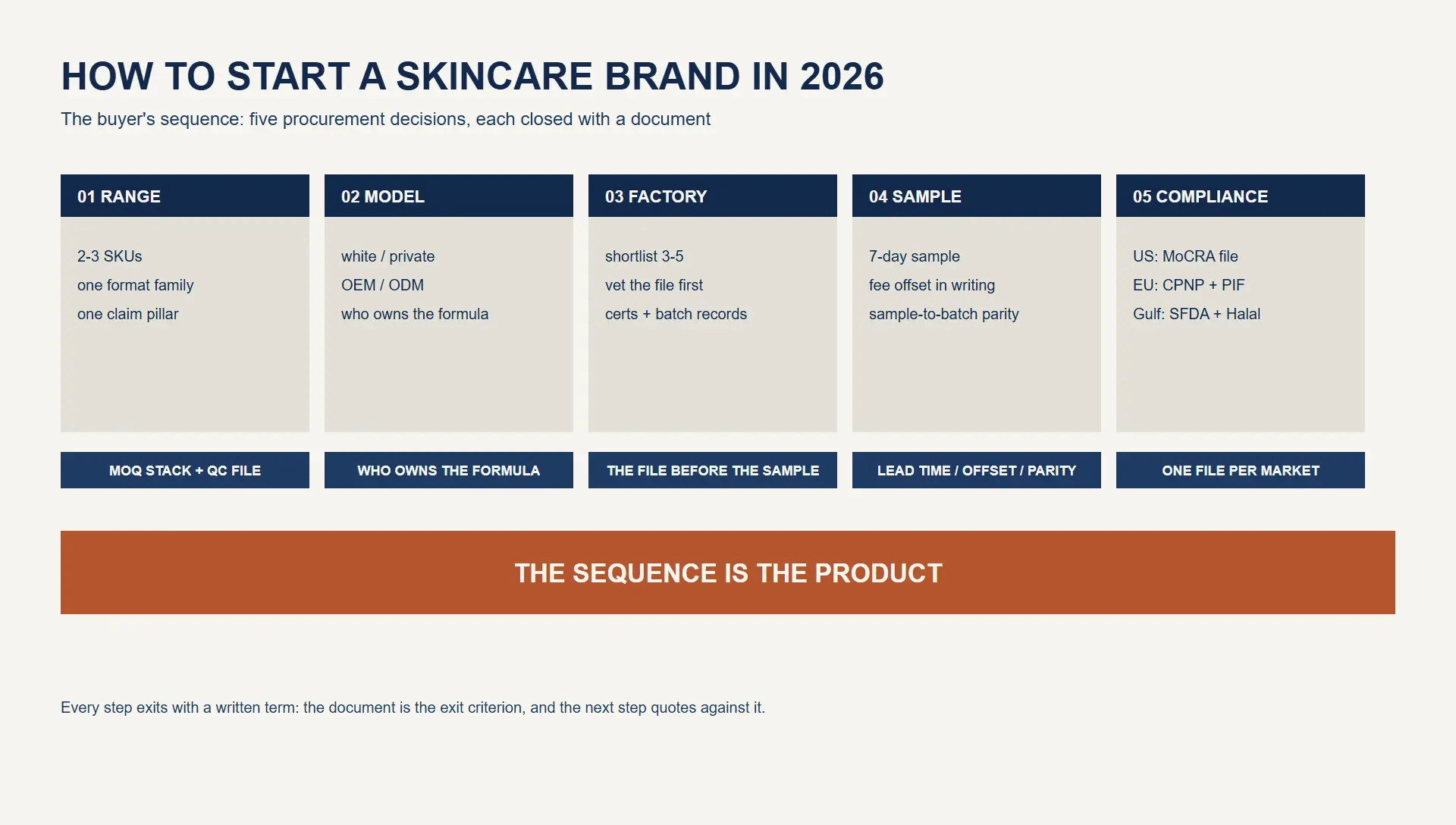
The factory-side read on starting a brand: five procurement decisions in sequence, the written terms that protect each one, and the ten questions worth asking before the first sample fee.
Scalp Aging Is Skincare's Next Frontier — and Its Trickiest Claims
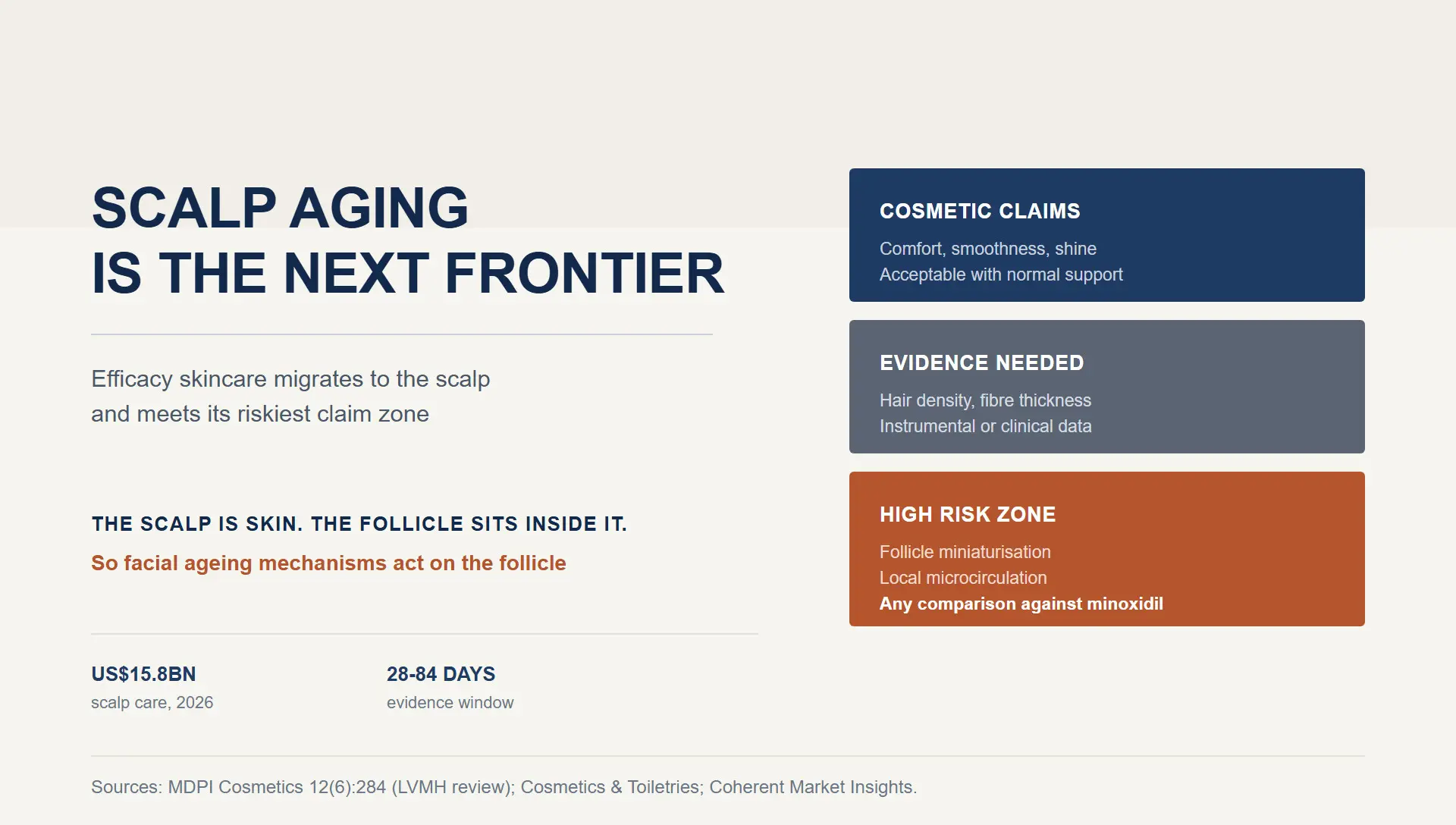
The scalp is becoming skincare's new battleground. A review published in Cosmetics by LVMH researchers found that reduced scalp skin thickness, altered microbiome diversity and lower sebum production together drive greying, thinning and fragility - scalp health is not a supporting factor but the foundation. On the ingredient side, quantified results already exist (a postbiotic at 0.2% improved hair-loss and density measures at 28, 56 and 84 days), and the scalp care market is roughly US$15.8 billion in 2026 growing at 7.3%. But for buyers this is also the most dangerous claim space: any language comparing a cosmetic to a drug such as minoxidil risks turning the product into an unapproved medicine.
Dermocosmetics Land Grab: Clinical Proof Is Now the Valuation Anchor
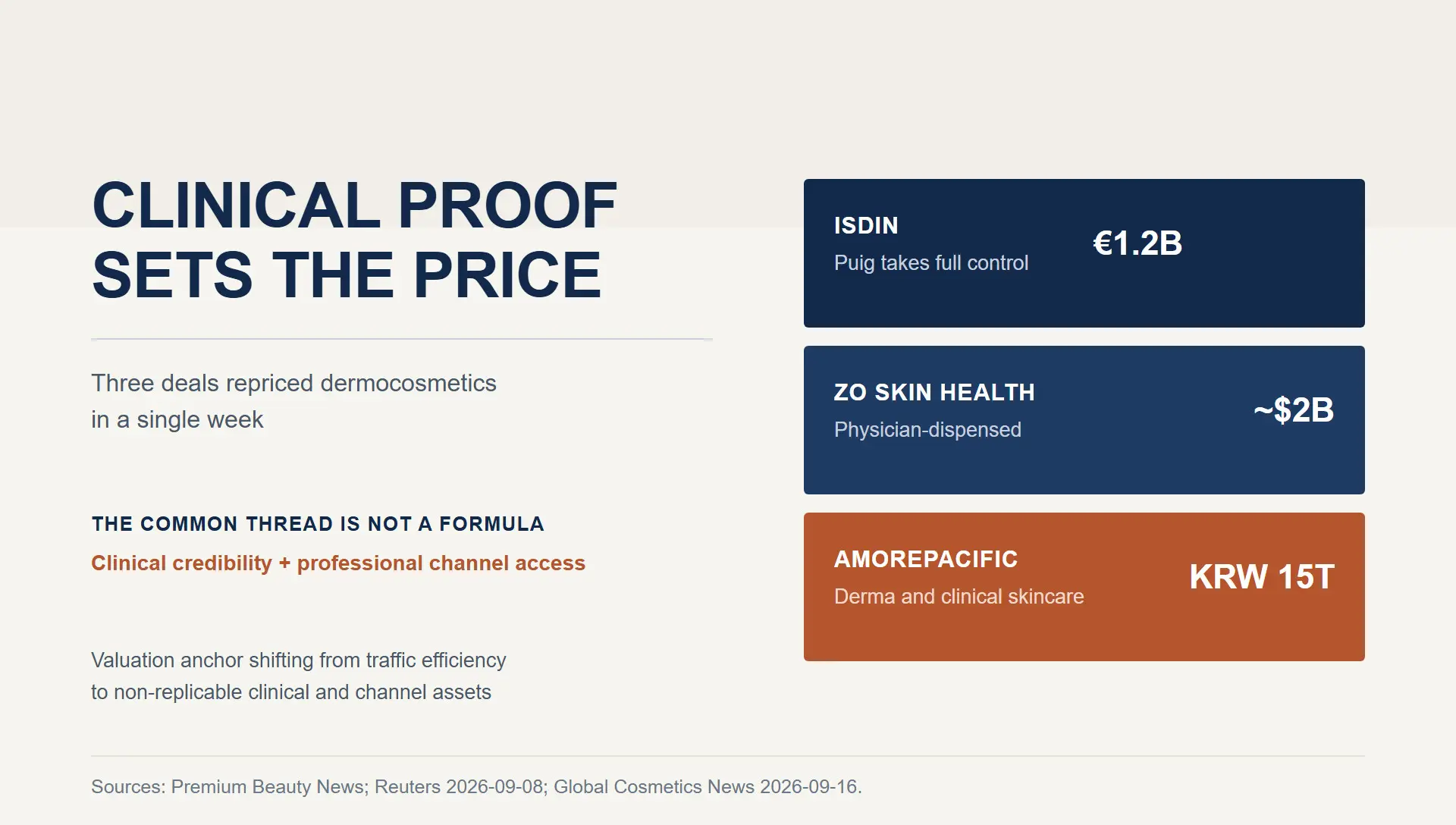
Within one week, three deals repriced dermocosmetics: Puig paid EUR 1.2 billion for full control of ISDIN, Blackstone is exploring an approximately US$2 billion sale of physician-dispensed ZO Skin Health, and Amorepacific named derma beauty and clinical skincare as a 2035 growth pillar; Caudalie's stated rationale for buying Talm was to leverage its pharmacy network. What these deals share is not a formula but clinical credibility and professional channel access. For brand owners and OEM buyers, that shifts clinical evidence from a cost line to an asset line - and who owns the evidence decides whether your brand can be valued at all.
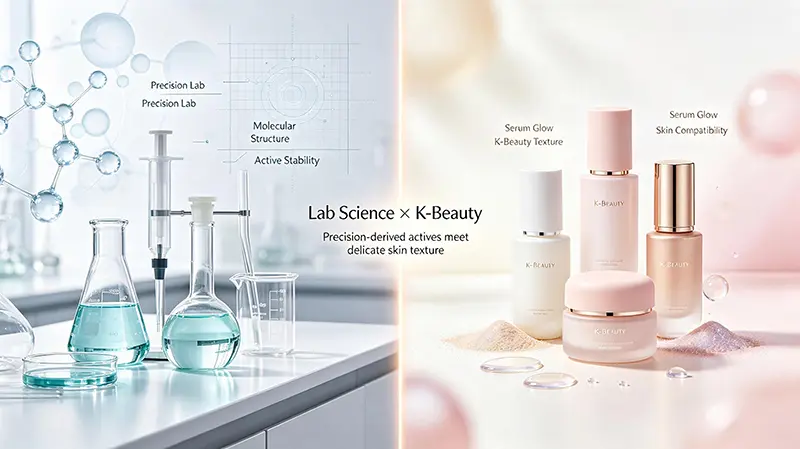
When Giants Start Co-Developing with Factories: Efficacy Skincare Is Changing Lanes
On September 10, 2026, L'Oréal and Korean cosmetics ODM giant Cosmax signed an MOU to co-develop next-generation beauty products, ingredients and sensory innovations across three areas: K-beauty-inspired products for international markets, new cosmetic raw materials and active ingredients, and new sensory signatures and formats influenced by Korean beauty. Meanwhile Yatsen's Q2 skincare revenue grew 40.4% while colour cosmetics fell 35.8% — efficacy-led skincare is absorbing other categories. When giants plug R&D capability directly into factories, the entry ticket to efficacy competition shifts from "can you source good ingredients" to "can you co-develop with your factory".
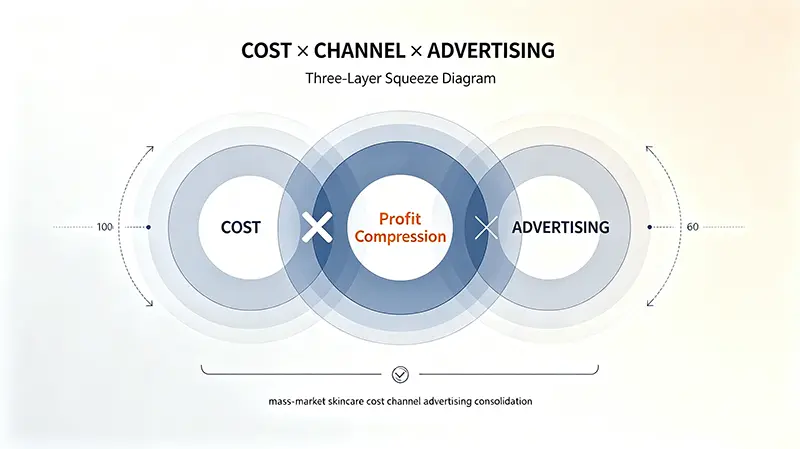
A Tissue Giant Takes Over Mass-Market Skincare: Where Do Independent Brands Sit in a US$40 Billion Deal?
On September 8, 2026, Australia's competition regulator conditionally approved Kimberly-Clark's US$40 billion acquisition of Kenvue (divesting Carefree/Stayfree period care), putting mass-market brands such as Neutrogena under a global tissue-and-care giant while EU approval is still pending. As giants consolidate, the mass price band gets more crowded — independent brands cannot win a frontal war; specialty positioning, evidence-based claims and a flexible supply chain are your real moat.

Social Commerce Hits an Inflection Point: Sephora × TikTok Shop and YouTube × Amazon Are Rewriting How Beauty Launches
In September 2026, social commerce hits a platform-level inflection: Sephora lands on TikTok Shop on September 19 with its monthly-exclusive "Drop Shop" live-launch format, while YouTube adds Amazon as a shopping partner (GMV up 13-fold in two years). For you as a brand owner, launches are shifting to monthly drops and sell-while-you-stream — and so should your factory-selection criteria.
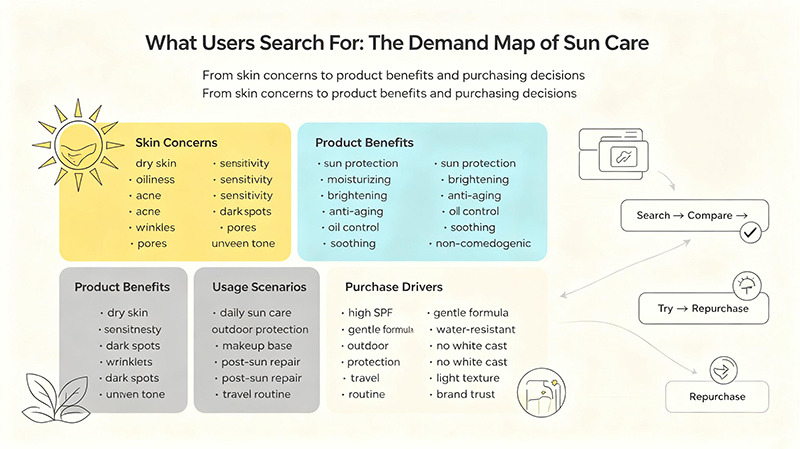
Sunscreen Demand Is Climbing: Three Shifts Reshaping Sun Care in 2026
Sunscreen is becoming the most crowded — and the most opportunity-rich — lane in skincare. Looking at the high-frequency search behavior of Google users, queries such as "best sunscreen for face", "mineral vs chemical sunscreen", "sunscreen for oily skin", "body sunscreen" and "is SPF 100 better" consistently rank among the top skincare searches, with clear seasonal peaks — and August in the Northern Hemisphere is the annual UV maximum, pushing sun-care searches to their yearly high. Meanwhile, the supply side has seen three shifts in 2026: the US FDA approved the new UV filter Bemotrizinol in 2025 (the first new chemical sunscreen active approved in roughly two decades); French brand Firn launched an SPF50+ refillable sun stick in August; and the sunscreen category is rapidly expanding from "facial product" toward "everyday body care." For buyers planning their next product line, the message is clear: sunscreen may be the incremental category worth betting on.
Is "Bio-Hacking" Taking Over Your Skincare Routine? How K-Beauty's 2026 Narrative Is Being Rewritten
"Bio-hacking your skin"—using exosomes to bio-hack your skin. It sounds like something out of a Silicon Valley experiment, but in 2026, it's becoming K-Beauty's most central narrative.
A new skincare framework is taking shape. Brands like Forté are leading the charge, pushing "bio-hacking" from a subcultural concept into mainstream consumer vocabulary. Meanwhile, the PDRN + spicules combination is moving from aesthetic clinics to home skincare—P.CALM's PDRN Caffeine Night Gel Mask is a prime B2C example, delivering 10,230 ppb PDRN with high-purity white spicules through a hydrogel system for "micro-needling-like" deep delivery.
These two threads converge on a single signal: K-Beauty is upgrading from "ingredient competition" to "signal dialogue." The skin is no longer just a surface to be coated—it is a biological system to be "programmed."