



AI Is Rewriting Skincare's Ingredient Playbook—But Are Consumers Buying It?
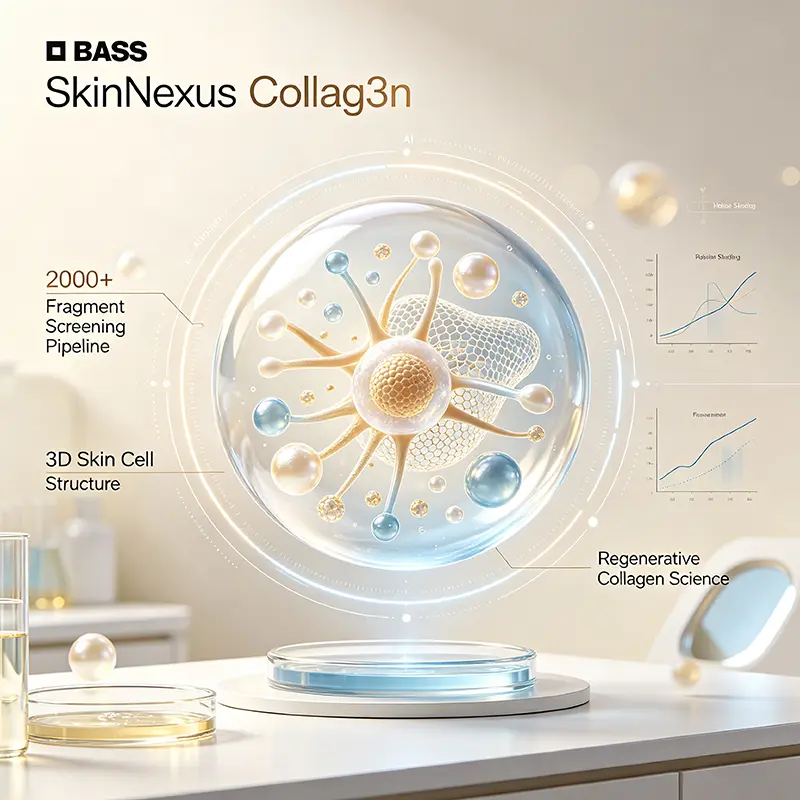
In July 2026, BASF and Bota Biosciences jointly launched SkinNexus Collag3n at in-cosmetics Global—an AI-driven recombinant type III collagen fragment. Using an AI bio-foundry platform, the partners screened over 2,000 collagen fragments while simultaneously assessing industrial production feasibility, dramatically accelerating the journey from discovery to mass production.
Lab data shows that in 3D dermal models, this ingredient increased type I collagen by 48%, type III by 82%, and type V by 71%. In clinical trials involving women aged 53–70, improvements in skin laxity and wrinkles were observed in just 4 weeks—outperforming a traditional collagen control at 10x the concentration.
This is no isolated case. According to Reuters, L'Oréal's Consumer Products Division president revealed that AI enables the company to predict the potential efficacy of specific molecules on skin and hair, allowing researchers to screen for novel active ingredients. Today, L'Oréal creates products 4x faster than before.
One of the latest breakthroughs: L'Oréal "cross-categorized" a molecule originally used in skincare to develop a shampoo that leverages collagen for hair fullness—breaking down the ingredient barrier between skincare and haircare.
The significance of AI in R&D goes far beyond "speed." At Mondelēz International, up to 60% of AI-generated recipes outperformed traditional formulations in nutritional value, sustainability, and cost. For the beauty industry, this means AI can not only accelerate known R&D pathways but also uncover "non-conventional" formula combinations that humans might overlook.
If AI is the "infrastructure" transforming R&D efficiency, then PDRN (Polydeoxyribonucleotide) moving from medical aesthetics to daily skincare represents the expansion of ingredient application boundaries.
In July 2026, The Estée Lauder Companies' brand Clinique launched the CX Skin Rejuvenation Hydrating Series in China, featuring recombinant PDRN as its core ingredient. According to The Estée Lauder Companies, this is the world's first skincare product with recombinant PDRN as its core ingredient.
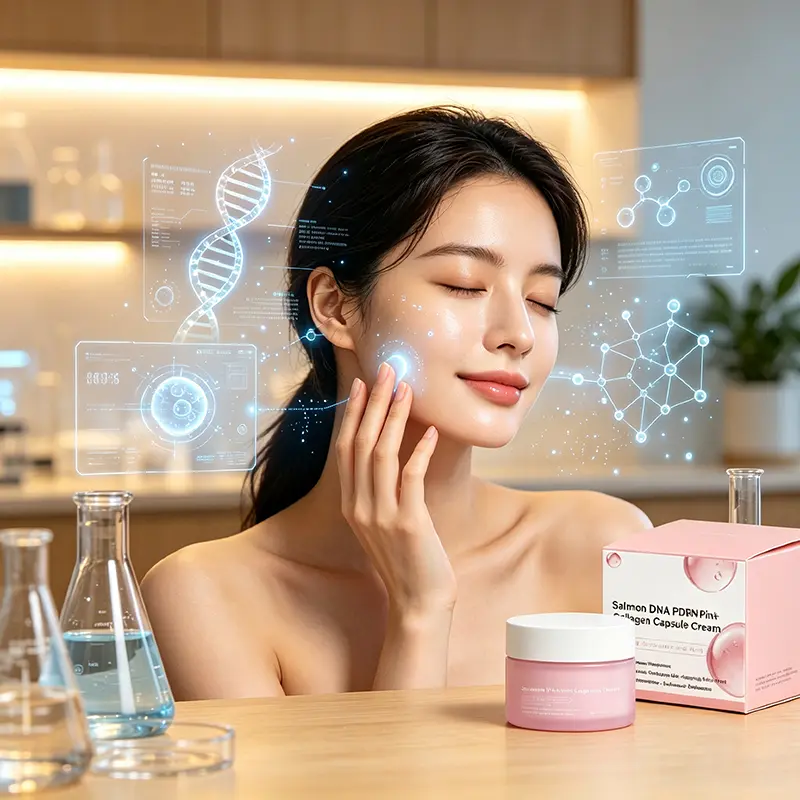
PDRN is not a new ingredient. Over the past decade, it has been primarily used in medical and aesthetic medicine. Derived from salmon DNA extract, PDRN is believed to promote tissue repair, improve skin barrier function, and aid wound recovery. In Korea's medical aesthetics market, PDRN injections have remained popular in recent years.
PDRN's entry into the mass skincare market reflects shifting consumer attitudes toward medical aesthetics. As acceptance of aesthetic procedures grows, the "post-procedure care" market—covering pre-treatment stabilization, post-treatment recovery, and long-term anti-aging—is expanding.
Adding further momentum, the new cosmetic ingredient filing regulations that took effect on July 15 have cleared the path for PDRN's "descent" into daily care. The regulations reduced the scope of higher-risk efficacy claims from 10 categories to 5—removing anti-hair loss, anti-acne, anti-wrinkle, anti-dandruff, and deodorant from the high-risk list. PDRN's core efficacy directions—anti-wrinkle, repair, anti-acne, and anti-hair loss—have all been removed from the high-risk list.
Technology is accelerating product innovation, but the market isn't unconditionally rewarding "speed."
In this environment, leading brands are betting on a bigger concept: Skin Longevity.
In July 2026, French skincare brand Clarins announced the launch of the Dr. Olivier Courtin Clarins Longevity Research Center—a scientific platform dedicated to deepening the understanding of the biological mechanisms of skin aging. The center has already produced 10 patents, 13 peer-reviewed scientific papers, and 12 collaborations with top global research institutions.
Clarins' move reflects a deeper shift in the beauty industry: "anti-aging" is being replaced by the more scientific concept of "skin longevity." The fundamental difference lies in their approaches: the former attempts to "conceal" or "reverse" signs of aging, while the latter seeks to understand and intervene in the biological mechanisms of skin aging.
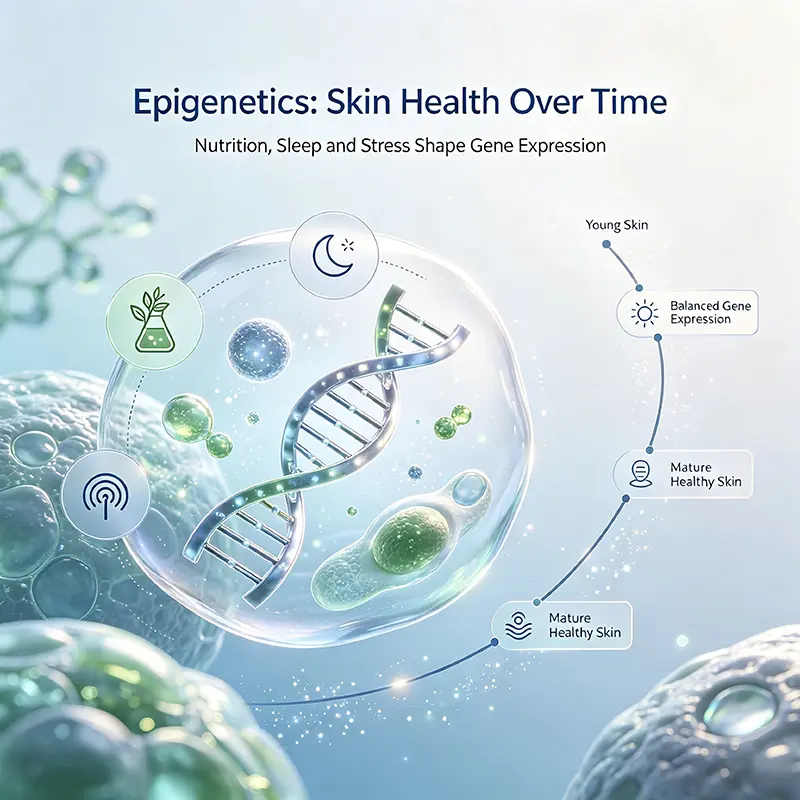
One of the core research directions at the Clarins Longevity Research Center is epigenetics—the study of how environmental and lifestyle factors influence gene expression. Research cited by the company shows that approximately 15% of gene expression is determined by genetics, while up to 85% may be influenced by external factors such as nutrition, sleep, stress, and physical activity.
This suggests that the future of skincare may no longer be just about "what you put on your face"—but increasingly integrated with lifestyle management.
As ingredient stories lose their power and major brands accelerate their expansion, new brands in 2026 are taking a completely different path.
C2CC Media's analysis of 21 new brands found that they almost never try to explain "who they are" to everyone—instead, they're finding a more precise "tribe." The most frequently recurring positioning concepts were: "science/lab/bio/cell" (7 mentions), "audience segmentation (Gen Z/mom & baby/aesthetic medicine)" (6 mentions), and "emotion/healing/fragrance" (4 mentions).
Specific cases include:
-
Runlanxin: Instead of marketing hyaluronic acid, it positions itself around "climate skincare," focusing on consumers in Northwest China dealing with skin issues caused by dry climates.
-
Xiao Liushen: Entering the near-vacant "mom & baby mosquito repellent" segment, responding to mothers' core anxieties with "0 alcohol, 0 irritation, rounded anti-bump" product design.
-
Xixian: Targeting the "premium medical aesthetics audience," rather than "everyone who wants anti-aging."
The common thread across these brands: replacing broad-spectrum coverage with precise audience positioning, and abstract efficacy with real-life scenarios.
In Q1 2026, the beauty and skincare market reached RMB 116.05 billion, up 10.0% year-on-year. Yet during the 618 shopping festival, the beauty category recorded its first-ever negative growth in nearly a decade.
This isn't a sign of overall consumer weakness—it's a structural market adjustment. Analysis shows that the biggest pressure during 618 was concentrated in the RMB 100-range mass skincare segment, which is crowded with domestic brands, white-label products, and unbranded goods. As e-commerce platforms integrate with the National Medical Products Administration's filing database and conduct comprehensive qualification reviews, a large number of non-compliant white-label products are being cleared from the market.
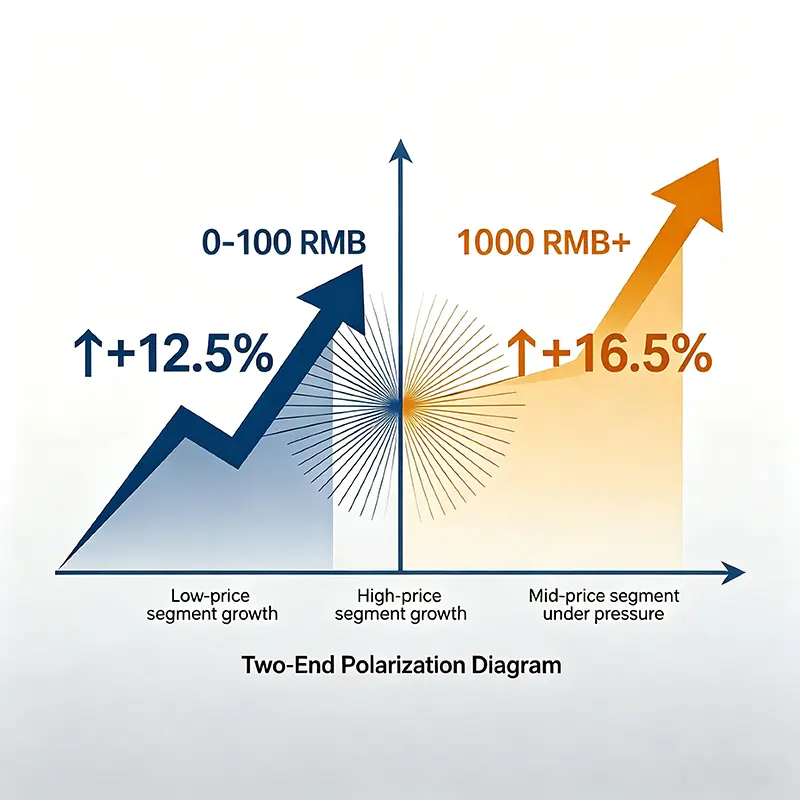
At the same time, the skincare market is showing clear "polarization" :
-
Affordable essentials: The RMB 0–100 price band grew fastest at 12.5%, with hydration, cleansing, and basic maintenance products consolidating at the lower end.
-
Premium upgrade: The RMB 1,000+ premium segment reached 16.5% market share, up 1.8 percentage points year-on-year. Anti-aging, repair, and advanced efficacy care are shifting to the higher end.
Consumers aren't spending less—they're simply unwilling to pay for unclear value. As Mintel's 2026 China Consumers report notes, consumer interest in "ingredient stories" and "efficacy concepts" is declining. The most acute pain points include: results taking too long to appear, effects not lasting long enough, and significant gaps between claimed and actual experiences.
The 2026 beauty industry presents a picture that seems contradictory yet internally consistent:
AI is accelerating R&D. Regulations are loosening restrictions on new ingredients. Medical-aesthetic ingredients are "descending" into daily care. The supply side is running at full speed. But on the demand side, consumers are growing more cautious, more rational, and harder to impress with "ingredient stories."
This is precisely the transitional pain of an industry shifting from "traffic-driven" to "value-driven." The old playbook—"tell a new ingredient story, harvest a wave of traffic"—is losing its effectiveness, because consumers have heard too many stories and seen too many promises left unfulfilled.
The competition among brands is shifting from "who has the newest ingredient" to "who can deliver truly perceptible, trustworthy, long-term value to consumers" —whether by solving a real problem in a precise niche scenario, or replacing anxiety-driven short-term marketing with scientific long-term thinking.
When AI makes it easier than ever to "create a new ingredient," earning consumer trust and sustained loyalty becomes the hardest thing of all.
Want to dive deeper into the 2026 beauty tech revolution and new skincare choices? Explore our curated selection of scientifically-validated, ingredient-transparent essentials—designed for those who truly care about skincare value.