



Is "Bio-Hacking" Taking Over Your Skincare Routine? How K-Beauty's 2026 Narrative Is Being Rewritten
Signal 1: "Bio-Hacking" Becomes K-Beauty's 2026 Master Narrative
The term "bio-hacking" was once associated with Silicon Valley bio-enthusiasts and longevity experimenters. But in 2026, it's being absorbed and transformed by the beauty industry at scale.
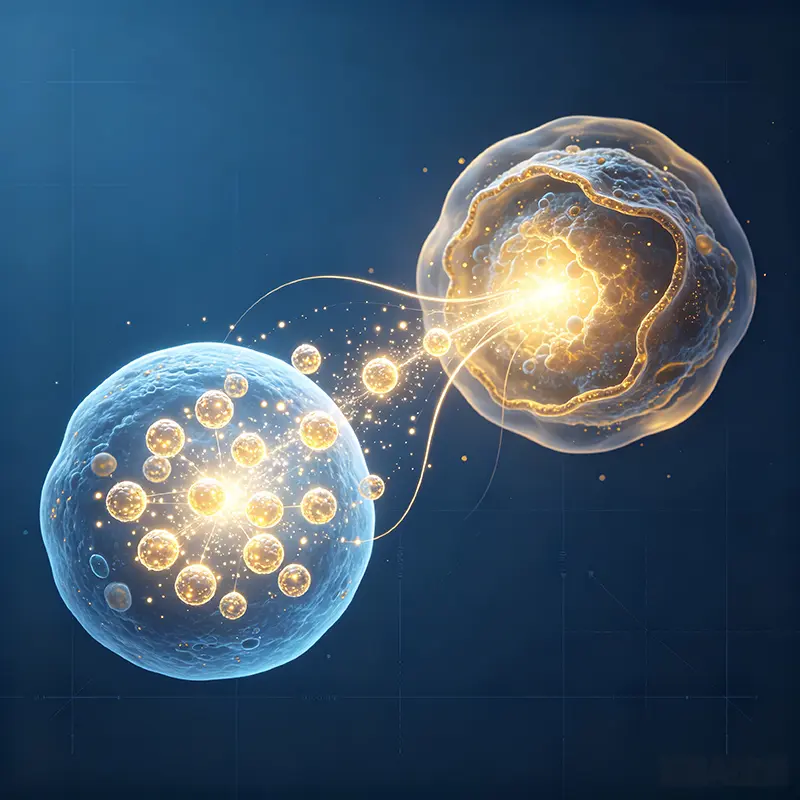
Professional skincare brand Forté's new "Bio-Hacking" framework is built on a core logic: using exosomes as "cellular messengers" to precisely instruct the skin to repair itself. This is no longer "supplementation" or "repair" in the traditional sense—it is active intervention and optimization of the skin's biological signals.
Behind this narrative shift lies a deeper change in consumer mindset. According to interviews with leading aesthetic doctors conducted by Marie Claire UK, Dr. Sophie Shotter observed: "2026 is the year of regenerative reset—the goal of treatments is no longer 'more,' but healthier, stronger, more radiant skin."
K-Beauty platform RUSHLET also noted in its 2026 trend analysis: "Bioregenerative active ingredients are becoming the new focus. Exosomes are the 'project managers' of cellular signaling—they are nano-scale vesicles packed with 'instructions,' carrying repair signals from healthy cells to damaged ones."
What does this mean? The "bio-hacking" narrative works because it transforms consumers from passive "skincare recipients" into active "skin managers." You're not just "applying a product"—you're "programming your skin."
Signal 2: PDRN + Spicules — A Hydrogel Delivery System from Clinic to Home
Just as the "bio-hacking" narrative gains momentum, a specific formulation pathway is being validated in the market: PDRN + Spicules + Hydrogel System.
P.CALM's PDRN Caffeine Night Gel Mask is a representative example. The product specs show: 10,230 ppb PDRN, 102,300 ppb Caffeine, 100% high-purity white spicules, and a three-layer hyaluronic acid hydrogel delivery system.
What's the technical logic behind this combination?
-
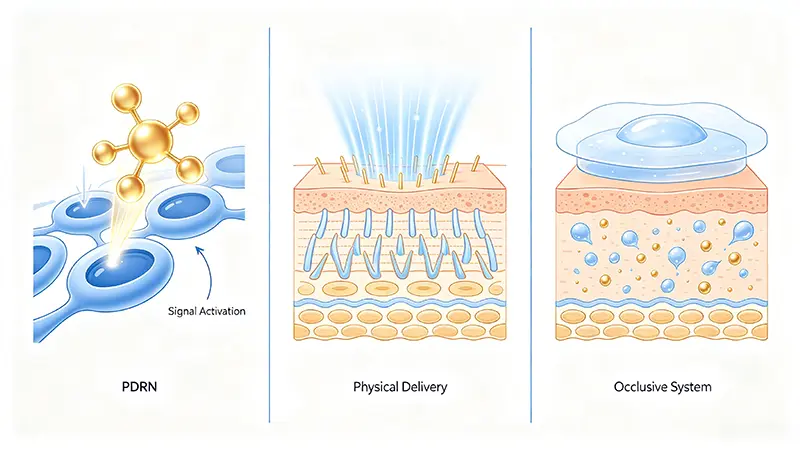
PDRN: Activates adenosine A2A receptors on skin cells, triggering fibroblast proliferation and collagen synthesis signals.
-
Spicules: Physically create micro-channels, enhancing transdermal penetration of active ingredients while triggering the skin's own repair cascade.
-
Hydrogel System: Forms a "closed diffusion chamber" on the skin surface, prolonging the active ingredients' duration of action.
This "three-in-one" logic essentially replicates the aesthetic clinic's "micro-needling + infusion + occlusive repair" protocol in a home setting. P.CALM's clinical testing shows the product passed sensitive skin irritation testing with an irritation index of 0.00—meaning consumers achieve deep delivery without needles or downtime.
What does this mean? The B2C adoption of the PDRN + spicules combination validates a product pathway: integrating "active ingredients + physical delivery + occlusive system" into a single at-home product. This creates more significant technical barriers than simple "high-concentration ingredient addition" and better supports the "bio-hacking" narrative.
Why This Narrative Works in 2026
Three trends converge in 2026, providing the perfect market conditions for "bio-hacking" skincare:
Trend 1: The Global Shift from "Anti-Aging" to "Skin Longevity"
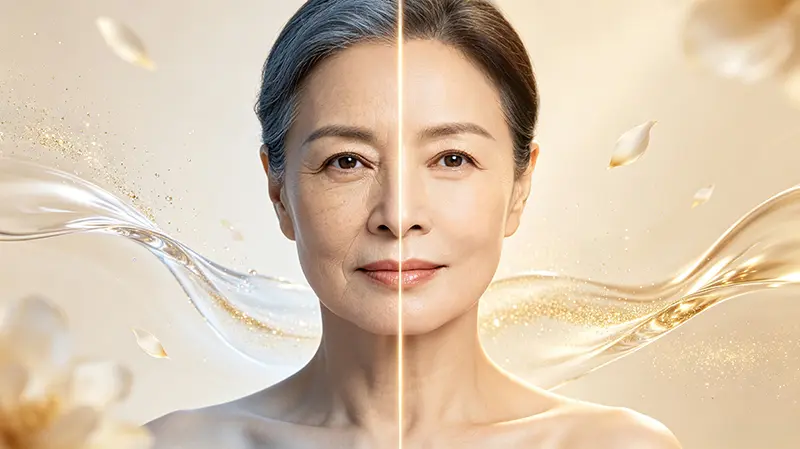
2025 was called the first year of "preventive treatments" and "slow aging." In 2026, this trend deepens further. Dr. Christine Hall notes: "2026 is all about prevention." Consumers no longer ask "how to erase wrinkles"—they ask "how to keep my skin healthy for the long term."
Trend 2: The Acceleration of the "Home-Clinic" Movement
Consumers want clinic-level results at home. Ingredients that were once exclusive to injectable products—like PDRN and exosomes—are now being formulated into serums, masks, and other daily-use skincare products.
Trend 3: The Maturation of Exosome Technology
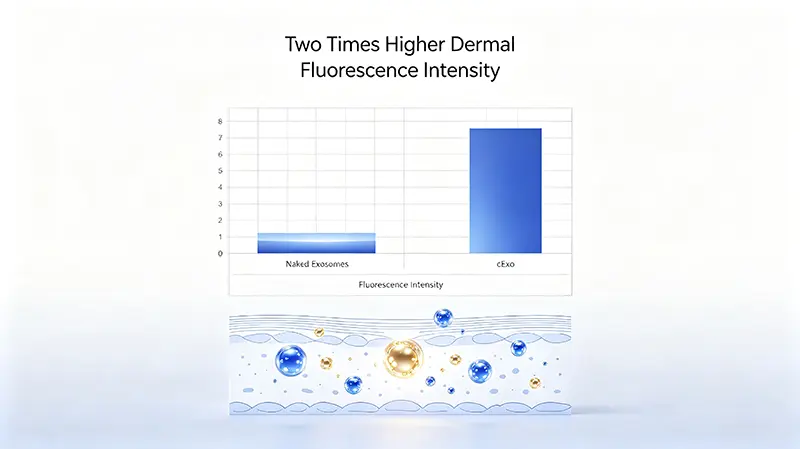
In 2026, exosome applications in skincare are moving from concept to evidence. A study published in the International Journal of Biological Macromolecules showed that chitosan-modified stem cell exosomes (cExo) achieved two times higher fluorescence intensity in the dermis compared to naked exosomes in a porcine skin model—demonstrating the penetration advantages of nano-delivery systems. Another study in BMC Biotechnology detailed the electroporation method for encapsulating PDRN into exosomes.
Conclusion: From "Do You Have This Ingredient" to "Can You Speak to Me"
K-Beauty in 2026 is undergoing a transfer of narrative authority.
The old logic was: "My serum contains PDRN at X ppb." The new logic is: "My formulation uses exosomes to deliver PDRN, sending repair signals to your cells through the A2A receptor pathway."
As "bio-hacking" becomes the master narrative, competition between brands shifts from "whose ingredient list is more impressive" to "who can speak more precisely to skin biology." The value of the PDRN + spicules hydrogel combination lies not in its "formulation complexity" but in its ability to replicate a complete intervention logic: signaling molecule + physical pathway + delivery system.
As K-Beauty editor Jen put it: "Skincare is no longer just about application—it's a conversation with your skin's biology."
Want to experience the "bio-hacking" approach to skincare dialogue? Explore our curated selection of scientifically-validated, signal-driven essentials—designed for those who want to "talk" to their skin.