
MoCRA 2026 Full Enforcement: Compliance Mandates & Supplier Selection Guide for Skincare Brands Exporting to the U.S.
In 2026, the U.S. Modernization of Cosmetics Regulation Act (MoCRA) enters its full mandatory enforcement phase. Any brand selling skincare products in the U.S. market – regardless of whether the products are manufactured in the U.S., China, South Korea, or Southeast Asia – must have its manufacturing facilities registered with the FDA and every single product listed with the agency. Failure to comply means immediate risks: customs holds, platform delistings, and even mandatory recalls. For buyers searching for contract manufacturers, this is no longer a matter of "finding the cheapest supplier" – it's about "finding a factory that allows you to legally sell your products."
From Voluntary to Mandatory: What MoCRA Actually Changes
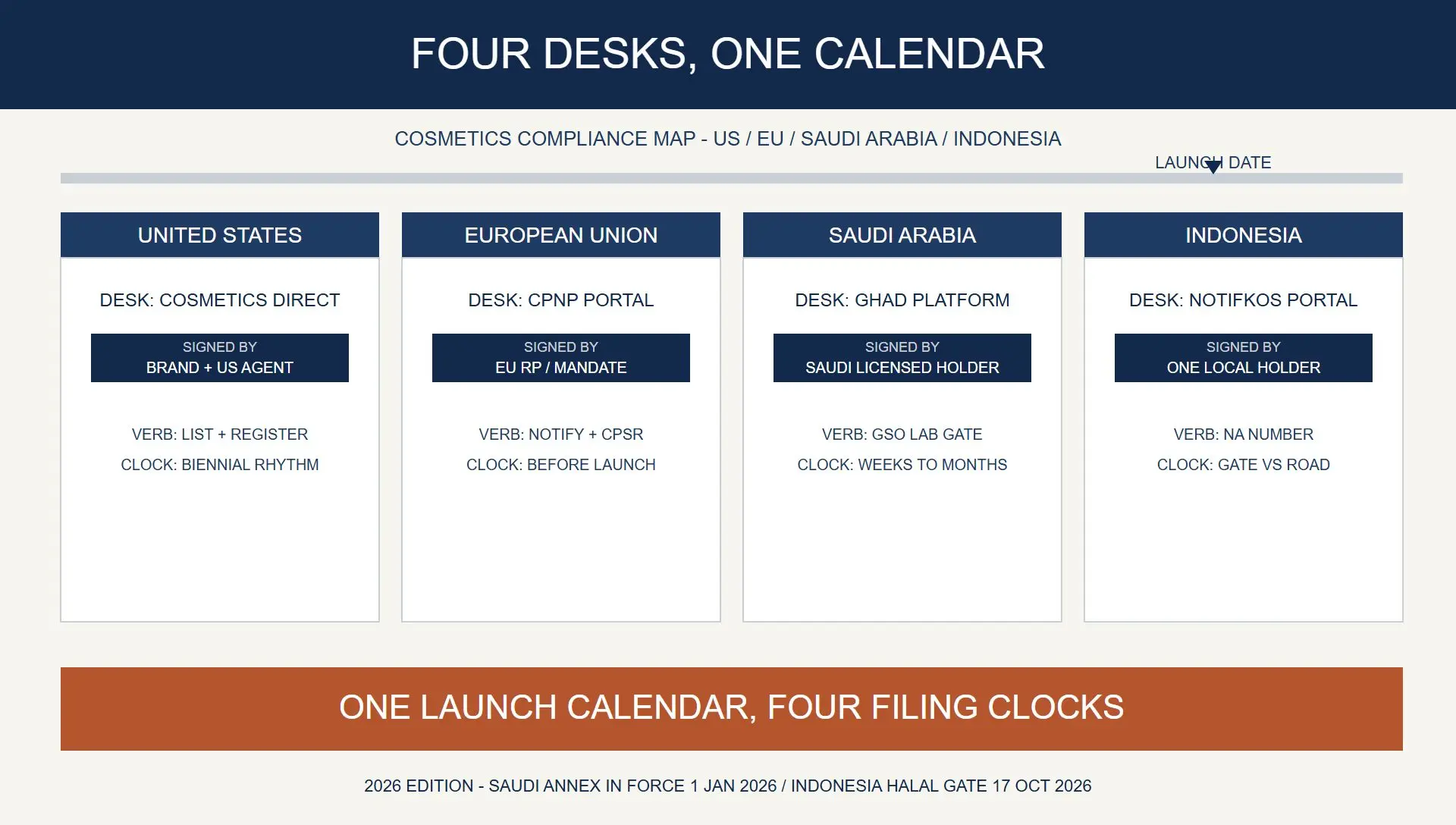
MoCRA represents the most significant expansion of FDA authority over cosmetics since 1938. Since being signed into law on December 29, 2022, the regulatory logic has completely reversed – where the FDA previously relied on a voluntary VCRP (Voluntary Cosmetic Registration Program) to understand the market, registration and listing are now mandatory obligations. As of January 2025, FDA data shows 9,528 facilities registered and 589,762 products listed – numbers that already surpass the 51-year historical total of the VCRP. Starting in March 2025, the FDA began publishing regular registration and listing statistics, signaling a shift toward routine enforcement, with 2026 marking the full transition to mandatory implementation.
At the enterprise level, compliance obligations are clear and non-negotiable:
-
Facility registration (renewed every two years)
-
Product listing (renewed annually)
-
Ingredient and product safety substantiation
-
Serious adverse event reporting within 15 business days (records retained for 6 years)
-
Label disclosure of fragrance allergens
Small businesses with annual sales under $1 million may qualify for certain exemptions, but products that come into contact with the eye area, injectables, oral products, and those that alter appearance for more than 24 hours are not exempt – meaning face masks, serums, and body care products fall squarely within mandatory compliance, with no room for exceptions.
For Buyers: Your Factory's Compliance Capability Is Your Market Access Ticket
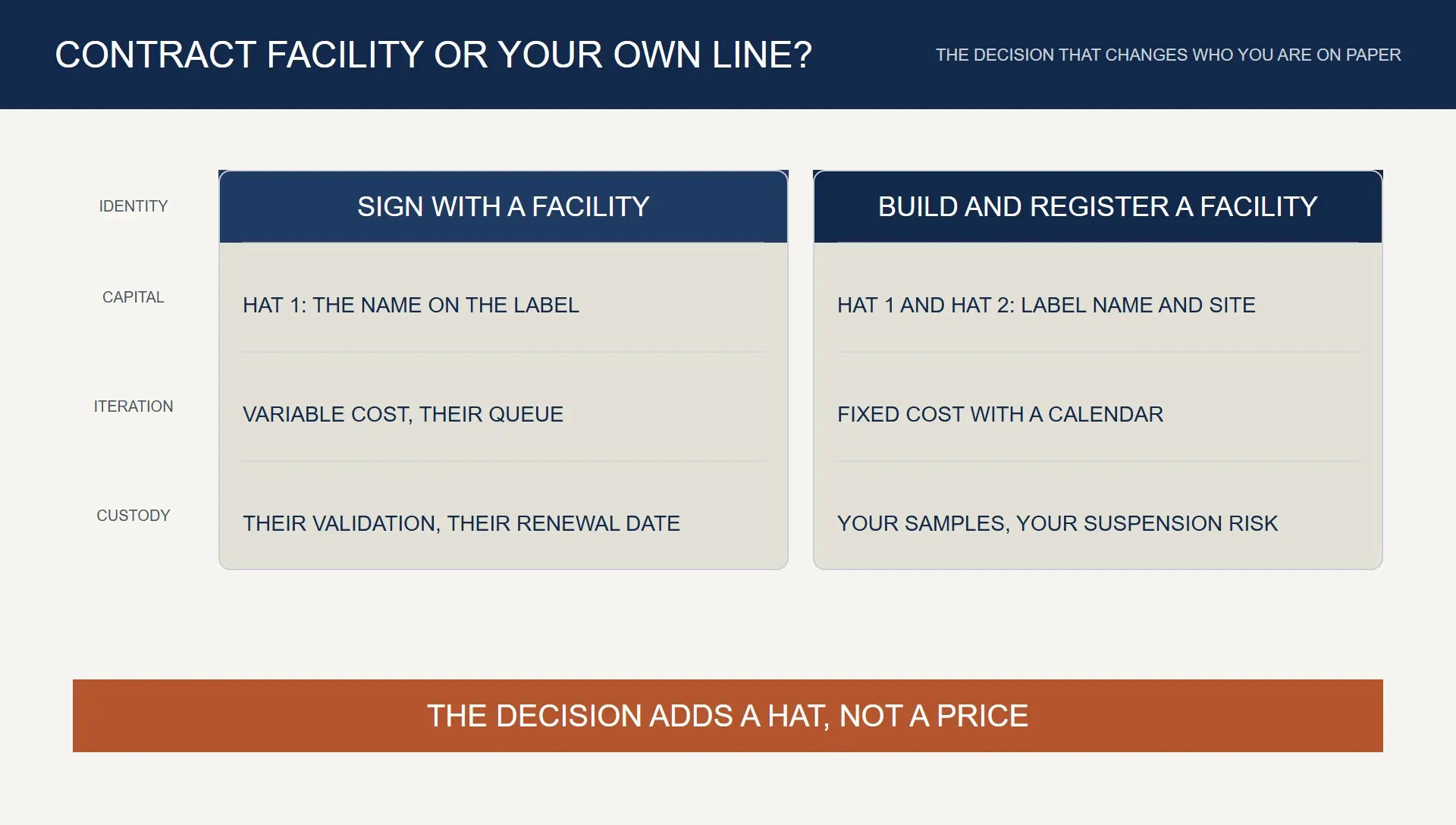
Here's a critical point that must be made clear: under MoCRA, the party responsible for product listing is the "responsible person" named on the label – which is the brand owner, not the factory. Based on our hands-on experience serving cross-border beauty brands, the three most common pitfalls in sourcing are:
-
The factory lacks FDA registration, making product listing impossible from the start.
-
The factory is registered but refuses to share ingredient and safety data, leaving the brand unable to complete safety substantiation.
-
"Credentials held under a third party's name" – a pass-through arrangement that leaves the brand with zero control over its own supply chain.

Therefore, we strongly recommend including three documents in your procurement contracts:
-
FDA facility registration certificate
-
GMPC certification
-
Ingredient and safety data package required for product listing
This is precisely why more and more brands are shifting orders to certified, scaled manufacturers – such as FKY (Zhuhai Fukangyuan Biotechnology), a facility that holds FDA registration, GMPC, and ISO certifications simultaneously, backed by 15 years of R&D experience in biotechnology. As a full-service OEM/ODM manufacturer, FKY offers integrated solutions from formulation design and efficacy customization to packaging development – with safety data provided alongside samples, so brands are on the right side of compliance from day one.
2026 Trend: PDRN and Biotech Skincare Are Rewriting Category Narratives
Beyond compliance, ingredient trends are also undergoing a major shift. PDRN (polydeoxyribonucleotide – a highly purified fragment derived from salmon DNA) is moving from medical aesthetics into mass-market skincare, with 30+ brands already launching PDRN product lines globally. Exosomes, growth factors, and other "bio-hacking" concepts are also reshaping the 2026 skincare narrative. Additionally, the FDA approved the new sunscreen active ingredient Bemotrizinol for inclusion in the OTC monograph in 2025, updating regulatory frameworks for sun care categories. For buyers, new ingredients represent both differentiation opportunities and compliance hurdles – more complex safety assessments and claims management require a manufacturing partner with genuine R&D depth. FKY's R&D team has already developed a series of technical know-how in PDRN and exosome applications – we welcome buyers to visit our facility for in-depth discussions on formulation solutions.

Your next bestseller deserves a factory that is compliant, R&D-driven, and committed to quality. FKY (Zhuhai Fukangyuan Biotechnology) offers full-service skincare OEM/ODM under FDA/GMPC/ISO-certified systems – including MOQ policies, FOB quotations, sampling lead times, and sample request procedures. Reach out to us today – share your requirements, and we guarantee a response within 24 hours with a customized solution.