


When 44°C Heat Waves Become the Norm, Is "Cooling Skincare" a Climate Necessity or Just a Summer Gimmick?
I. From "Seasonal Gimmick" to "Climate-Era Necessity"
Cooling skincare is not a new concept. Menthol shampoos, cooling sprays, and refreshing lotions have long occupied summer shelves. But the difference in 2026 is this: "cooling sensation" is evolving from a vague skin feel into a measurable, technology-backed functional benefit.
Market data confirms this shift. From January to May 2026, sales of skincare products tagged with keywords like "cooling," "refreshing," and "ice-cool" in China grew 46% year-over-year, with May alone surpassing 40 million yuan—a two-year high. The average price of related products also rose from about 42 yuan to 55 yuan, an increase of over 30%. The global cooling skincare gels market was valued at $75.7 billion in 2024 and is projected to reach $105.9 billion by 2033.
What's particularly noteworthy is the surge in cooling sunscreens. In the UK, consumer searches for "cooling sunscreen" jumped 30% year-over-year in May 2026, and 17% of British adults actively seek cooling-effect skincare products during hot weather. Pureseoul, the UK's largest K-Beauty retailer, has seen a 60% increase in sales of cooling sunscreen-related products since autumn 2023.

II. Hydrogel Carriers: The "Hardware Upgrade" of Cooling Skincare
If cooling ingredients are the "software," hydrogel is the "hardware" powering this revolution.
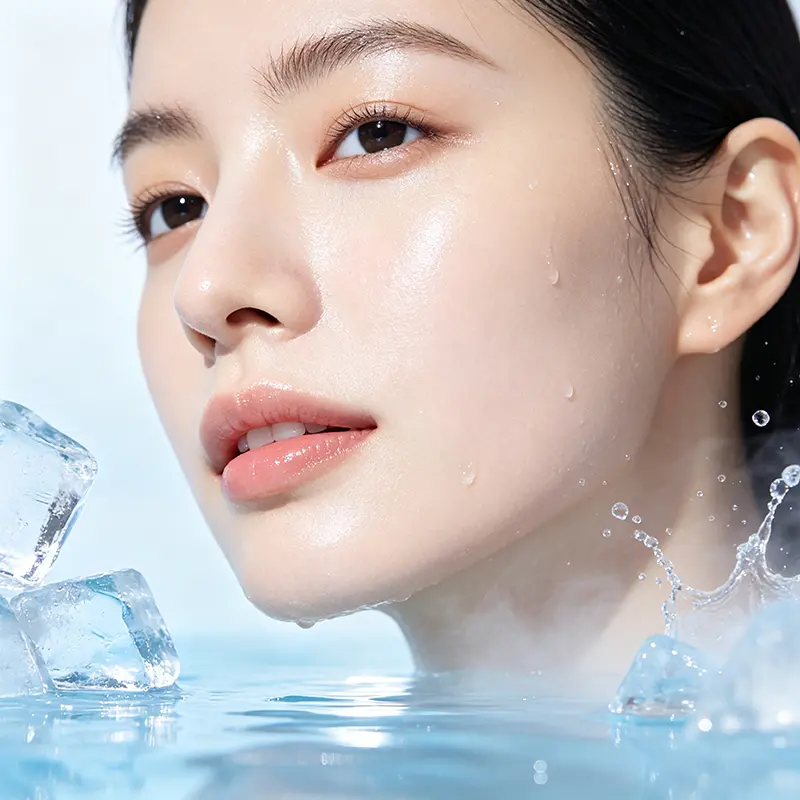
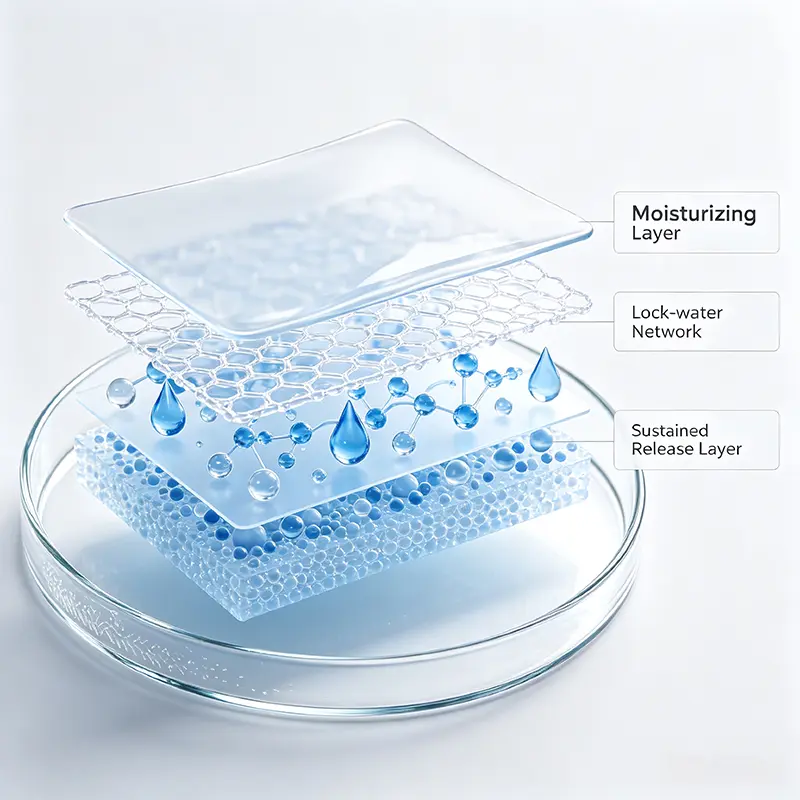
Hydrogels' three-dimensional porous structure locks in large amounts of water, forming an occlusive layer on the skin's surface that maintains a moist microenvironment and provides immediate cooling and soothing effects. Compared to traditional nonwoven sheet masks, hydrogel masks offer superior skin conformability, moisturizing capacity, and local tolerability. This physical cooling approach is becoming the industry's core technological direction.
2026 scientific research is providing even more possibilities for hydrogel carriers. A study published in Scientific Reports developed a composite facial mask based on chitosan hydrogel with banana/viscose nonwoven fabric, demonstrating strong antibacterial, antioxidant, and moisture management performance. Another study proved that high-amylose corn starch hydrogel masks enable controlled release of thyme essential oil, offering a new solution for stabilizing natural active ingredients.
These innovations are moving from the lab to store shelves. ODM manufacturers like Nox Bellcow are already developing "gentle cooling composition" patents, using seawater combined with multiple cooling agents to provide a milder cooling experience.
III. From Korea to the World: The Globalization of a "Cooling Narrative"
Cooling skincare's rise owes much to South Korea's "climate experience." With summer temperatures often exceeding 35°C and humidity above 90%, cooling beauty products are no longer discretionary items in Korea—they're everyday essentials for surviving the heat.
Now, this trend is going global. At Olive Young, Korea's largest health and beauty chain, cooling products span scalp sprays, body wipes, face masks, neck cooling gels, and sunscreens. K-Beauty brands are replacing traditional menthol with more modern cooling ingredients, providing longer-lasting, non-irritating freshness.
Vogue observed that in 2026, cooling skincare is no longer a "beach vacation luxury"—it's a daily necessity for urban commuters. Behind this is the reality of global heatwaves: 44°C temperatures in Europe, low air-conditioning penetration in UK homes, and high-humidity environments across Asia are all pushing cooling skincare from "nice-to-have" to "need-to-have."
IV. The Challenges: When "Cooling Sensation" Becomes a Measurable Metric
Cooling skincare's rise comes with challenges that demand attention.
First, the sustainability problem. Whether chemical cooling or physical evaporative cooling, the effect is largely momentary. If a product only provides seconds of refreshment, it struggles to drive repeat purchases. Phase-change microcapsules can theoretically extend cooling duration, but high costs and complex manufacturing processes have prevented widespread adoption.
Second, the standardization gap. Brands use inconsistent testing methods and expression formats for claims like "temperature reduction in X minutes" and "duration of cooling effect." As cooling transitions from sensory selling point to quantifiable metric, the industry must eventually confront testing standards, evaluation methods, and claim boundaries.
Third, consumer perception hurdles. The global cooling skincare gels market faces a significant constraint: limited consumer awareness of cooling gels' benefits, combined with varying expectations of sensory and therapeutic outcomes. Many potential buyers may perceive the cooling effect as merely cosmetic or temporary, affecting their willingness to try and repurchase.
Conclusion
Returning to our opening question: Is cooling skincare climate-driven necessity or a fleeting summer gimmick?
The answer is likely: both, but the former is gaining weight. When 44°C heatwaves are no longer news, when "heatstroke deaths" aren't just rhetoric, the value of skincare is being redefined—it's not just about making you beautiful, but helping you live more comfortably in extreme climates.
Hydrogel carriers, cooling ingredient innovations, physical cooling technologies—these aren't marketing buzzwords; they're the industry's real response to real needs. Whether cooling skincare can transcend the seasonal cycle depends on whether it evolves from "summer ice cream" into "everyday water"—not a discretionary pleasure, but an indispensable part of daily life.