
When Giants Start Co-Developing with Factories: Efficacy Skincare Is Changing Lanes
On September 10, 2026, the world's largest beauty group, L'Oréal, and Korean cosmetics ODM giant Cosmax signed a memorandum of understanding (MOU) to jointly develop "next-generation" beauty products, ingredients and sensory innovations for global markets. The collaboration has three explicit directions: first, K-beauty-inspired products for international markets; second, research into new cosmetic raw materials and active ingredients; third, new sensory signatures and product formats influenced by Korean beauty trends. If you run your own skincare brand, or are planning your next efficacy line, the value of this news is not that "two giants shook hands" — it is what it reveals about the changing rules of efficacy competition: R&D capability is shifting from "brand-owned" to "shared between brand and factory", and the ticket to that sharing depends on which kind of factory you choose. This article breaks the news into three parts — facts, mechanics and actions — with checklists and contract points you can take straight to your factory.
The Facts: Three Directions, Two Players, One Signal
Let us be precise first, to avoid reading this as "yet another cross-border partnership". Based on L'Oréal's official announcement and trade coverage, the key points are:
Three keywords decode the signal: "active ingredients" — direction two targets the core asset of efficacy competition; "agile R&D" — the giant explicitly names speed as a reason to partner; "MOU, not acquisition" — giants do not need to own factories, only to plug into their R&D on demand. The implication for buyers follows: if your factory's R&D capability can be plugged in by a giant on demand, its relative value to you depends on what you have locked in. This is not alarmism but a natural consequence of supply and demand — scarce development capacity flows first to orders with the highest certainty, which is exactly what you need to hedge in advance with contracts and trust.(Industry integration and changes in supply chain bargaining power, please refer to the interpretation of the $40 billion merger case on the website)
Why This Is a Signal for Efficacy Competition: Three Fresh Data Points
A single partnership does not prove a trend, but placed beside the same week's data, the direction is clear. All three items below are recent published figures and events:
Together the three tell one story: efficacy skincare is taking share from other categories (Yatsen skincare +40.4% vs colour cosmetics -35.8%), efficacy technology is spreading across categories (growth factors into eye makeup), and the bar for substantiating efficacy claims is rising simultaneously (a trade show built around evidence). Under this triple pressure, the deciding factor moves from "marketing volume" to "R&D and evidence". And L'Oréal × Cosmax shows precisely that even the world's largest group no longer develops everything in-house — it co-develops with factories. If your brand still works by "sending a formula sheet to the factory", your gap versus industry leaders will not be price. It will be iteration speed.
The Line Is Blurring: From Procurement to Co-Development
Why does "co-development" happen? Understanding the mechanics matters more than memorising the conclusion. For three decades the division of labour was: the brand defines the product (positioning, concept, claims); the factory executes the formula and manufactures it reliably. Three forces are dismantling that division.
Force one: efficacy ingredient iteration outpaces brand in-house development. New raw materials, actives and formats (better encapsulation, superior sensory bases) iterate fastest at ingredient suppliers and factories(For a comparison of the mechanisms and selection criteria of various efficacy ingredients, refer to the article "A Comprehensive Analysis of Efficacy Skincare Ingredients" within the site.), because they serve dozens or hundreds of brands and see the widest market feedback. Brand labs can validate, but struggle to keep pace with discovery.
Force two: the cost of evidence raises the self-development threshold. When an efficacy claim requires clinical, consumer or lab data (see ECGT and MoCRA substantiation requirements), each in-house trial costs not just formula expense but a composite of time, testing and compliance. Sharing it with a co-development partner is the most direct way to cut unit trial cost.
Force three: sensory experience has become part of efficacy. Direction three (sensory and formats) reveals another trend: consumers' perception of efficacy depends heavily on texture and skin feel — the same active in different bases produces different repurchase rates. Sensory tuning is quintessential "factory craft": experience-intensive and hard to specify on a formula sheet.
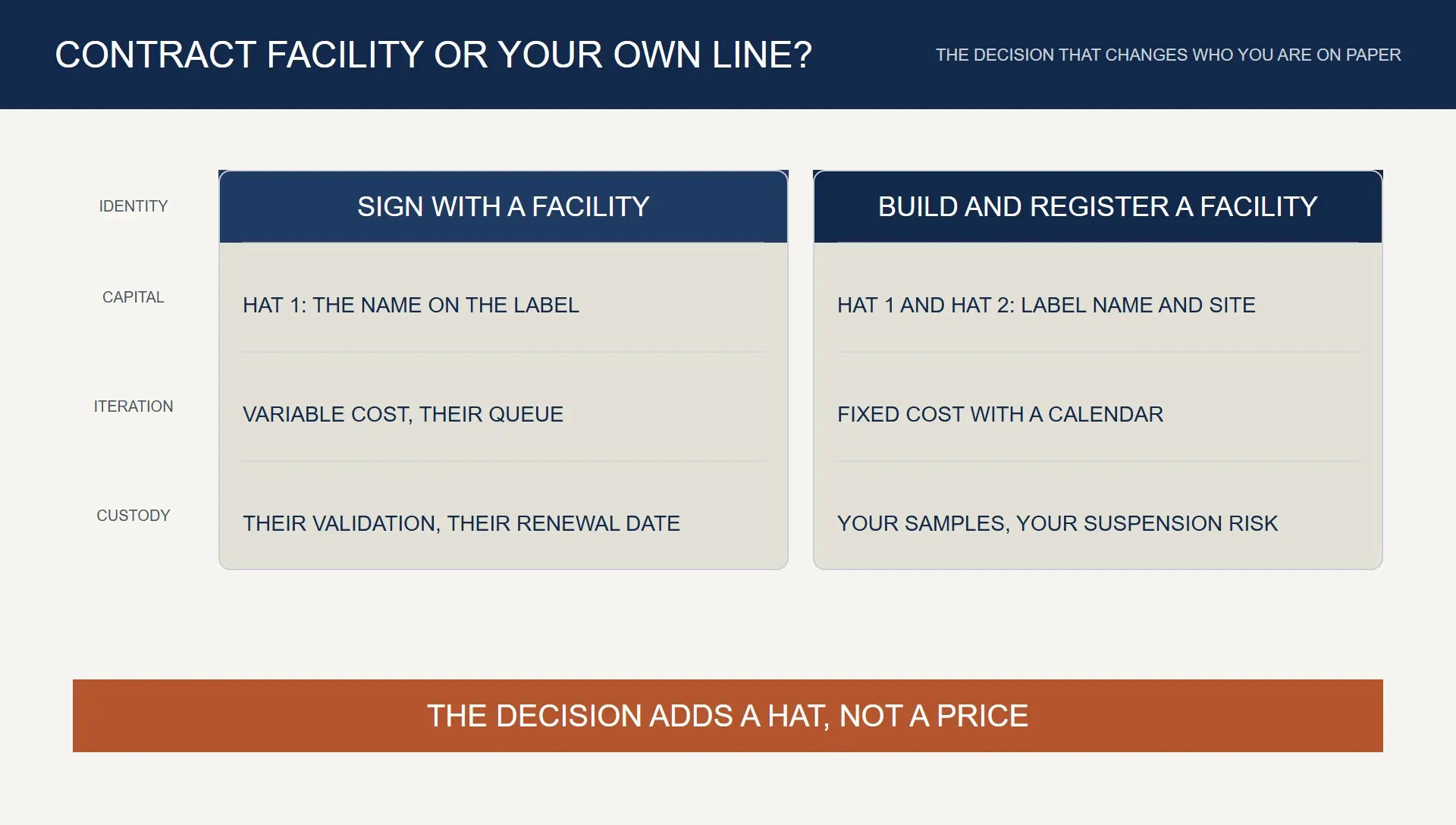
Together these forces push the brand–factory relationship from "buyer-supplier procurement" toward "co-development partnership". For you, that means two things: first, core factory-selection criteria must expand from price and capacity to R&D and validation capability; second, relationship stability shifts from price comparison to accumulated shared assets — who owns the IP and who may use the data will determine your negotiating position in the next product iteration.
Updated Factory Criteria: 8 Questions to Test R&D Capability
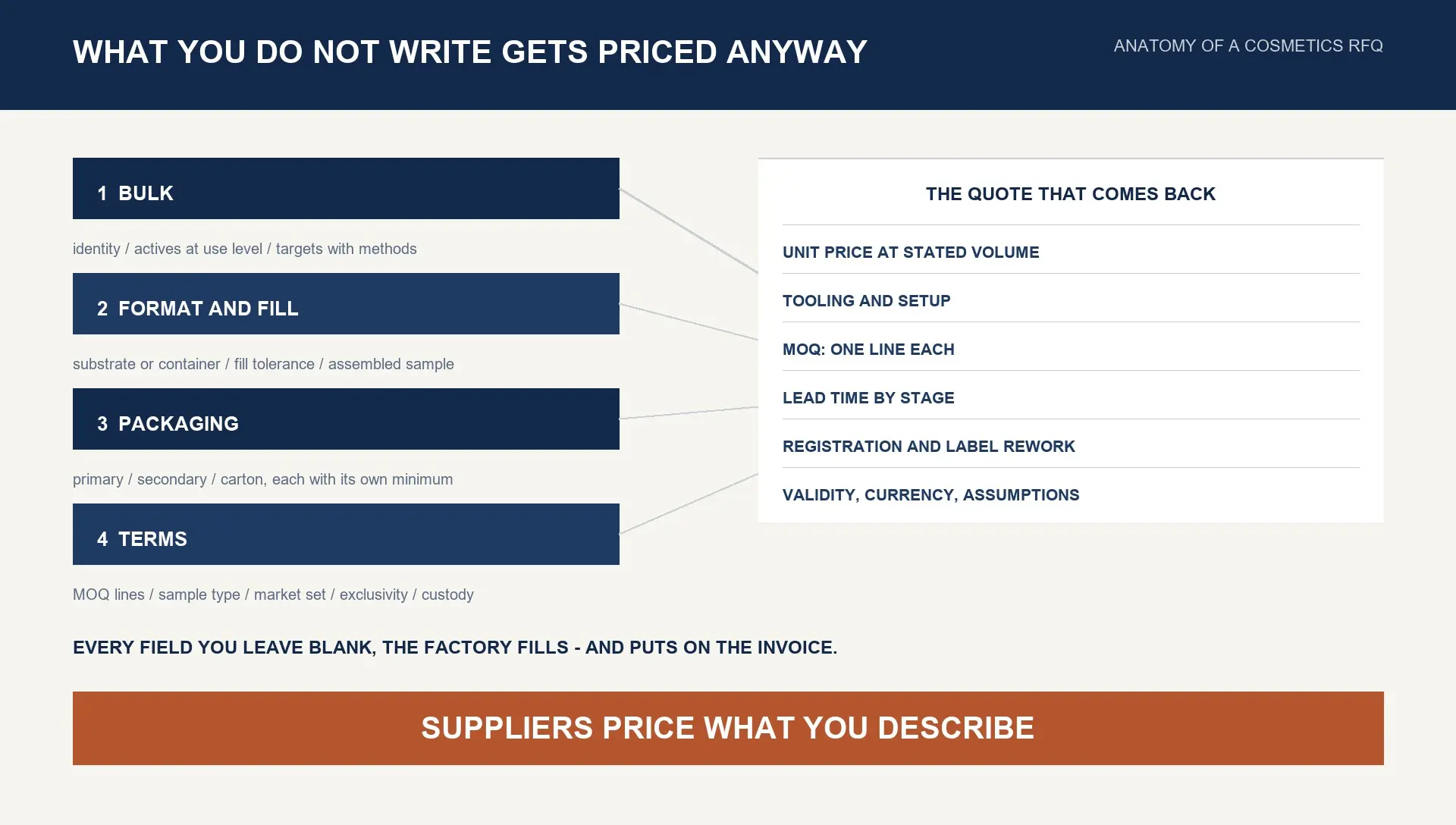
Turning the analysis into action yields a question list you can send to your current or candidate factory today. Ask for written answers and write critical commitments into the contract annex.
- R&D team size and structure: how many formula developers? Are there dedicated efficacy-evaluation (in-vitro/in-vivo) and stability roles, or is everything outsourced?
- Depth of the formula library: can they share mature base-formula frameworks for you to differentiate on? Will changing one active compromise stability?
- Access to new ingredients: which ingredient suppliers do they co-create with directly? Can they obtain pre-launch samples and complete feasibility assessment?
- Efficacy validation capability: what in-house testing (instrumental, in-vitro models) exists? Which third parties run clinical and consumer tests, with what lead times and costs?
- Evidence document delivery: can they provide ingredient data, COA, stability reports and packaging-formula compatibility reports with samples? Who signs them?
- Format and sensory expertise: beyond serums, masks and creams, do they have production cases for custom formats (novel mask substrates, waterless systems, bi-phase serums)?(Please refer to the formulation and texture presentation of essence, facial mask and body care in FKY product series)
- Capacity and R&D priority: how are development resources allocated? What response commitments apply to my project during sampling and revision (maximum rounds, per-round lead time)?
- IP and data boundaries: how is ownership of co-developed formulas and data defined? Have they developed similar formulas for other clients — and if so, how do they prevent convergence?
How to use it: questions 1-7 filter; question 8 negotiates. What determines long-term partnership quality is often not "can the factory do it" but "for whom will it be done first, and who owns the result".(Key points of light joint research and cooperation models for small and medium-sized brands can refer to the article "China Low MOQ Skincare OEM" on the website)
Contract Points: 5 Clauses on Co-Development Ownership
Once co-development begins, "who owns what" must be on paper. The five points below are ranked by importance and can serve as a legal briefing outline (specific clauses depend on your market and commercial relationship):
- Separating formula ownership from usage rights: define who owns the formula and the scope of licences (region, channel, category, term). A common structure: joint ownership, with your brand receiving exclusive usage in specified categories/markets.
- Exclusivity window: specify the length of exclusivity in your market or channel, and whether the factory may sell to third parties afterwards, and whether reformulation is required.
- Ownership of data and evidence: ownership and licensing of stability, efficacy and compatibility data — these are core assets for claim substantiation; state explicitly that you may use them for product claims and regulatory submissions.
- Continuity of raw material supply: if the formula depends on a novel ingredient, agree substitutes, reformulation obligations and cost sharing if supply is interrupted or prices rise.
- Exit and transfer: on termination, how formula files, process parameters and test methods are handed over; whether you may transfer production to an alternative factory — this clause determines whether your dual-source strategy is even feasible.
Six Frequently Asked Questions
Q1: Will giants co-developing with ODMs crowd out my R&D resources as a smaller brand?
The structural risk exists but can be hedged: contract research response commitments (sampling rounds and lead times), avoid peak-season development, and build long-term frameworks rather than one-off projects. What gets crowded out is ad-hoc insertion, not planned work.
Q2: Does co-development suit a brand with a few million dollars in annual sales?
Yes, if you pick the right form. Giants pursue frontier-ingredient co-development; smaller brands more realistically pursue "mature base formula + differentiated actives" — light co-development that uses a factory's stable base and concentrates your budget on differentiating actives and evidence.
Q3: How do I tell real R&D from packaging?
Look at three things: whether they can show formula frameworks and post-mortems of failed projects (success-stories-only usually means limited experience); whether they can explain why a formula works (mechanism, not sales talk); and whether they hold in-house stability and compatibility data rather than outsourcing everything.
Q4: Will co-development make my formula identical to competitors'?
This is the most realistic risk. Three countermeasures: negotiate an exclusivity clause; differentiate on active combinations and concentration gradients; and require firewall and conflict review for similar projects.
Q5: Who should bear the cost of efficacy validation?
Convention gives it to the brand, but it can be shared: the factory covers routine stability and compatibility testing; the brand covers clinical and consumer testing; or costs split by project stage. The key is attaching the test list and cost allocation to the contract before sampling, avoiding last-minute budget surprises.
Q6: If my factory is partnering with a giant, should I worry or capitalise?
Both. Worry about squeezed capacity and R&D priority; capitalise on access to frontier ingredients and processes, and require — within the contract framework — that equivalent technology be made available to you in agreed form. Treating your factory as a technology partner rather than a mere supplier is the most effective posture at this stage.
A 12-Month Action Roadmap
Here is the analysis folded into an executable schedule:
The roadmap's core logic: during the window when giants are accelerating co-development, upgrade your supply chain from executor to co-creator. That window typically lasts only one to two years — once co-development becomes the industry standard, the scarcity disappears.
Take this list into your next supplier meeting: can your factory co-develop with you, rather than merely execute? Does your contract contain even one clause protecting your rights to co-developed results? If you want to benchmark your current factory's R&D capability and willingness — formula frameworks, testing, evidence delivery and IP boundaries — using the same criteria, send us the 8-question list: FKY offers brand-side buyers a free R&D-fit assessment, turning this industry shift into certainty in your own product line.