



When Skincare Shifts from "Anti-Aging" to "Skin Longevity," Can Your Serum Really Read Your Cells?
I. From "Anti-Aging" to "Skin Longevity": A Global Mindset Shift
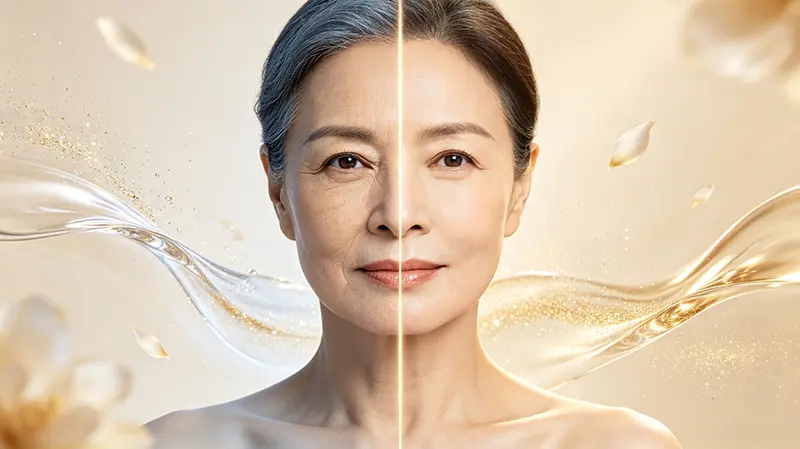
For decades, "anti-aging" was skincare's most powerful sales pitch. But in 2026, consumers around the world are actively rejecting the term.
Mintel's report states it bluntly: the "anti-ageing" era is over—consumers find the term outdated and negative; it no longer aligns with their concept of beauty. Taking its place is a concept that feels more scientific and long-term: Skin Longevity.
According to Mintel's in-depth research on beauty consumers, one of the current core global trends is "Metabolic Beauty" —the industry is entering a new phase where health, technology, and personalization converge. Consumers no longer care only about "erasing a wrinkle." They're now asking: Is my skin barrier healthy? How's my cellular repair function? Is my metabolism functioning properly?
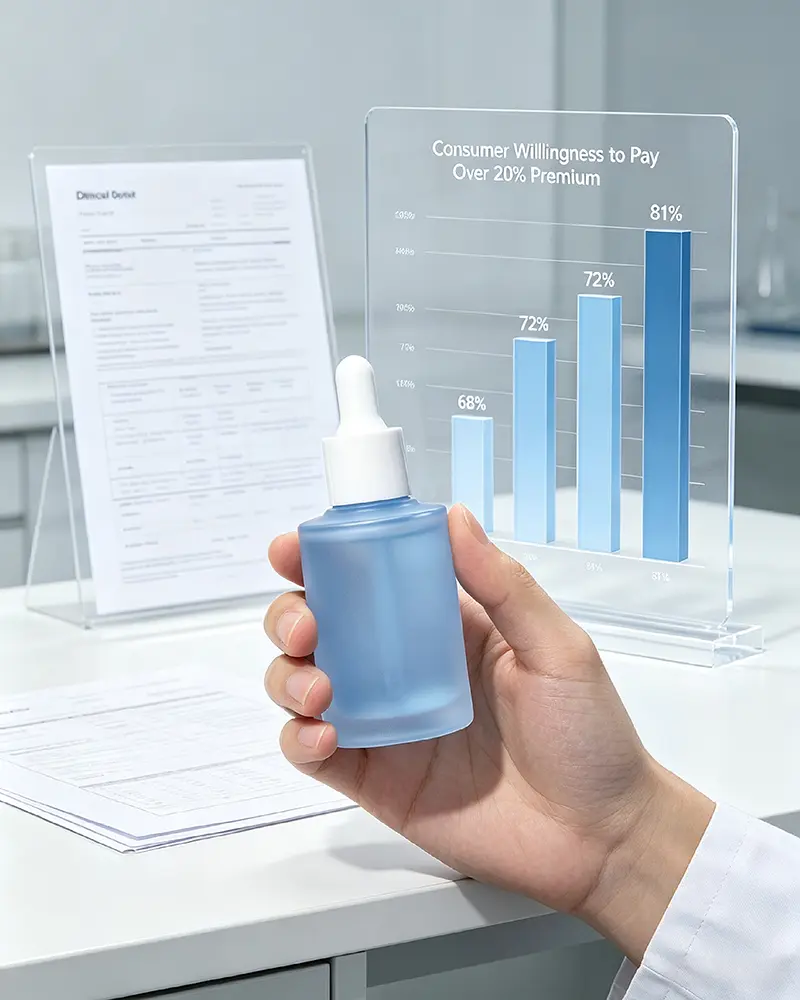
Behind this shift lies a broader consumer focus on preventive health management. According to Euromonitor, approximately 26% to 30% of consumers are willing to pay more than 20% premium for skincare products with expert recommendations or medically-backed efficacy—with "products recommended by medical professionals" commanding the highest willingness (around 30%).
The industry trend is thus moving decisively from "mass-market beauty" toward "science-driven skin health." Purchase decisions are shifting from "Is this brand famous?" to "Does this ingredient have clinical data to back it up?"
II. The Global Surge of Evidence-Based Skincare: The Data Tells the Story
This shift is reflected clearly in 2026 data across global markets.
Dermocosmetics is becoming the fastest-growing segment for major beauty groups worldwide. According to Huatai Securities' analysis of Q1 2026 earnings for leading global beauty companies, the dermatological beauty divisions of Galderma (Cetaphil/Alastin), L'Oréal (CeraVe/SkinCeuticals), and Beiersdorf (Eucerin) posted revenue growth of 17.0%, 10.2%, and 8.2% respectively—significantly outpacing their overall corporate growth.
This trend is truly global in scope:
-
In China: Functional skincare products are surging, with body contouring, ampoule/essence serums, and lyophilized powder serums gaining popularity. Consumption is shifting from "basic skincare" to "precision care."
-
In North America: Nearly 69% of U.S. consumers follow a structured skincare routine, and 61% prefer dermatologist-tested products.
-
In Europe: Approximately 64% of consumers prioritize ingredient transparency. Pharmacy and specialty clinic channels account for about 44% of regional sales, reflecting a "trust-driven" purchasing model.
-
In Asia-Pacific: In 2025 alone, the Southeast Asian sunscreen category grew 14% and skincare 10% —far exceeding average market growth.
The global skincare market is projected to grow from approximately $176.3 billion in 2025** to about **$293.9 billion by 2032, at a CAGR of 7.57%. And efficacy-driven, dermatologically-backed, ingredient-transparent products are the core engine of this growth.
III. The "Metabolic Beauty" Era: The New Battleground for Skincare Brands
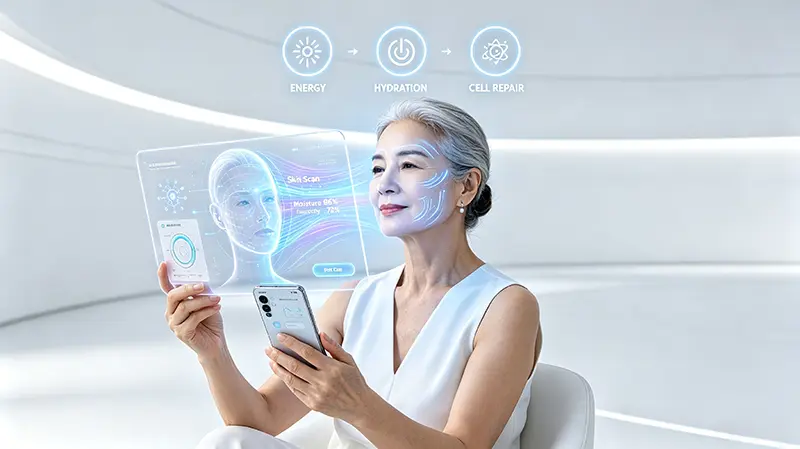
But simply "having efficacy" is no longer enough. Mintel defines 2026 as the tipping point where beauty and wellness converge. The truly disruptive trend is this: advances in biomarker testing, metabolic monitoring, and biosensing technologies are reaching mainstream accessibility, making customized solutions for energy, hydration, and cellular repair a reality.
In other words: the future of skincare will be "measurable."
Whether a brand can leverage AI skin analysis, biosensors, or genetic testing to deliver personalized skin health diagnostics and predictions will become the next competitive frontier. Skincare will evolve from a "discretionary indulgence" into "preventive health insurance," and brands will compete not as "beauty companies" but as "health management service providers."
Early signs of this trend are already visible among leading players. Shiseido's "Beauty Park" in Japan doesn't just assess skin condition—it integrates physical and mental state diagnostics to predict future changes. Meanwhile, in China, over 60% of consumers have used beauty-related apps in the past 12 months, and AI-powered diagnostic solutions combined with online dermatologist consultations are rapidly gaining traction.
IV. The New Pricing Logic in Premium Skincare: How Much Would You Pay for a Brand That "Gets" You?
This transformation is also redefining what "premium" means in skincare. In the past, premium meant luxury packaging, brand storytelling, and celebrity endorsements. But in 2026, the new definition of premium is: scientific validation, clinical data, and personalization.
Euromonitor data shows that nearly 30% of consumers are willing to pay more than 20% extra for clinically-backed, medically-recommended products. Similarly, global consumer insights reveal that over 65% of skincare buyers trust products recommended or tested by dermatologists.
For independent brands and DTC sites, this means building "scientific trust" may deliver greater long-term value than blanket marketing spend. Keywords like "skin biomarkers," "AI-powered personalization," and "clinically-proven efficacy" are becoming new focal points in consumer search and decision-making.
Conclusion
"The beauty industry sits at the nexus of wellness and appearance; but until recently, this connection has been more marketing than science." — Mintel, 2026 Global Beauty Trends Report
The skincare industry in 2026 is undergoing a paradigm shift from "surface beauty" to "deep health." The core consumer question has evolved from "Make me look younger" to "Make my skin truly healthier."
When your serum doesn't just hydrate but can actually tell you—through biosensing—that "your cellular repair capacity is declining, consider supplementing with X nutrient"—will you still care whether its bottle is made of glass?
This transformation is still in its early stages. But it has already begun. And for both brands and consumers, a more transparent, more scientific, and more personalized era of skincare is arriving.
Want to learn more about your skincare choices in the "Metabolic Beauty" era? Explore our curated selection of scientifically-validated, ingredient-transparent essentials—designed for those who truly care about their skin's long-term health.