






Why Biotech Skincare is Better than Traditional Formulas
What Makes Biotech Different?
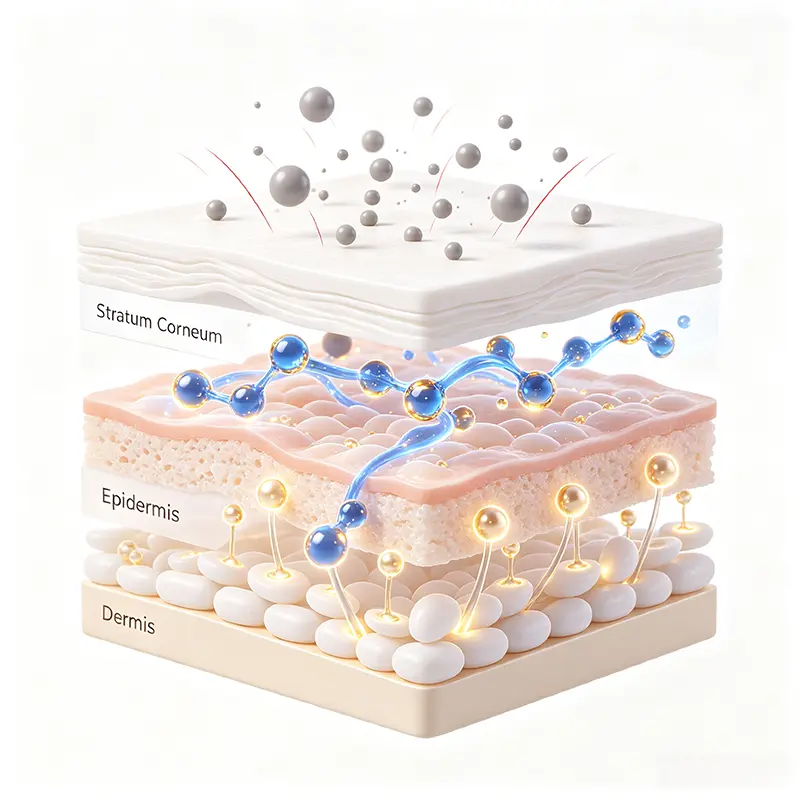
The skin is not a wall. It is a living organ, constantly communicating through proteins, lipids, and microbes. Traditional skincare often speaks the wrong language to this organ—harsh acids overwhelm the barrier, plant extracts trigger unpredictable reactions, and synthetic actives offer power without precision.
Biotech changes the conversation. By engineering molecules in controlled lab environments, biotech creates bio-identical or biomimetic ingredients that the skin recognizes and accepts. These ingredients don't just sit on the skin; they work with it.
"Your skin recognizes these ingredients as natural, so you have this compatible, biomimetic exchange."
— Joanna Ellner, founder of Reome
The Precision Problem: Why Natural Isn't Always Better
Many consumers believe "natural" equals "better." Cosmetic chemist Ginger King explains why this isn't always true: natural ingredients "may not have the performance levels you're looking for" because their concentration varies due to factors like weather, soil, and harvest time.
Biotech solves this problem. Through fermentation and controlled biological reactions, biotech produces ingredients that are more consistent, quality-wise. Every batch is identical to the last.
Consider the example of squalane. Traditionally, squalane was sourced from shark liver—unsustainable and ethically problematic. Olive-derived squalane offered an alternative but suffered from seasonal variability. Biotech produces squalane through precision fermentation of sugarcane, creating a 100% vegan, stable, skin-identical molecule that doesn't fluctuate with harvest conditions.
| Aspect | Traditional | Biotech |
|---|---|---|
| Consistency | High batch-to-batch variability | Consistent, quality-controlled |
| Sustainability | Resource extraction-dependent | Renewable feedstocks, low-input fermentation |
| Skin Compatibility | Some ingredients irritating or incompatible | Designed to be biomimetic and skin-recognizable |
| Purity | Potential impurities from extraction | High purity, standardization possible |
The Proof in the Data: Biotech Delivers Results
Biotech isn't just a marketing story. Clinical studies back its claims.
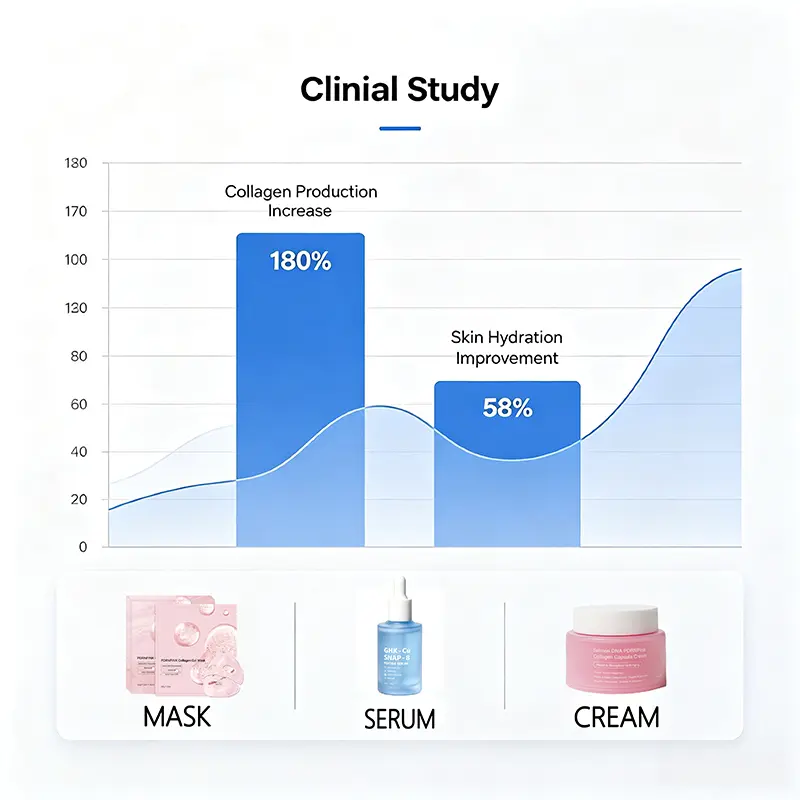
BASF's live probiotic anti-aging cream uses Lactobacillus crispatus—a bacterium abundant on young skin but mostly absent by the mid-50s. When applied in a cream at 0.25% concentration, it increased collagen production by 180% in a 56-day study, resulting in a marked reduction in wrinkles.
Hydrinity, a biotech skincare brand built on biomimetic exosome delivery technology, was named the fastest-growing professional skincare brand in the US two years running by Kline + Company, with 77.3% year-on-year growth and a presence in 40 countries.
Epicutis projects $50-75 million in revenue for 2026. Its Hyvia moisturizing agent—derived from non-GMO chia seed through a biotech extraction process—delivered 58% greater improvement in skin hydration versus vehicle in a study published in the Journal of Cosmetic Dermatology. The ingredient doesn't just deliver hydration topically; it "activates the skin's own hydration machinery at the gene expression level".
Melt&Marble's precision-fermented lipid Marble7 (INCI: r-Saccharomyces Butter) offers a biomimetic skin lipid profile rich in Omega-7. Clinical studies demonstrate benefits for skin barrier repair, hydration, and anti-inflammation—all from a single ingredient produced without animal or plant sourcing.
Plant-derived exosomes have also demonstrated significant clinical results. A 2025 Korean study showed that a formulation containing four types of plant-derived nano-exosomes doubled skin moisture content within two weeks, while significantly improving elasticity, reducing pigmentation, and refining skin texture.
Sustainability Without Sacrifice
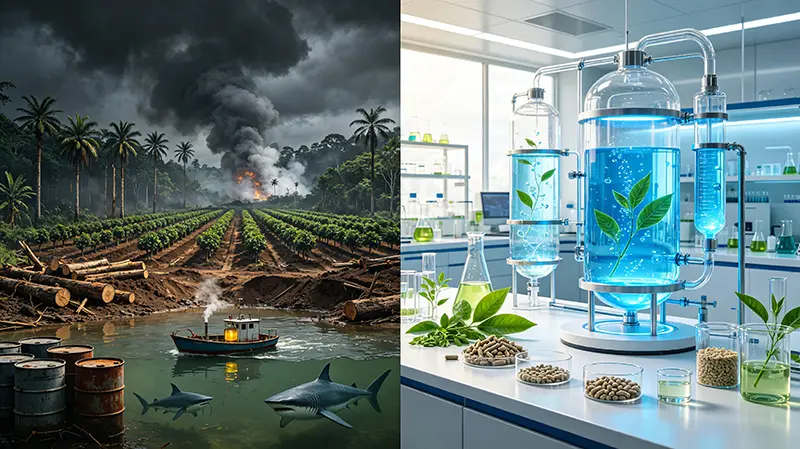
Traditional sourcing comes with a heavy environmental toll. Palm oil cultivation causes significant deforestation—"an estimated forest area of 300 football fields" cleared every hour for plantations. Animal-derived ingredients carry high emissions and ethical concerns. Over-harvesting threatens ecosystems.
Biotech offers a different path. Precision fermentation uses renewable feedstocks, requires less land and water, and produces dramatically lower carbon footprints than plant- or animal-derived alternatives. BASF's Probiolift production uses only renewable inputs and repurposes fermentation waste for other cosmetics.
"Sustainable skincare trends are moving beyond just natural labels toward science-driven ingredients that combine performance with sustainability."
— Magdalena Koziol, Äio
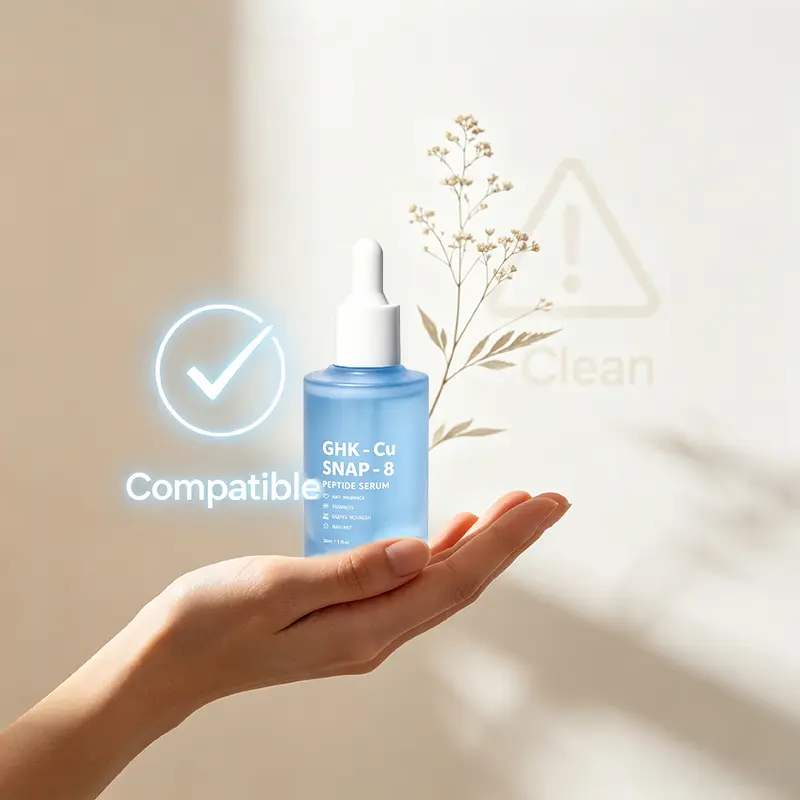
From "Clean" to "Compatible": The New Standard
For over a decade, "clean" was the beauty industry's buzzword. But as one expert notes, clean does not always mean compatible.
A plant extract can be natural and still irritating. A minimalist formula can be paraben-free and still destabilize the microbiome. Compatibility is a higher bar: designing formulas for skin tolerance, long-term resilience, and minimal inflammation to the skin's ecosystem.
This is where biotech excels. By engineering molecules in consistent, controlled lab environments, active ingredients can be standardized for purity, as well as predictability. The question is no longer "Is it clean?" but "Will the skin recognize and accept it?"
As industry experts note, the industry no longer runs on what's clean. It's about what's in sync. Skin compatibility is becoming the new credibility.
A Quiet but Powerful Shift
The shift toward biotech isn't just happening in boutique brands. Across the industry, major players are betting on biotech. CeraVe's ceramide-rich range has earned global trust on the skin-identical promise. No7 launched its Prime Forever collection in 2026 using spatial transcriptomics research with the University of Manchester.
Investment is following. DC Advisory reports that skincare is the most active beauty M&A subsector globally, with acquirers targeting proprietary molecules and delivery platforms rather than simply pursuing scale. The market is projected to grow from $5.8 billion in 2025 to $8.6 billion by 2032.
The Bottom Line
Biotech skincare offers what traditional formulas have struggled to achieve: consistency, precision, sustainability, and true skin compatibility. It doesn't force the skin to adapt to a product—it teaches the product to adapt to the skin.
When you choose biotech, you're not just buying a product. You're buying into a system that respects your skin's biology, the environment, and the science behind what actually works.
As one industry leader put it: "Science always wins. When you build on a real scientific foundation, you don't have to change your story. The results speak for themselves."
Want to experience the biotech difference? Explore our curated selection of scientifically-validated, biotech-powered essentials—designed for skin that deserves the best of science and nature, working in harmony.