

PFAS 2026 Ban Map: "Forever Chemicals" in Skincare Formulas Are Being Phased Out State by State
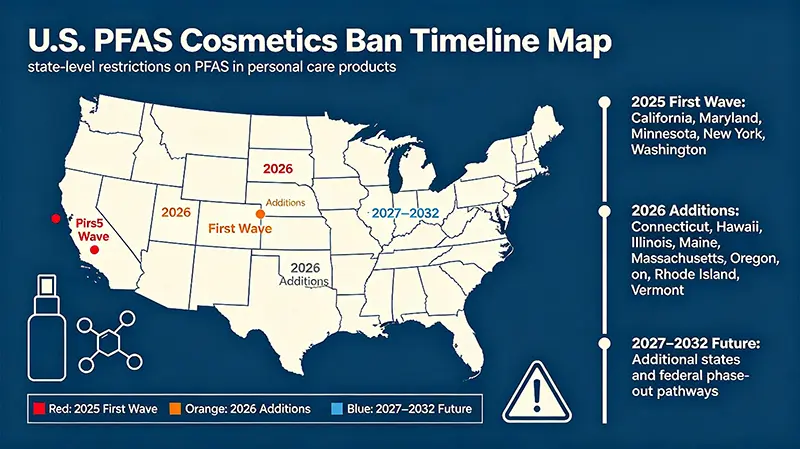
2026 is shaping up to be the year PFAS (per- and polyfluoroalkyl substances, the "forever chemicals") cosmetics bans go wide. In the United States, as many as seven states now prohibit the sale of cosmetics with intentionally added PFAS — California, Colorado, Maryland, Minnesota and Washington led the way on January 1, 2025; Connecticut, Maine and Vermont joined on January 1, 2026, with New Hampshire following in January 2027. In the EU, the REACH universal restriction covering more than 10,000 PFAS substances is entering its endgame: the Committee for Risk Assessment (RAC) adopted its opinion on March 2, 2026, final consolidated opinions are due by the end of 2026, and the European Commission is expected to decide in 2027 — while France has already banned PFAS-containing cosmetics nationwide from January 1, 2026. For skincare and colour-cosmetics brands, the meaning is clear: selling into the US is no longer a single "federal licence" but a state-by-state formula compliance map, and the fluorinated film-forming ingredients behind claims such as "waterproof, sweat-resistant, long-wear" now sit at the front line of removal.
The US: State Bans Stack Up, Cosmetics at the Centre
At the US federal level there is still no PFAS cosmetics ban, but state legislation is stacking up. As of early 2026, seven states — California (AB 2771, effective January 1, 2025, class-wide ban), Colorado, Maryland, Minnesota, Washington, Maine and Vermont — prohibit the sale of cosmetics with intentionally added PFAS. Connecticut requires notification before sale of PFAS-containing cosmetics from July 1, 2026, moving to a full ban in 2028; New Jersey signed its "Protecting Against Forever Chemicals Act" on January 12, 2026, with a cosmetics ban effective January 2028; and Illinois' PFAS Reduction Act also places cosmetics on the prohibited list. Just as significant is the finish line: Maine, Minnesota and New Mexico will implement all-product "blanket bans" by 2032. And under Minnesota's "Amara's Law", manufacturers of any product with intentionally added PFAS sold in the state must submit a detailed report to the state's Pollution Control Agency by July 1, 2026 — one of the earliest hard deadlines of the year.
The EU: REACH Universal Restriction in Its Endgame, France Already Ahead
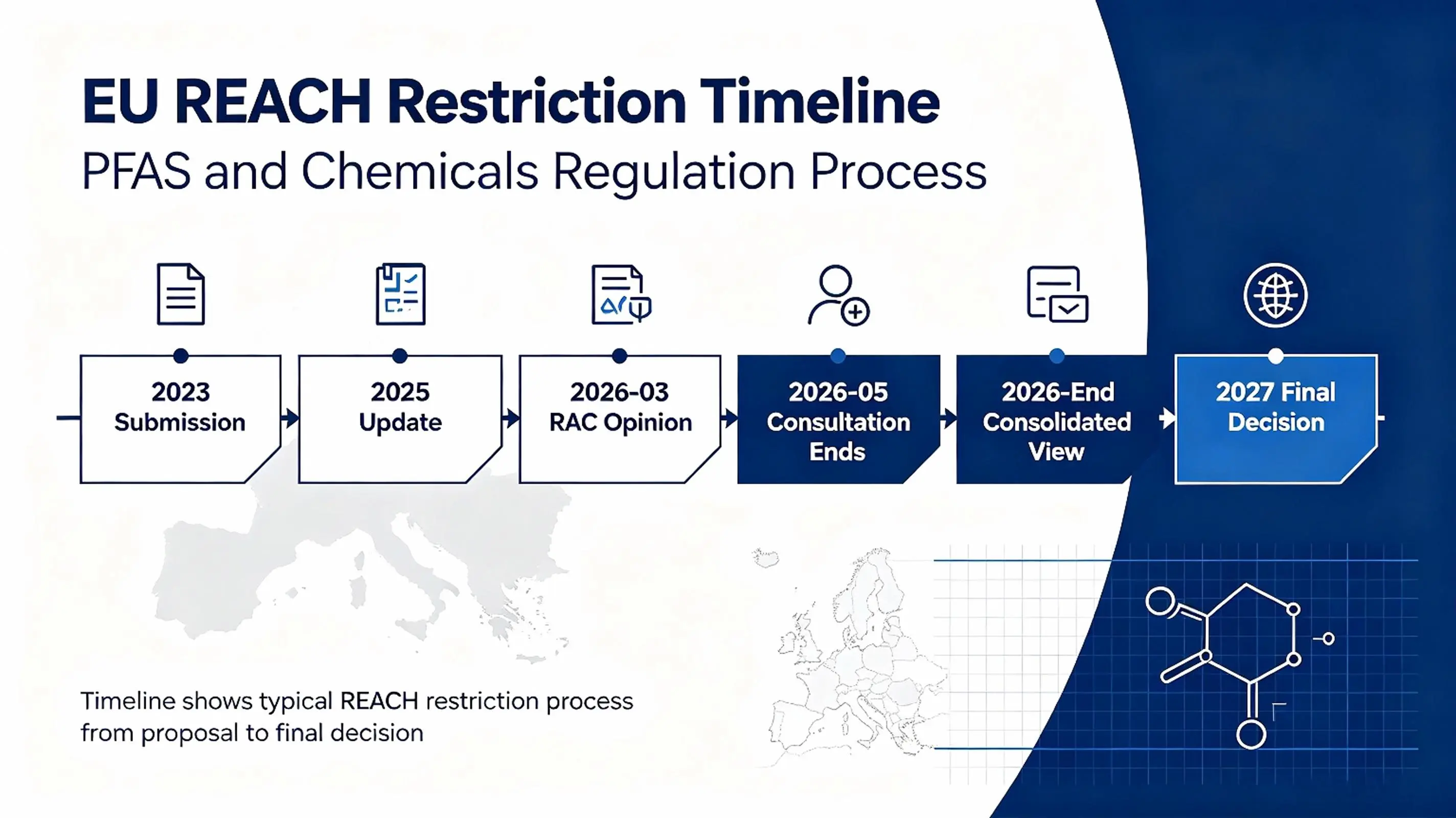
The EU's REACH universal PFAS restriction is one of the largest chemical-restriction initiatives ever proposed: submitted in January 2023 by the authorities of Denmark, Germany, the Netherlands, Norway and Sweden, covering more than 10,000 substances; revised by ECHA in August 2025 to widen the assessment from 14 to 22 sectors; with the Committee for Risk Assessment (RAC) adopting its opinion on March 2, 2026; a final public consultation running from March to May 25, 2026; and final consolidated RAC and SEAC opinions expected by the end of 2026, ahead of a Commission decision in 2027. If adopted, it would be the most comprehensive chemical restriction in EU history. Before the EU-wide layer lands, national action has already moved: France banned the manufacture, import and sale of PFAS-containing cosmetics (alongside textiles, clothing, footwear and ski wax) from January 1, 2026, and Denmark restricts PFAS clothing and footwear from July 1, 2026. And on packaging, PFAS limits already took effect on August 12, 2026 under the EU's PPWR — this wave now targets the formula itself.
Where PFAS Hides in Skincare: The Cost of "Waterproof, Sweat-Resistant, Long-Wear" Claims
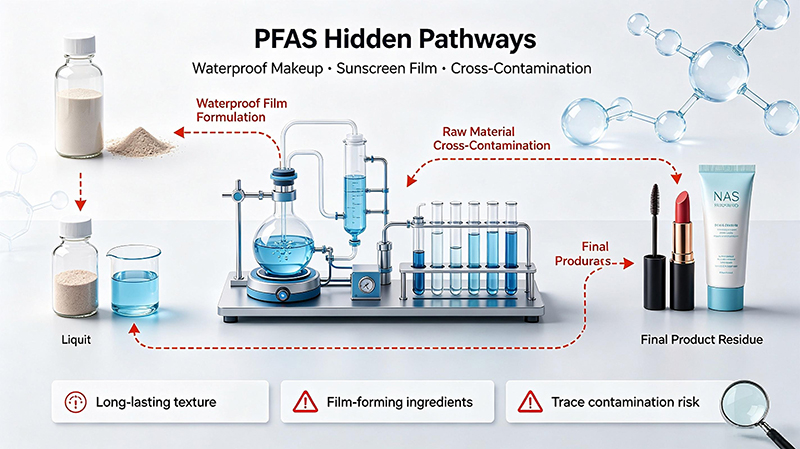
In skincare and colour cosmetics, PFAS are added deliberately for one core reason: function. The hydrophobic and oleophobic carbon-fluorine chain powers waterproof mascara, long-wear foundation, sweat-resistant formulas and sunscreen film formation, and improves skin feel and spreadability. Regulators generally use the "intentionally added" definition — PFAS deliberately incorporated during manufacturing for a functional purpose — but the industry pain point is that even formulas that never intend to add PFAS can show trace levels through raw-material cross-contamination. That is why TOF (total organic fluorine) screening is increasingly demanded by regulations and buyers alike. And the threshold trend in neighbouring categories is a warning: Vermont's total-organic-fluorine limit for textiles drops from 100 ppm to 50 ppm on July 1, 2027 — testing bars are tightening, not loosening.
Buyer Action List: Put "PFAS-Free" into Formulas and Contracts
Formula-level compliance must start at the source of the supply chain. Our five-step recommendation: first, obtain from current and candidate contract manufacturers a declaration of "no intentionally added PFAS" plus a full ingredient list, and check the INCI list for fluorine-related ingredients (PTFE, PVDF, fluorinated surfactants); second, request a total organic fluorine (TOF) screening report to rule out cross-contamination; third, write prohibition clauses into the supply contract with agreed testing responsibility and penalties; fourth, map your target-market obligations — products sold in Minnesota containing intentionally added PFAS must be reported by July 1, 2026 (new reporting rules may involve trade-secret protection procedures); fifth, start substitution development — waterproof and sweat-resistant functions can be delivered by silicone-, wax- or polymer-based film formers, and formula changes plus re-sampling will require reconfirming MOQ, sample policy and lead time. Budget at least 8–12 weeks for the switchover window.
Industry View: PFAS-Free Formulation Is Becoming an OEM Baseline
In our formula discussions with US and EU clients, PFAS self-auditing is shifting from a "compliance question" into an "access question" — buyers no longer ask "does your product contain PFAS?" but simply require "give me the PFAS-free declaration and TOF report." This mirrors exactly the logic of the MoCRA era: the finer the regulation, the more valuable the supply chain's evidence capability. As an OEM/ODM partner serving both US and EU markets, we are helping clients screen formulas for PFAS, issue PFAS-free declarations, and develop silicone- and polymer-based film-forming alternatives — turning "PFAS-free" from a selling point back into a baseline capability.
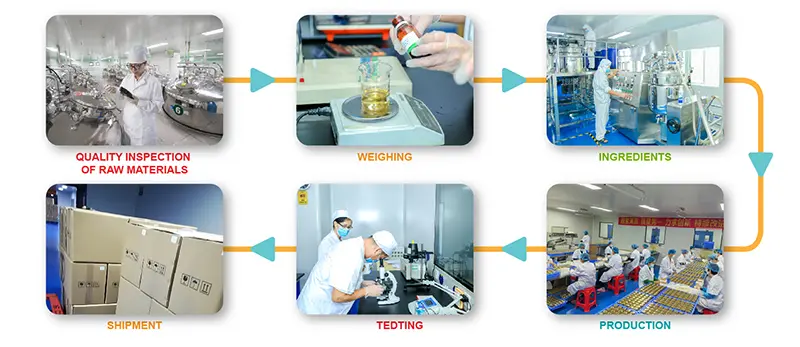
Can your formula survive the state-by-state PFAS map of 2026? FKY (Zhuhai Fukangyuan Biotechnology) now offers "PFAS formula audit + PFAS-free declaration" support: ingredient-list verification, TOF screening liaison and substitution development advice — MOQ, FOB/CIF quotations, sampling lead time and sample policy are available on request. We reply within 24 hours.