
ECGT Applies September 27, 2026: "Natural", "Eco" and "Carbon Neutral" Skincare Claims Lose Their Free Pass
Two Fronts: ECGT Applies While GCD Is Paused — the Bar Only Rises
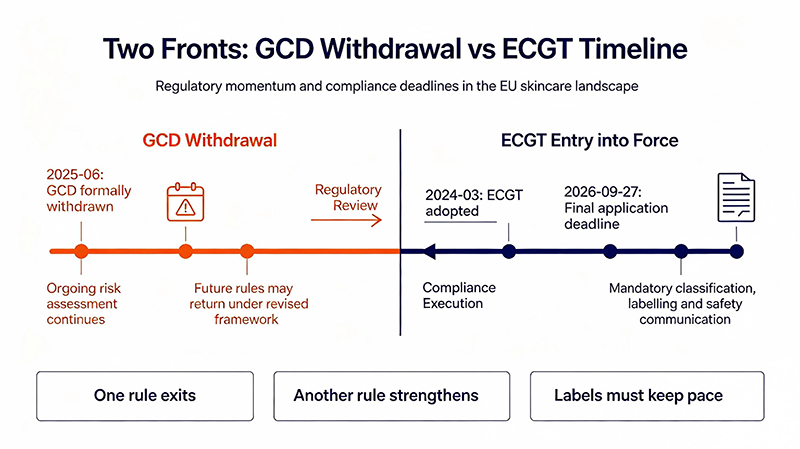
To understand this regulatory shift, you first have to separate two pieces of "green legislation". In March 2023, the European Commission proposed the Green Claims Directive (GCD), which would have created unified, science-based substantiation and third-party verification for all environmental claims. In June 2025, however, the Commission announced its withdrawal, suspending trilogues. While the GCD stalled, the other front advanced regardless — the ECGT, in force since March 2024, amended the Unfair Commercial Practices Directive (2005/29/EC) and added the most important "greenwashing" phrases directly to the blacklist, applying across all 27 member states from September 27, 2026. In other words: regulators closed the GCD door and nailed the window shut through the ECGT — the evidentiary rigour the GCD draft envisioned is now landing early, in blacklist form, enforced by national consumer-protection authorities.
Four Types of Wording on the Blacklist
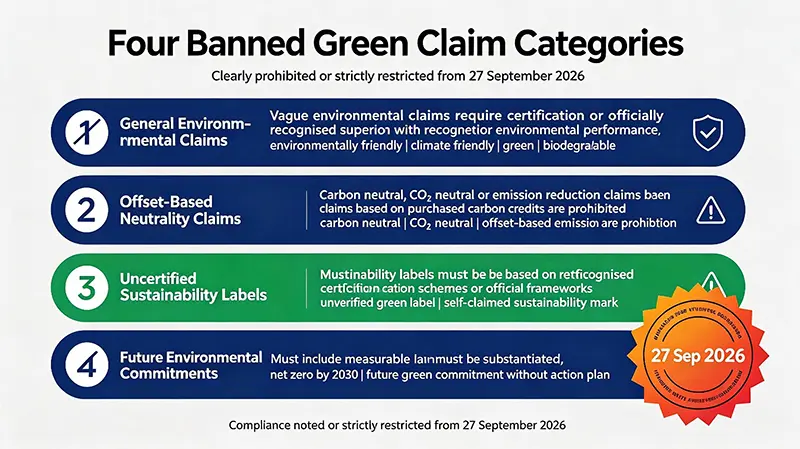
Under the ECGT amendments, four categories of wording are prohibited or strictly limited from September 27, 2026: first, generic environmental claims — vague terms such as "environmentally friendly", "climate friendly", "green" or "biodegradable" are banned unless you can demonstrate recognised excellent environmental performance that is certified or officially recognised; second, offset-based product claims — any claim that a product is "carbon neutral", "CO₂ neutral" or has reduced emissions based on carbon-credit offsetting is flatly banned, effectively killing offset-dependent "carbon neutral" product labels; third, unsupported sustainability labels — any sustainability label must be based on a recognised certification scheme or established by public authorities; fourth, future environmental performance promises — claims such as "net zero by 2030" require a clear, public and verifiable implementation plan with concrete targets, regular independent third-party monitoring and disclosed findings.
Impact on Skincare Brands: What to Remove, What Still Works
Skincare is a hotspot for green claims: natural, organic, plant-derived, biodegradable mask sheets, recyclable bottles, carbon-neutral creams — nearly every selling point touches the line. After September 27, vague words like "natural" can no longer stand alone unless backed by a recognised scheme such as COSMOS organic certification; "carbon neutral" product labels supported by offsetting are banned; and "recyclable" is misleading if the packaging is not actually recyclable. The enforcement direction has already been rehearsed: on June 27, 2024, Germany's Federal Court of Justice (BGH) ruled that the term "klimaneutral" (climate neutral) is inherently ambiguous and must be explained in the advertisement itself — reduction or offsetting; courts in Hamburg and Swiss authorities (SECO/SLK) have tightened CO₂-neutral wording since. The compliant playbook is not "stop talking about sustainability" — it is "only claim specific, provable sustainability": "bottle made with 30% recycled plastic" is far safer than "eco packaging".
Buyer Action List: Claims Evidence Starts at the Factory
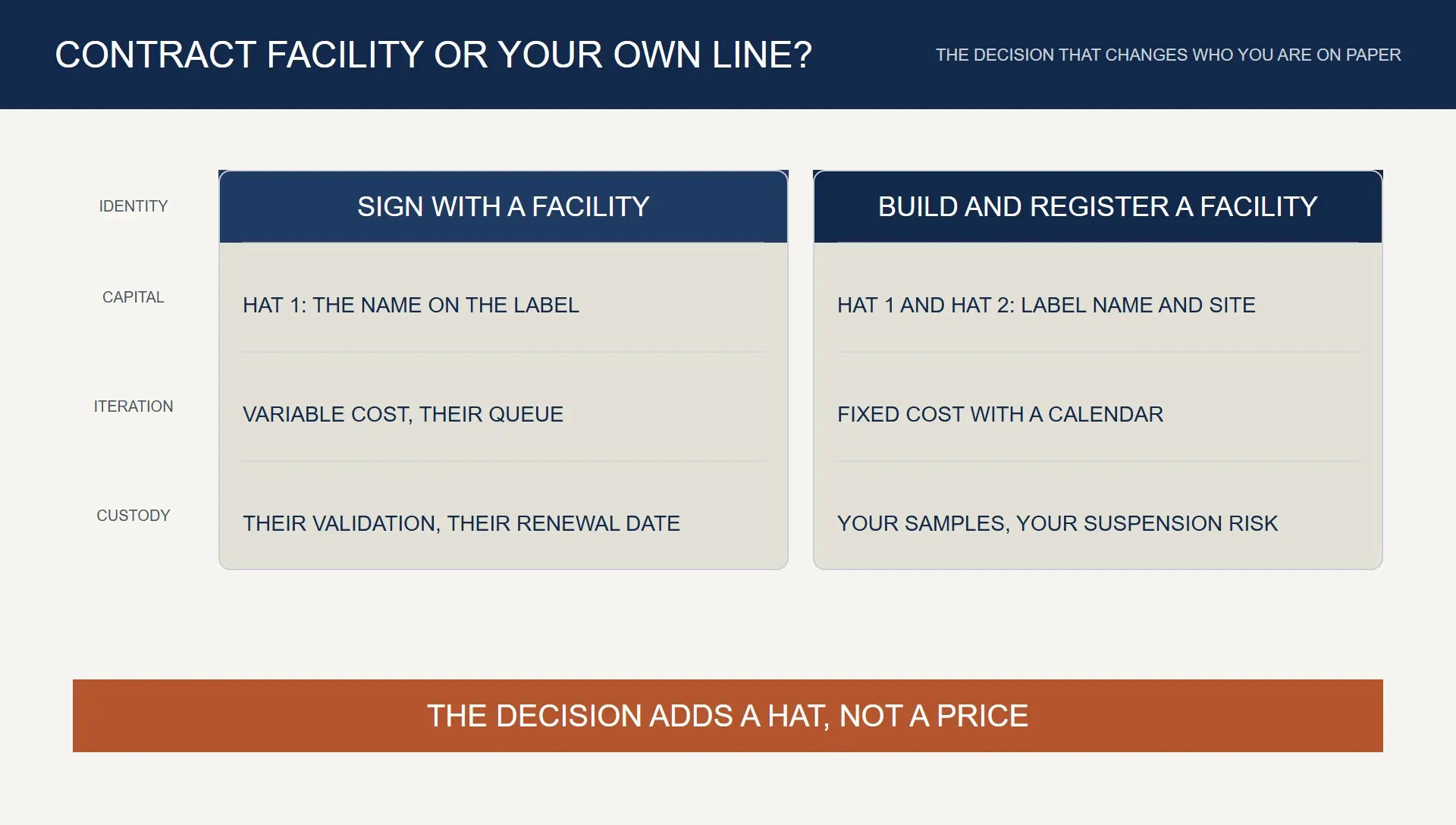
The burden of substantiating claims sits with the brand, but the evidence chain starts at the factory. Our recommendation is a three-step plan: first, inventory every environmental/climate statement across packaging, product pages and social media, classified as generic, specific-attribute, carbon-neutral, future-promise or label-based; second, replace high-risk wording (natural/eco/carbon neutral) with specific, provable statements, and update product pages and ad creatives accordingly; third, obtain from your contract manufacturer an evidence package matched to your claims — ingredient traceability, stability and efficacy test reports, certification documents — and write "claims support clauses" into the supply contract. One practical note: rewording usually triggers label and packaging revisions, which involve re-sampling and printing — MOQ, FOB/CIF quotations, lead time and sample policy all shift accordingly. Build in a switchover window before peak season and before enforcement escalates.
Industry View: Evidence Capability Becomes a New Supplier Selection Criterion
In our day-to-day work with EU clients, "can the factory provide claims-support documentation?" is becoming a supplier-selection criterion as important as price. For a brand to substantiate "natural, biodegradable, recyclable", the factory must be willing and able to provide ingredient sourcing, test reports and certification liaison,From the EU's PPWR packaging regulations to the recent ECGT declaration rules, sustainable regulation is tightening on both ends — the same logic as the US MoCRA wave we covered earlier: compliance is no longer "the factory's own business" but part of the brand's supply-chain capability. As an OEM/ODM partner serving both US and EU markets, we provide clients with ingredient data packages, stability and efficacy testing support, GMPC/FDA/ISO documentation, and initial compliance review of label copy — so brands can align their claims and evidence chains before the ECGT takes effect.
Will your EU marketing wording survive the first wave of scrutiny after September 27? FKY (Zhuhai Fukangyuan Biotechnology) now offers an "EU green claims audit + evidence package" consultation: inventory your current claims, provide ingredient and test evidence, and support initial label-copy compliance review — MOQ, FOB/CIF quotations, sampling lead time and sample policy are available on request. We reply within 24 hours.