
News
OEM Skincare Manufacturer Malaysia: SEA Market Access Guide
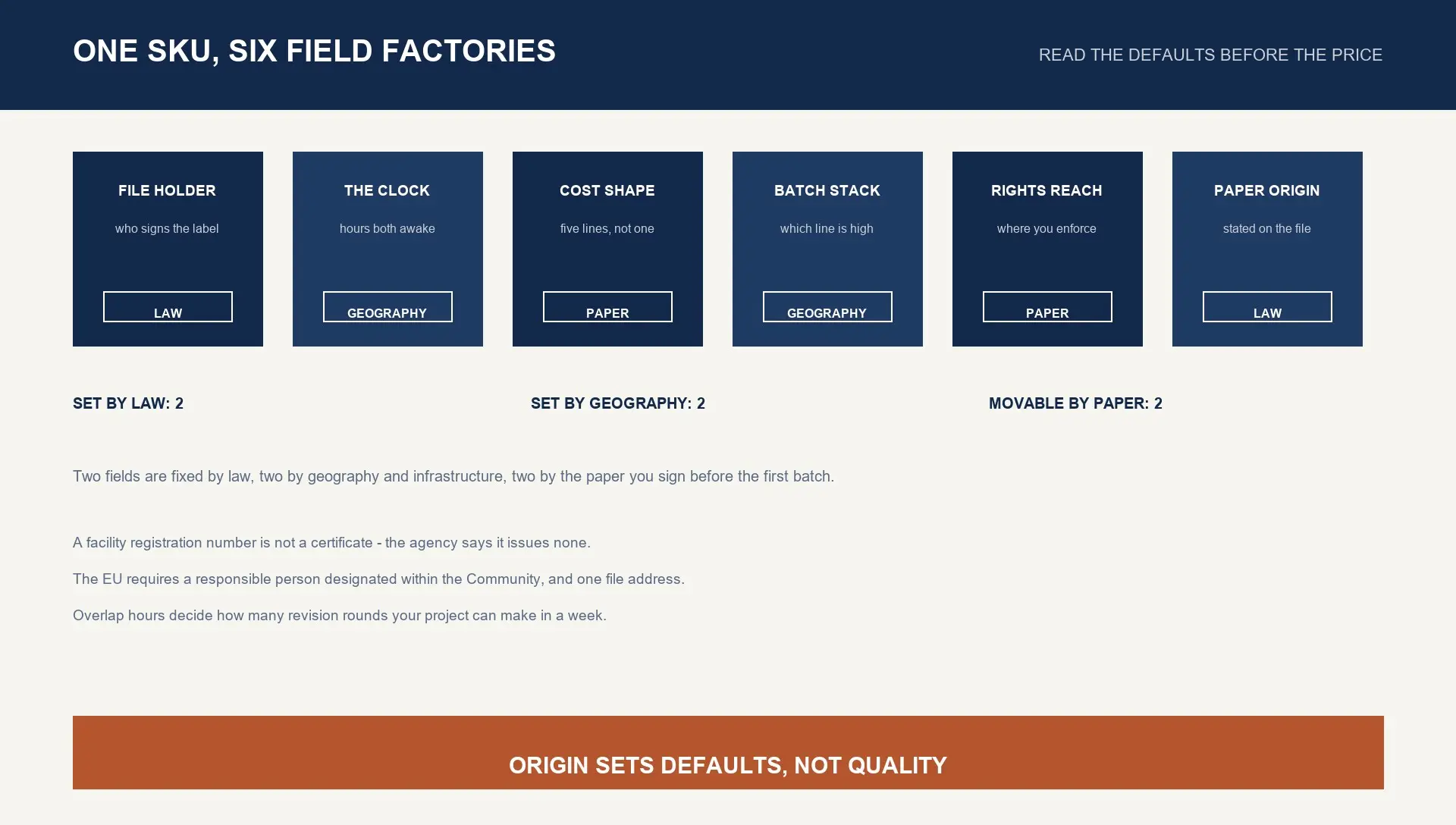
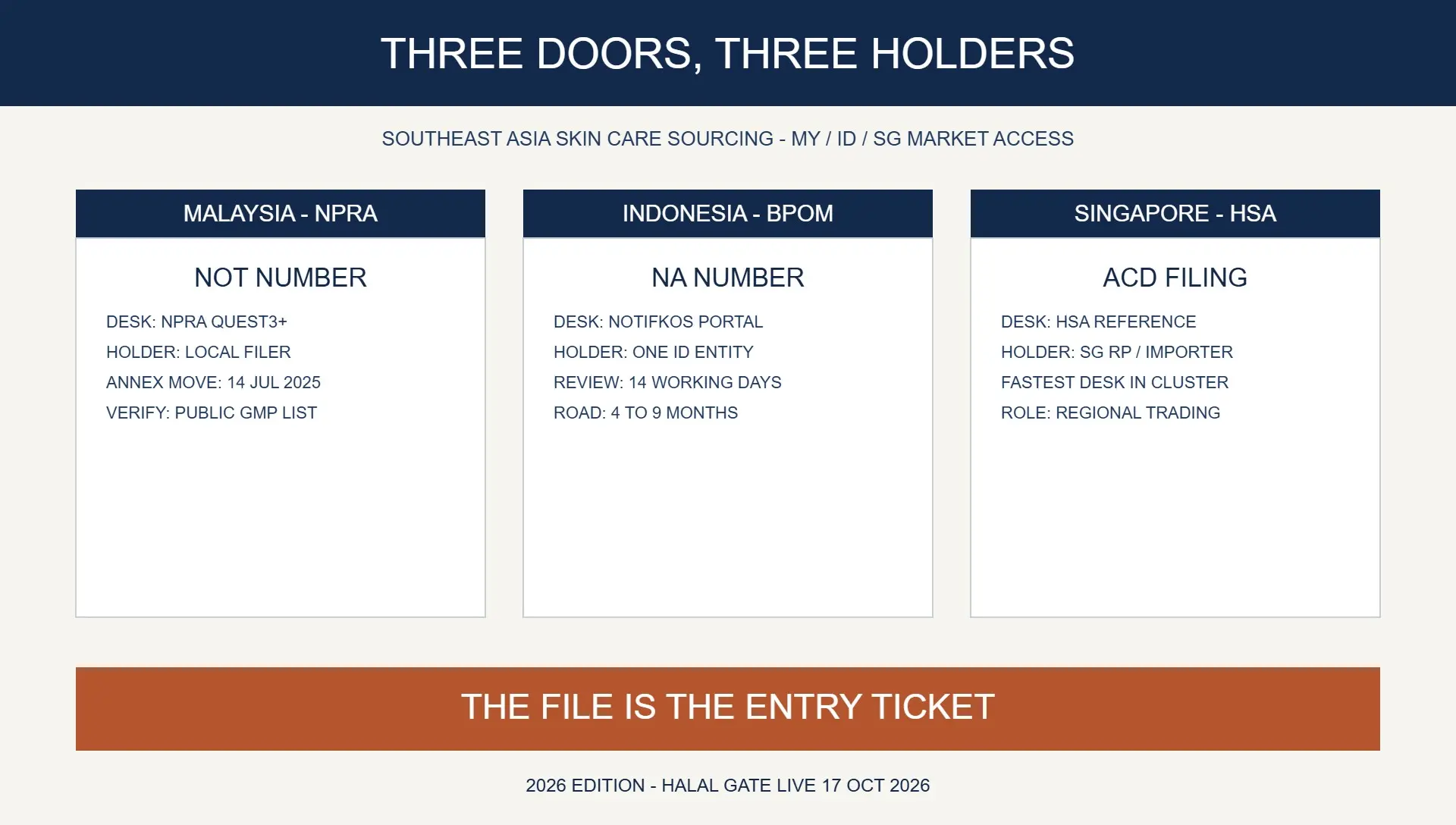
Selling skincare into Malaysia, Indonesia or Singapore is a filing question before it is a formula question. This playbook maps the three doors, who legally holds each notification number, the real Indonesia clock — and what an OEM partner must hand over in writing before your local filer can submit anything.
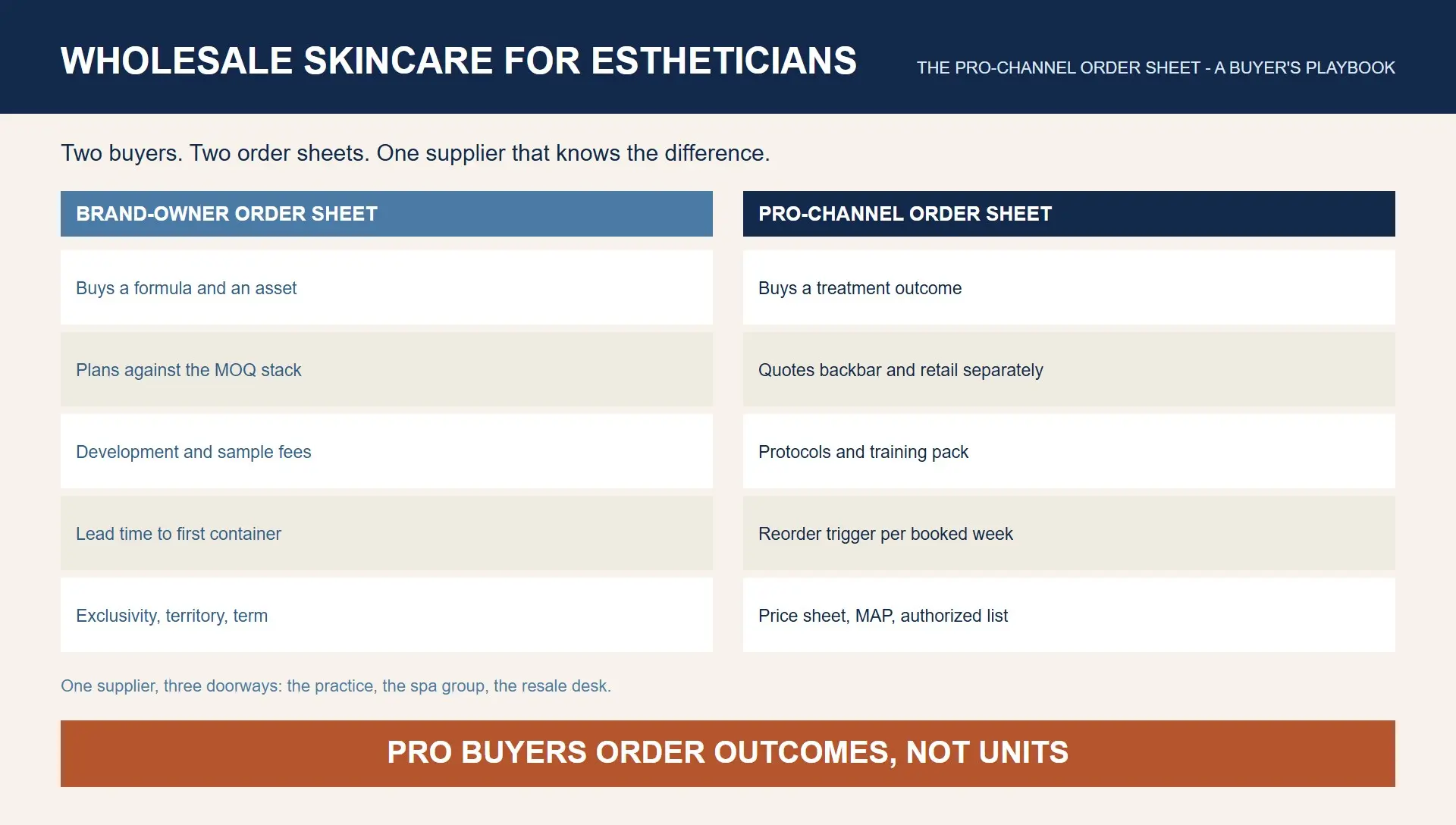
Wholesale Skincare for Estheticians: The Channel Playbook
The professional channel does not buy jars — it buys treatment outcomes. Read the market numbers by boundary instead of headline, split the backbar line from the retail line, put training and price discipline in writing, and find where the AHA strength line stops being marketing and becomes paperwork.
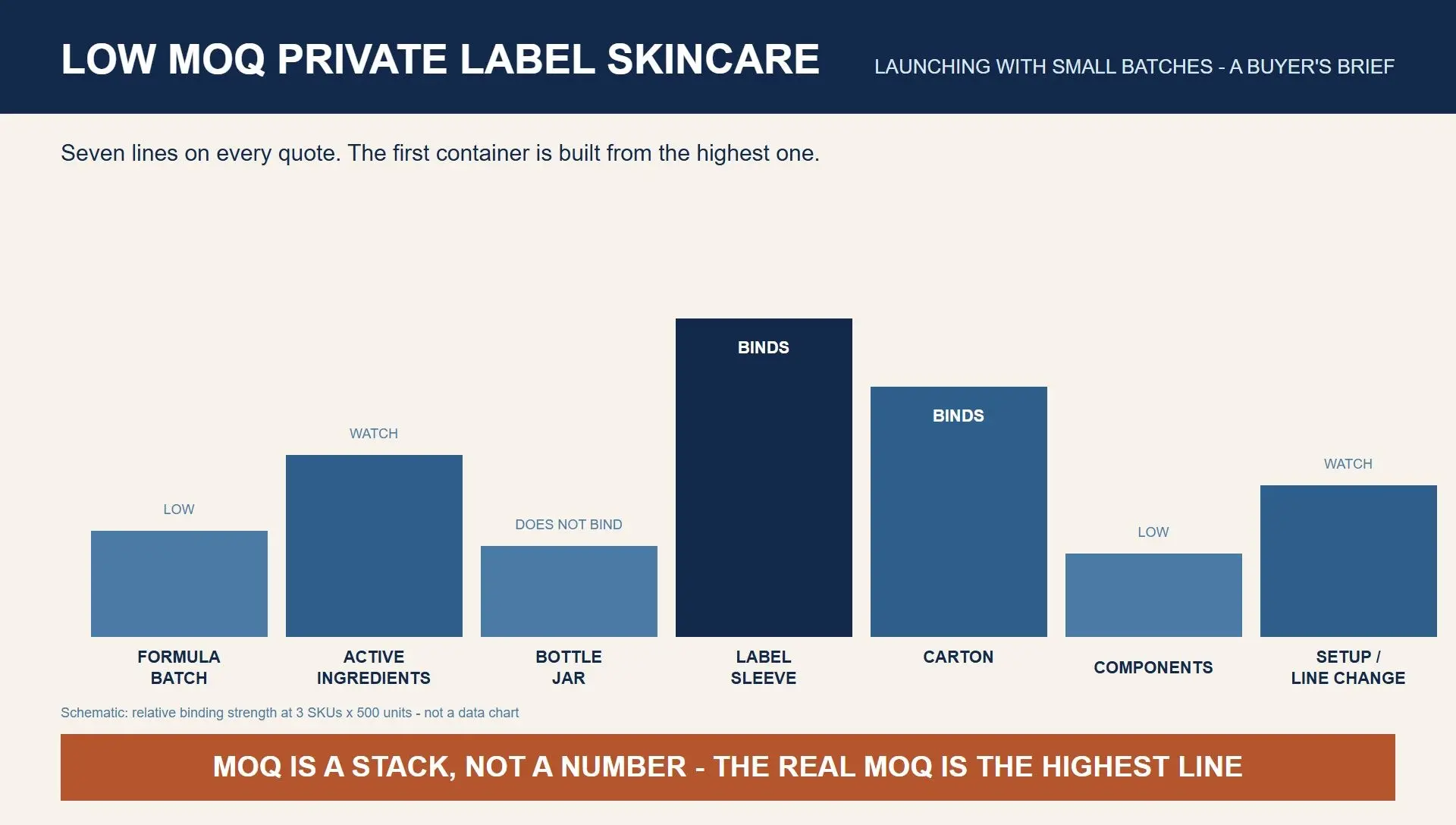
Private Label Skincare Low MOQ: Launching with Small Batches
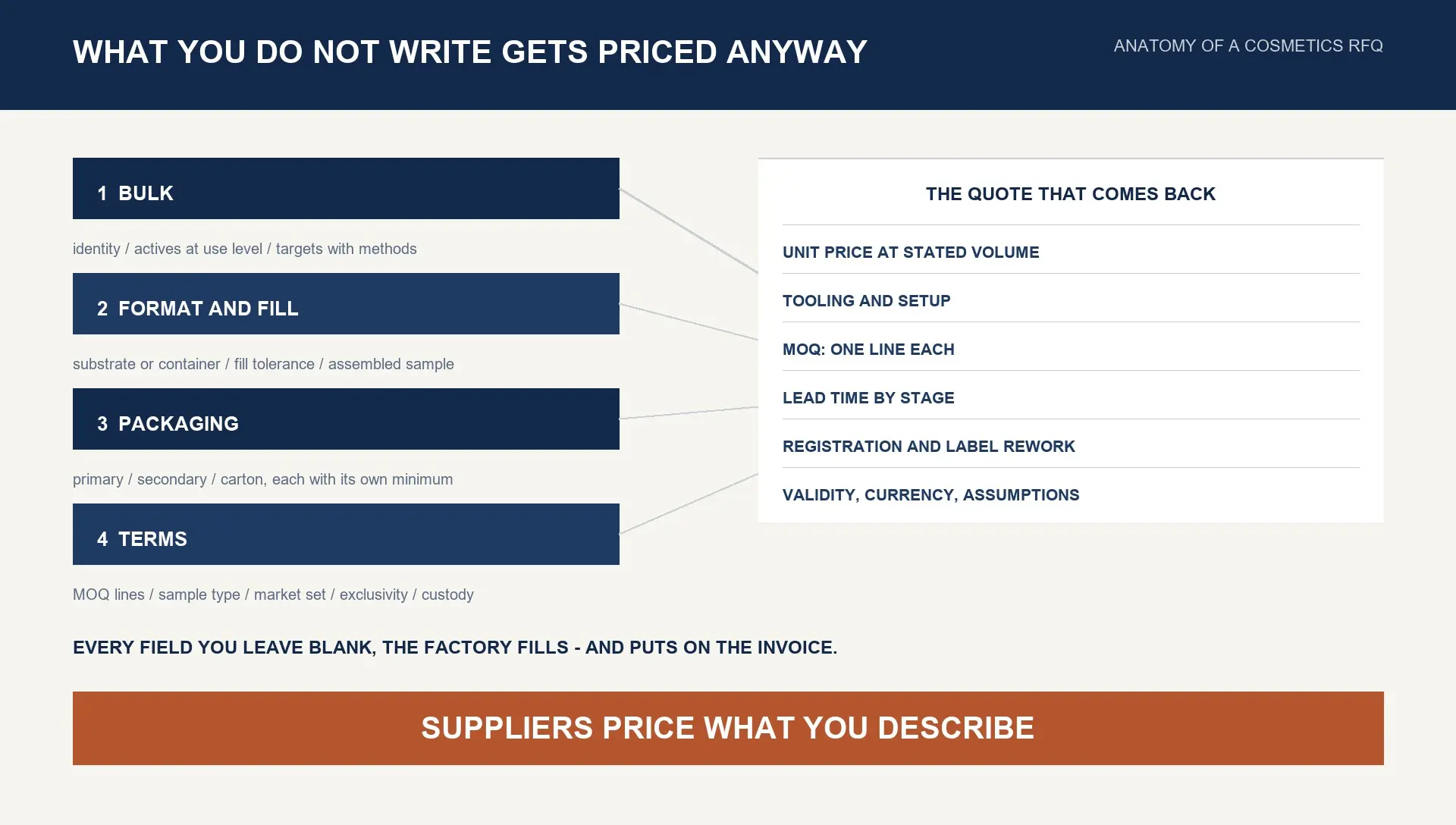
MOQ is a stack, not a number: the formula line, the packaging line, the components line. Read the 50-to-10,000-unit spread in published "low MOQ" claims honestly, work the first container at three SKUs by five hundred units, and name the line that binds before your factory does.
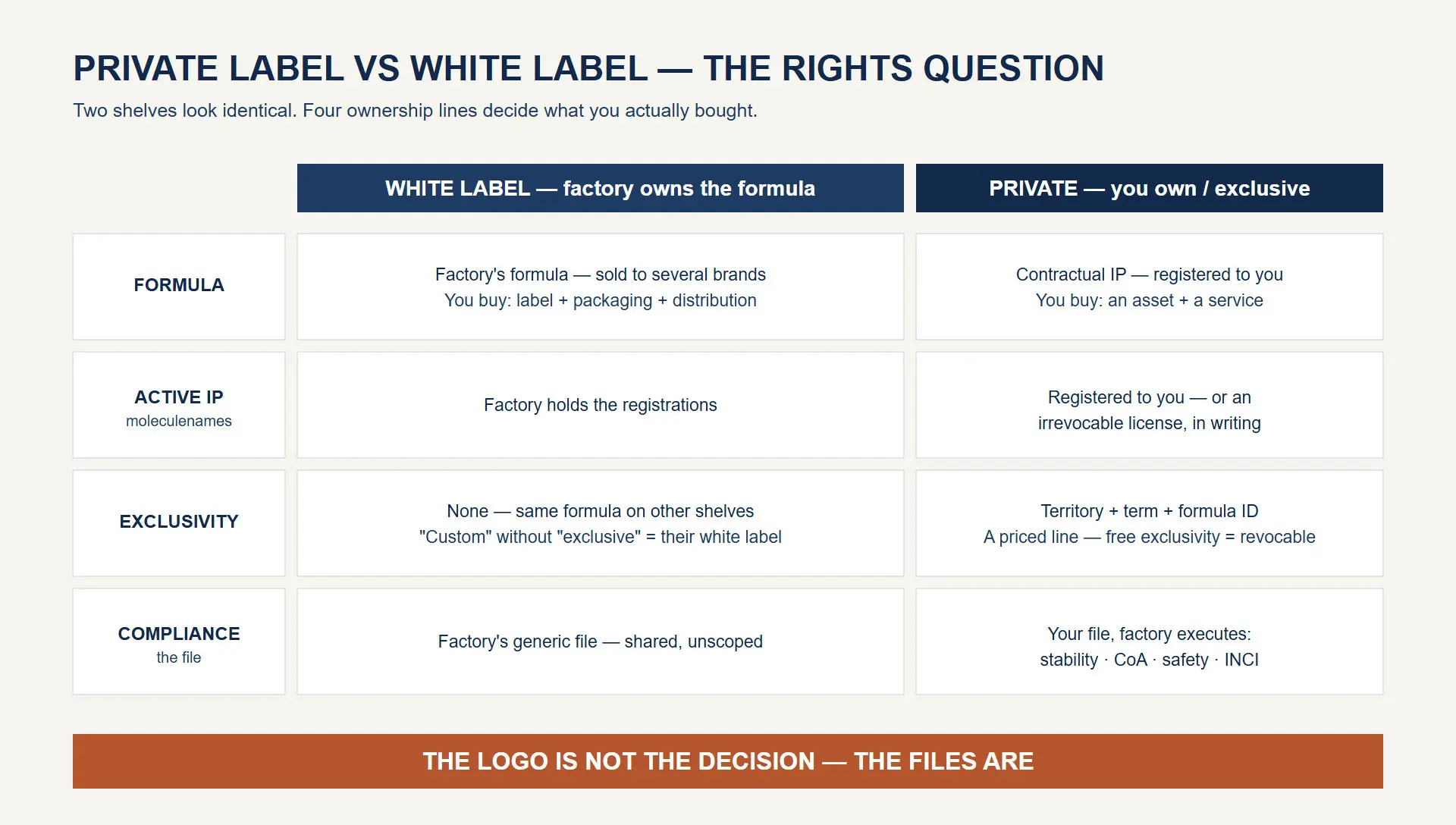
Private Label vs White Label Skincare: Which Model Fits
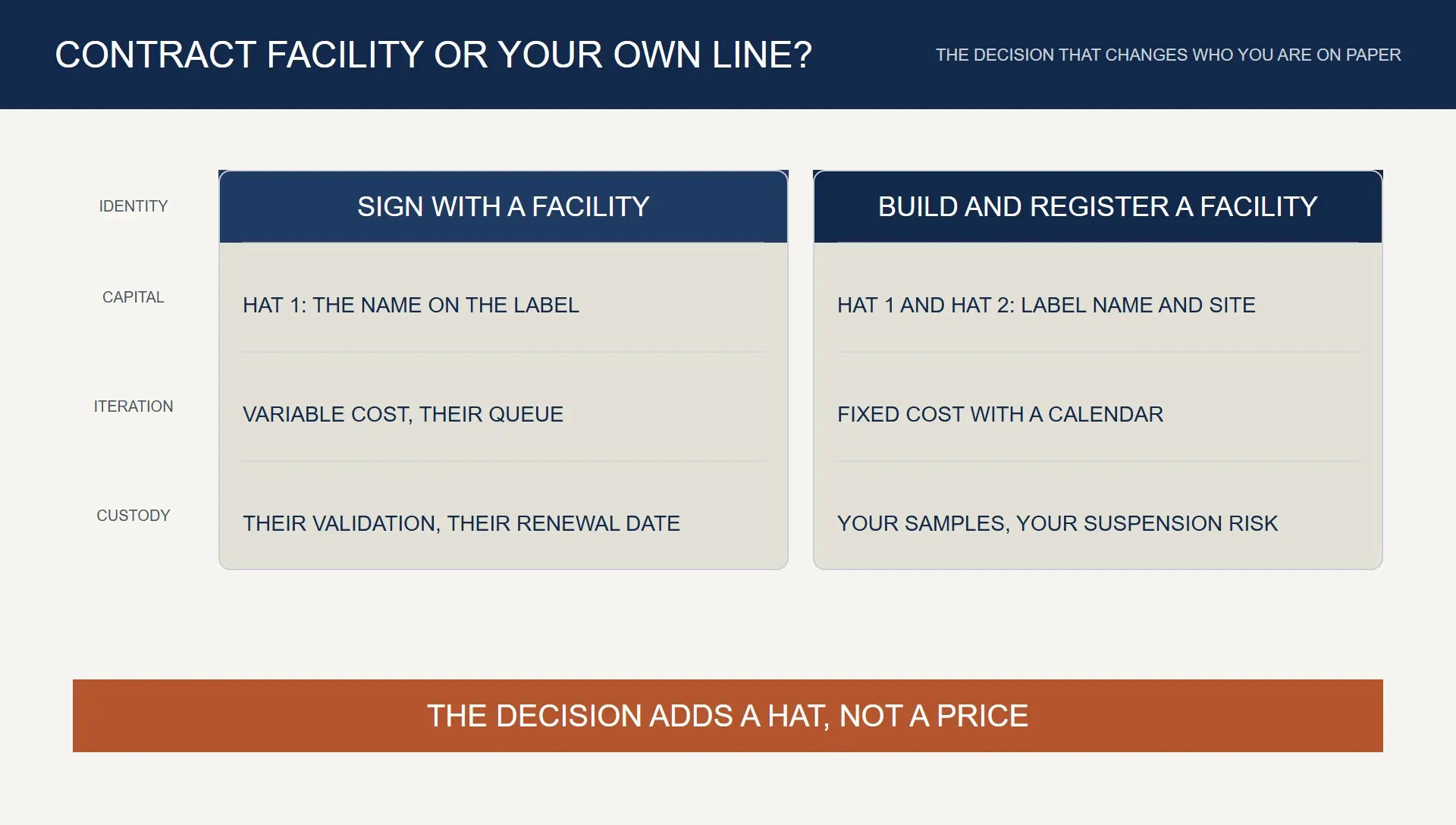
The private label vs white label decision is a rights question, not a logo question: who owns the formula, the IP, the exclusivity and the compliance file — plus the quote math, the geography table and a scoreable five-dimension factory checklist.
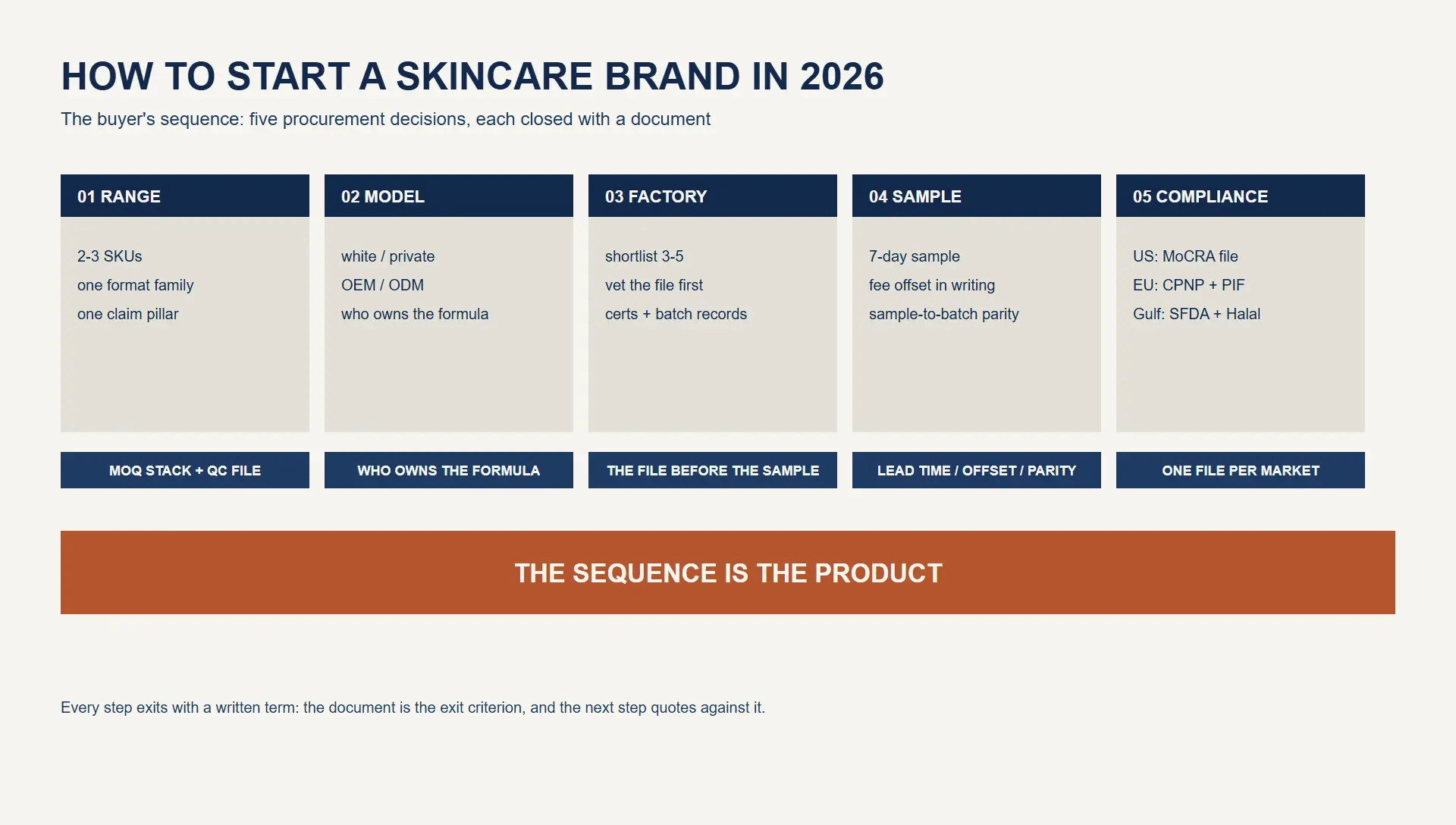
How to Start a Skincare Brand in 2026: A Factory Buyer's Playbook
The factory-side read on starting a brand: five procurement decisions in sequence, the written terms that protect each one, and the ten questions worth asking before the first sample fee.
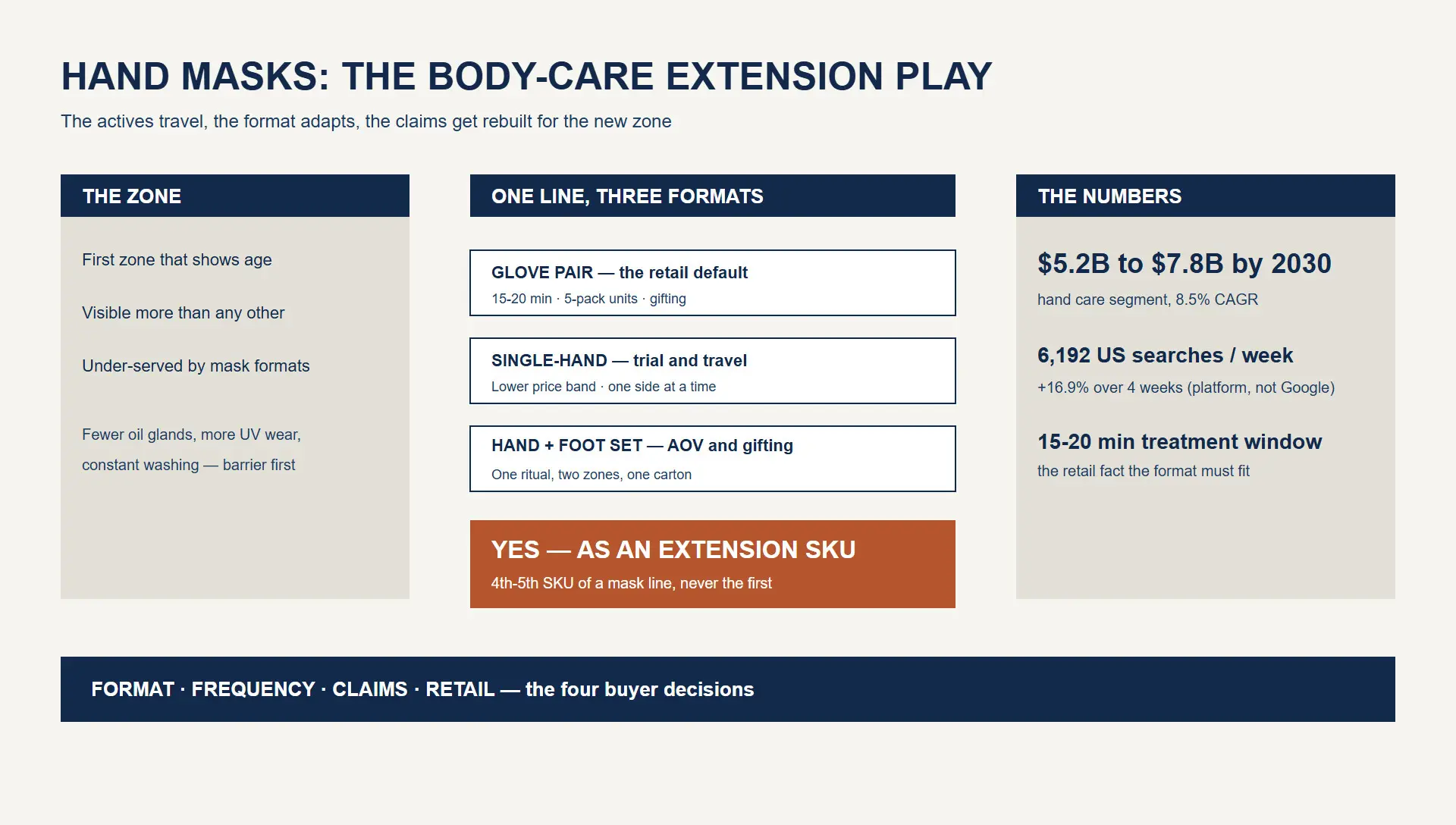
Hand Mask Benefits: Use Frequency and Retail Angles for Brands
The buyer's read on hand masks before you extend your range: what the format decision actually is, how usage frequency drives repurchase, the honest "worth it" math, and the retail angles that make hand and foot sets work.
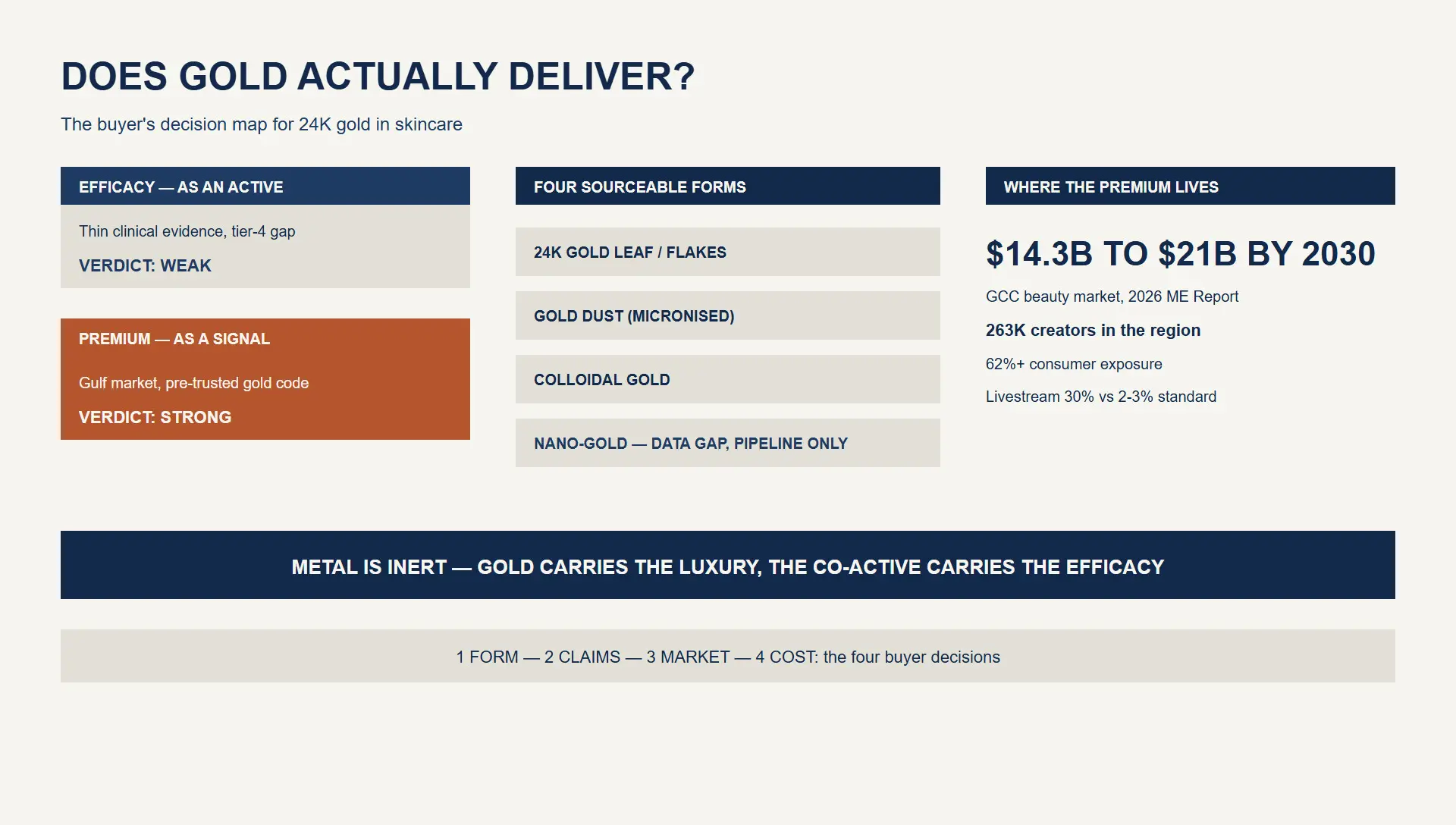
24K Gold Serum Benefits: Does Gold Actually Deliver?
A buyer's read on 24K gold in skincare: the honest evidence tiers, the Gulf premium with the numbers behind it, the four forms you can actually source, the claims you may print, and the documents to demand before a gold sample is paid for.
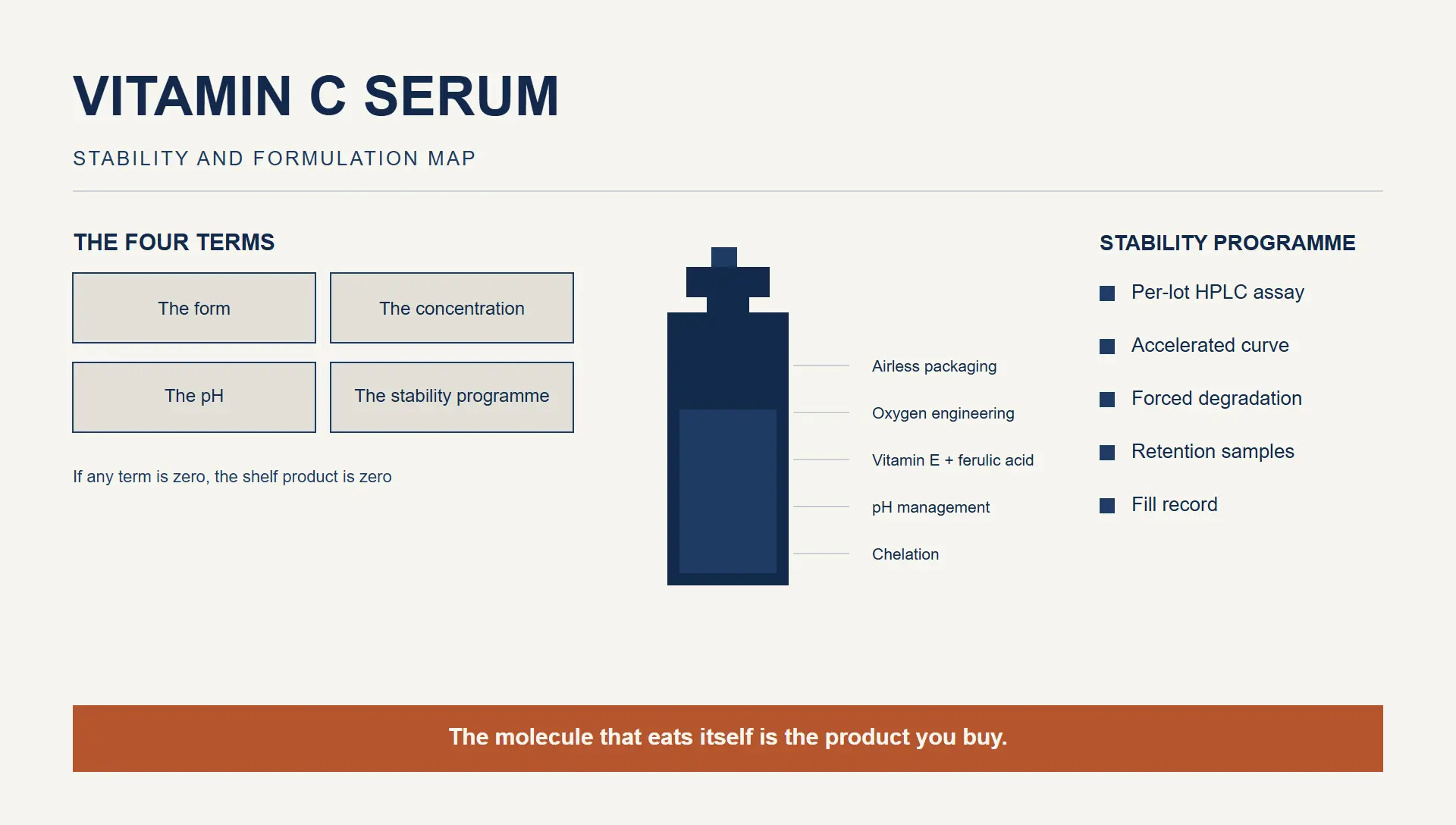
Vitamin C Serum Benefits for Skin: Stability and Formulation Guide
A vitamin C serum is the one product category where the active ingredient can be perfectly specified on paper and still fail on the shelf. This guide is written for the buyer who signs the purchase order: the three form families and what the form decision actually costs, the failure modes that turn a stable formula into an orange, degraded one, the formulation protection stack layer by layer, and the stability program you must demand in writing before any sample is paid for.
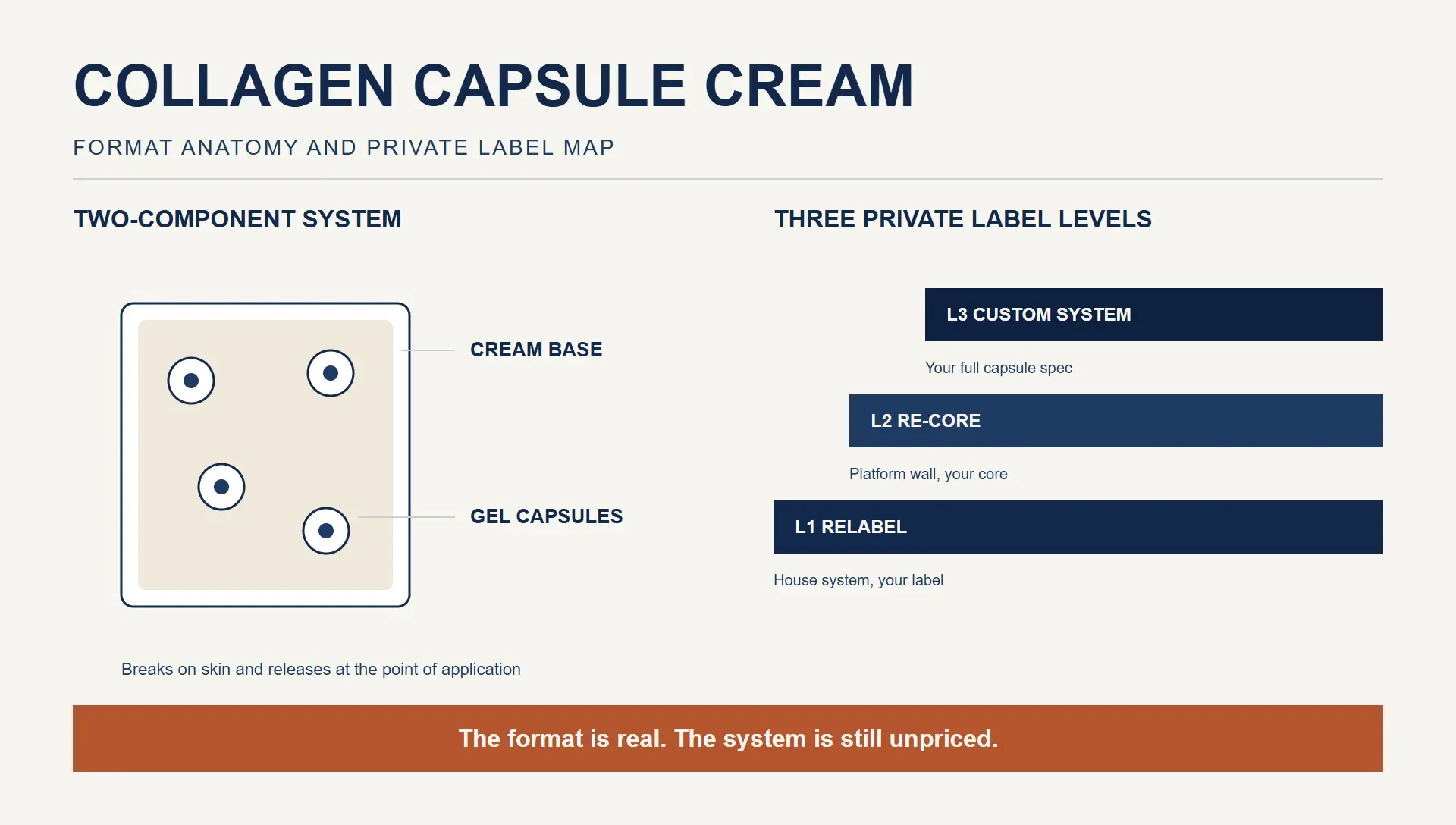
Collagen Capsule Cream Benefits: Format and Private Label Guide
A collagen capsule cream is not a cream with a clever name; it is a two-component system — a cream base carrying a population of gel capsules that burst on contact with the skin and release their core where you apply it. This guide covers what is actually inside the jar, the production routes behind the capsules, the market data read honestly across seven research houses, and the three levels of private label a buyer can choose from.
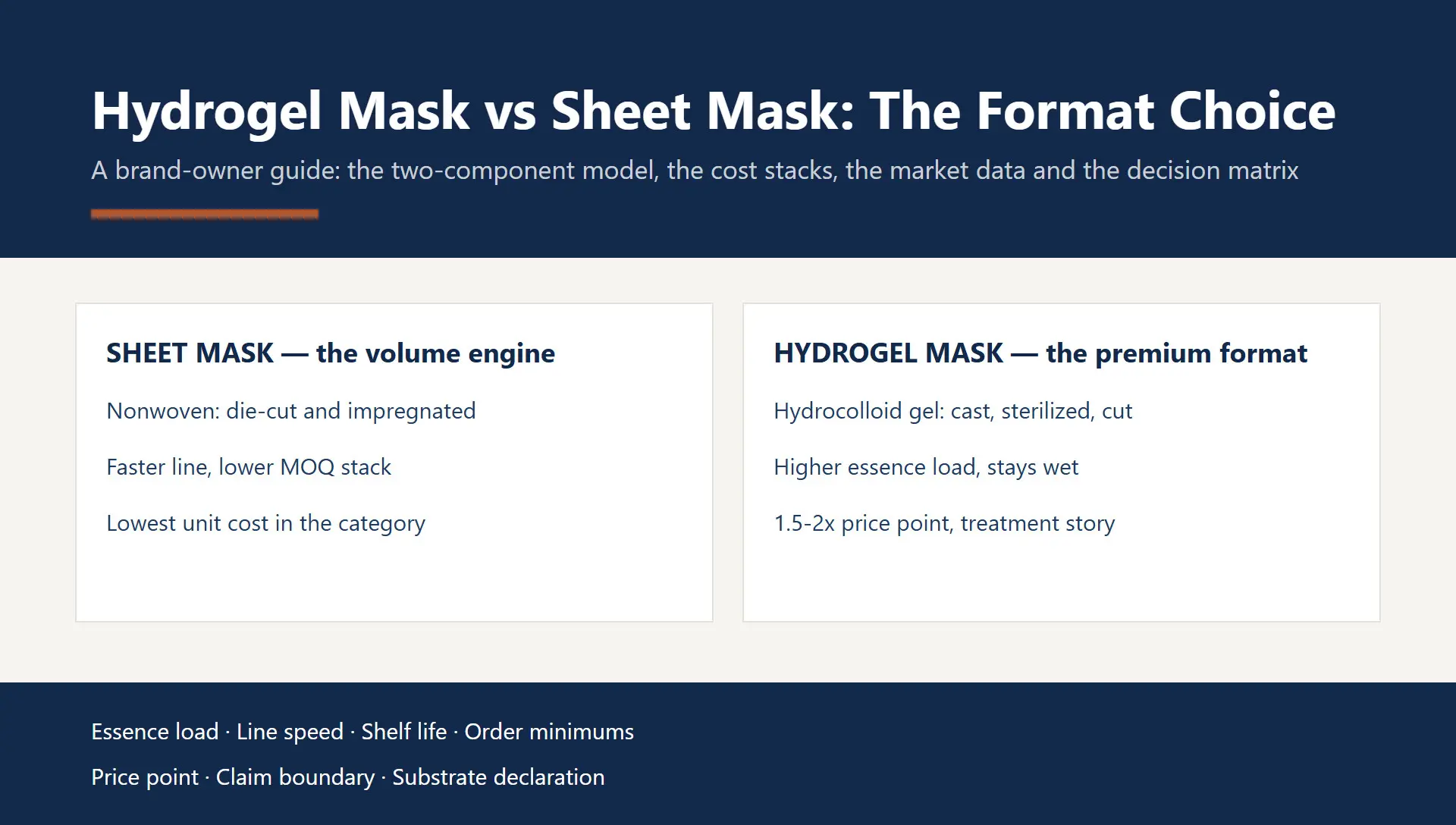
Hydrogel Mask vs Sheet Mask: The Format Choice for Your Brand
Sheet masks win on cost and speed; hydrogel masks win on load, feel and price point — but neither choice is made in the formula room. This guide walks a brand owner through the two-component model of what a mask actually is, the cost stacks of each format, the market data read honestly, and a scoring matrix that decides which format your SKU should be.